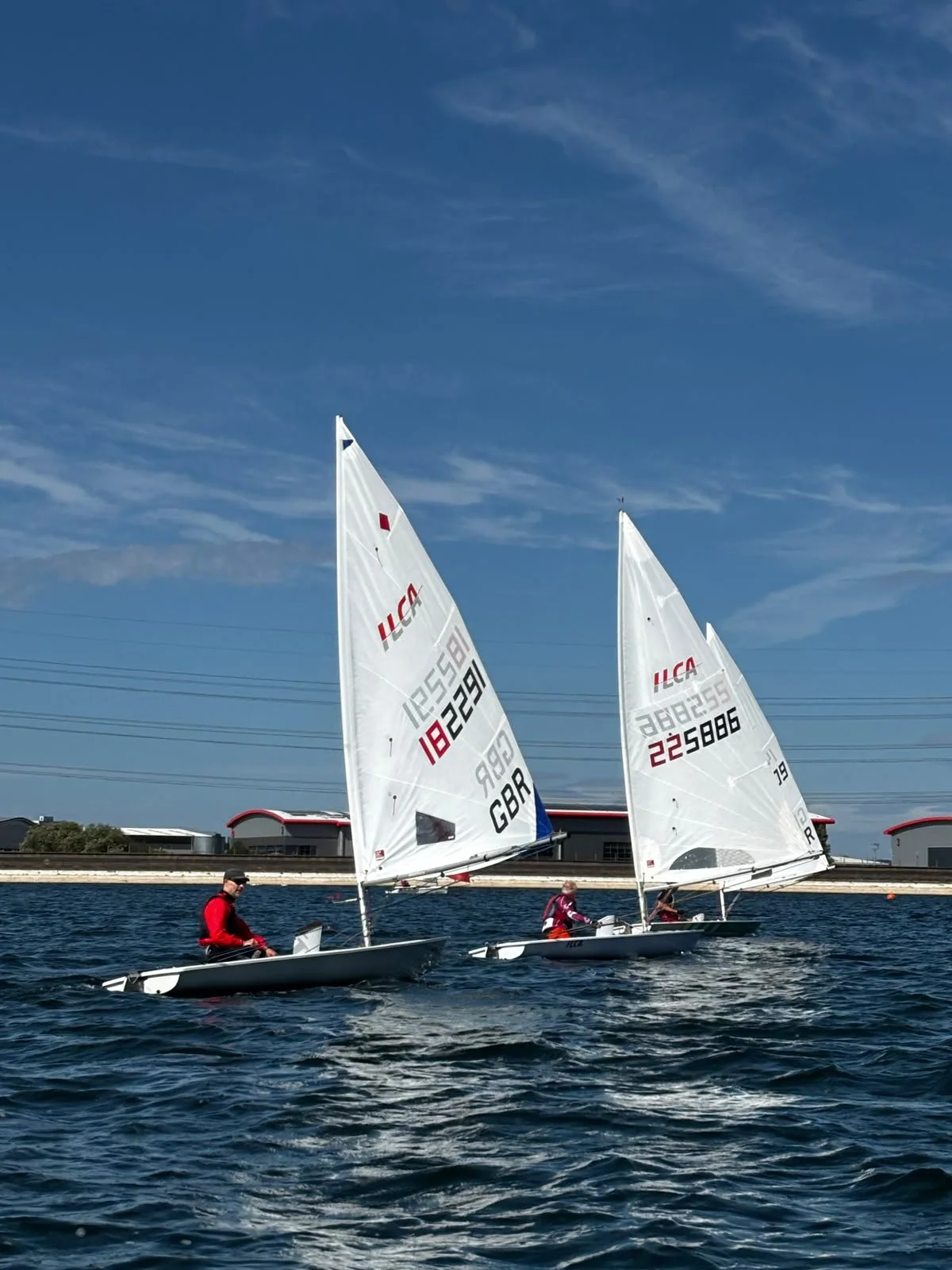
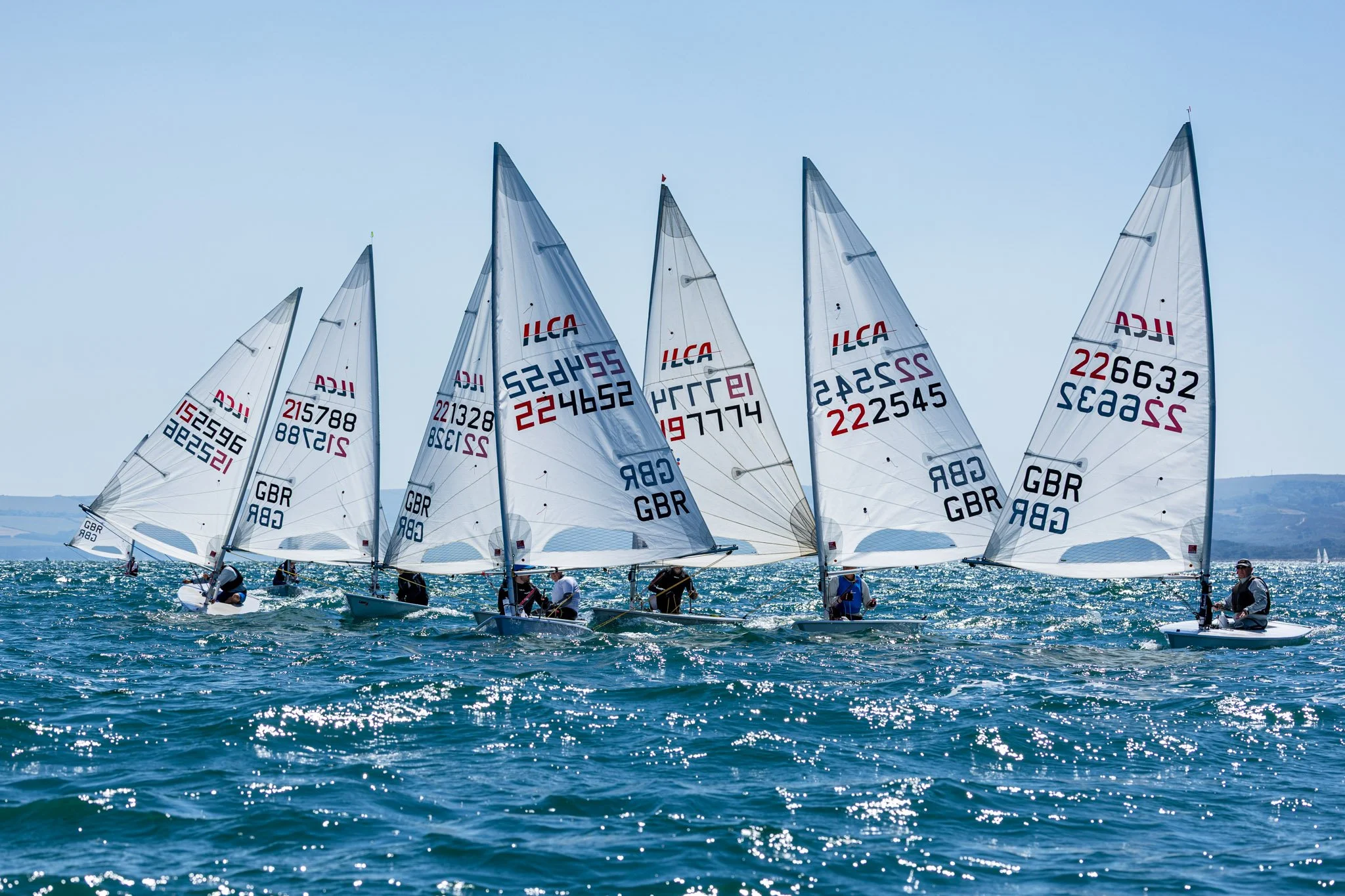
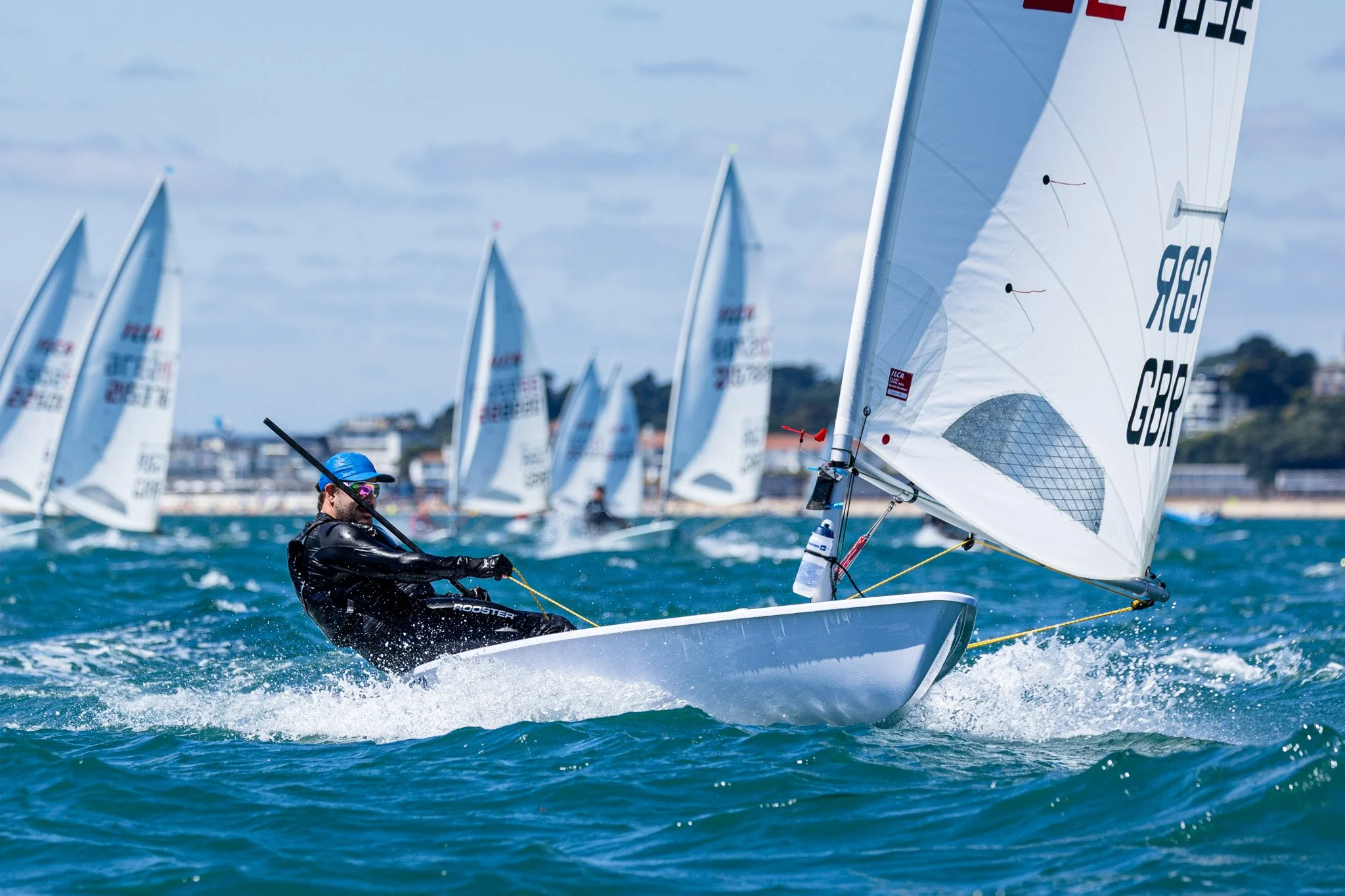
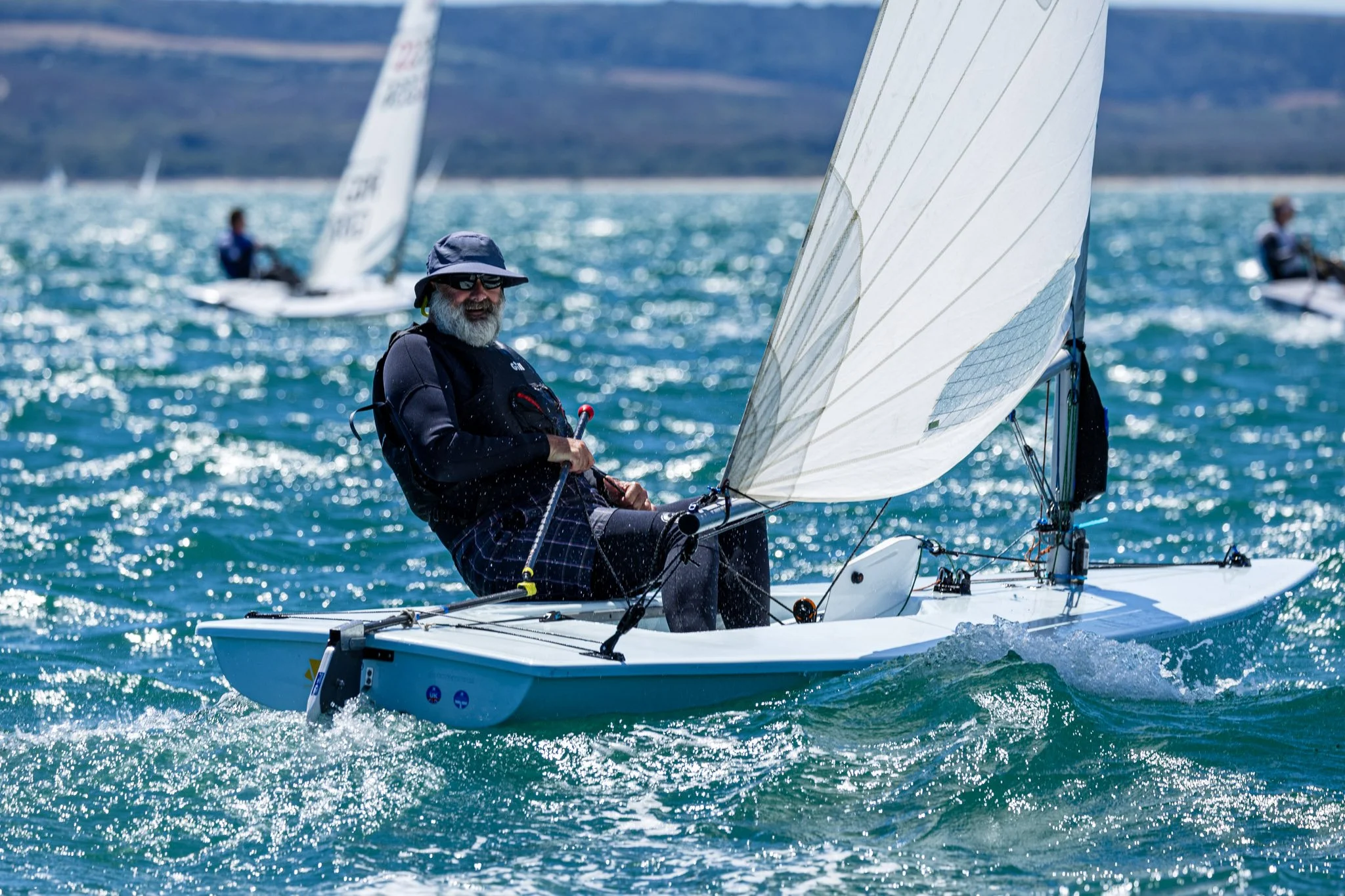
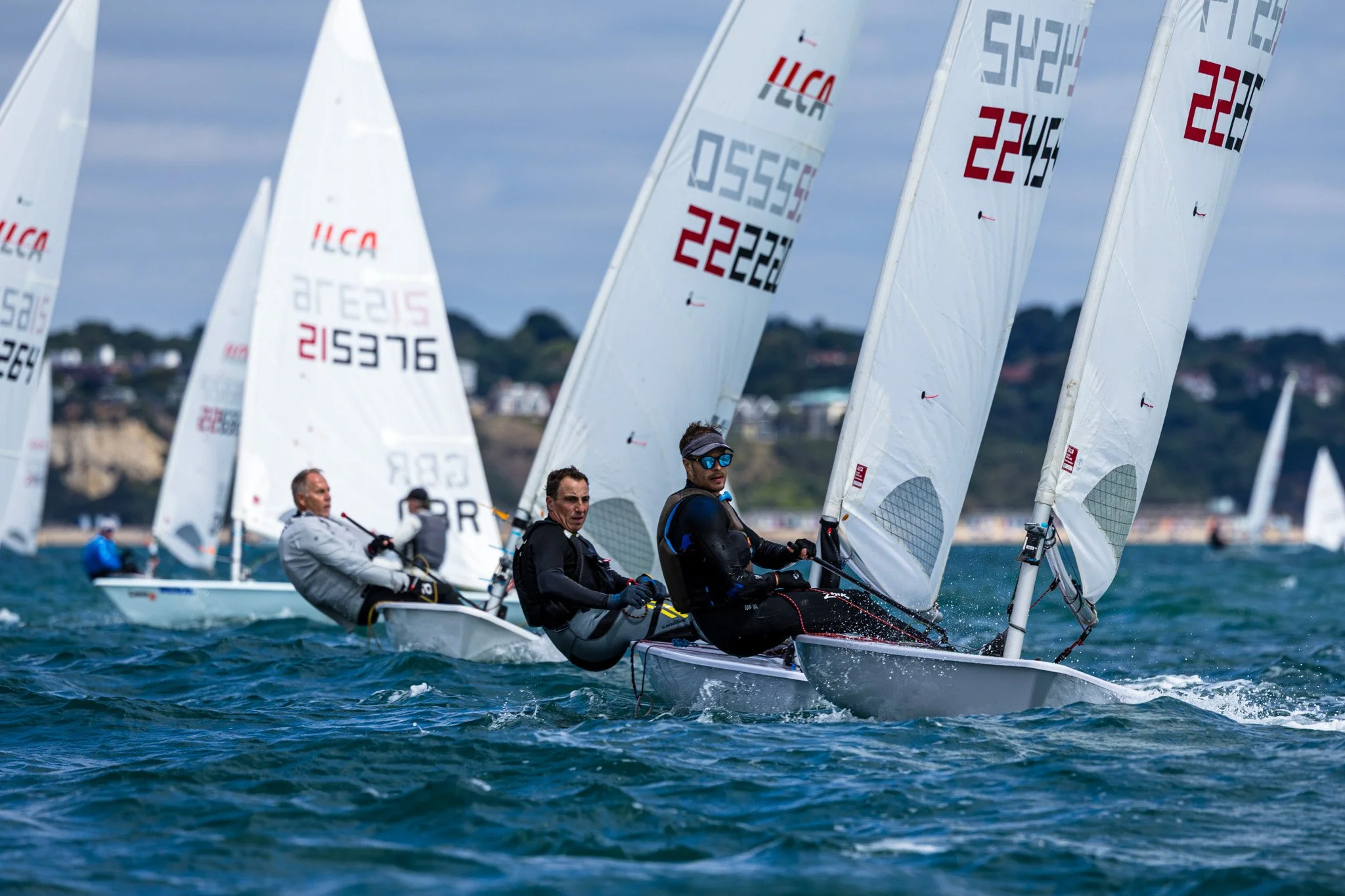
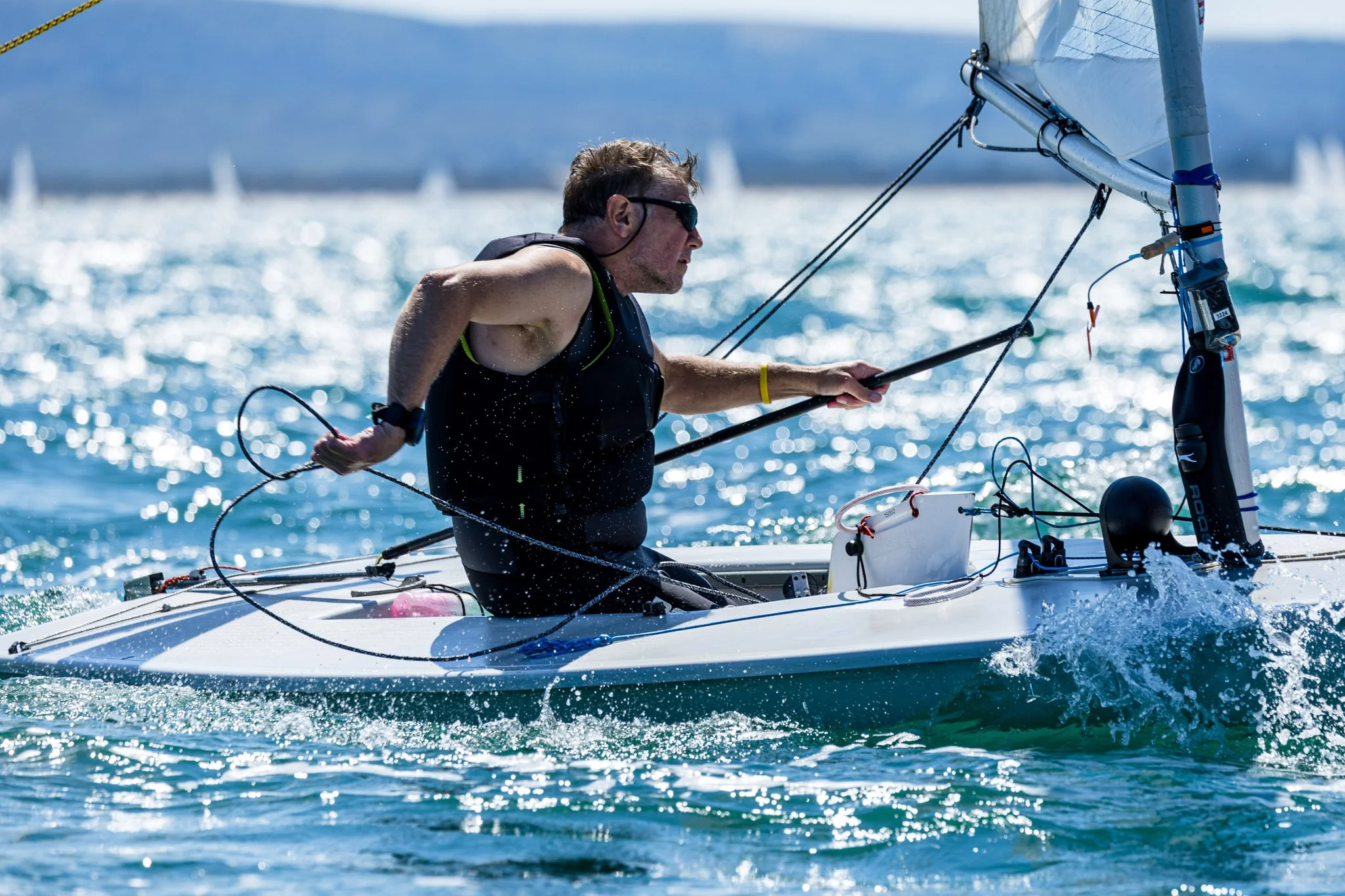
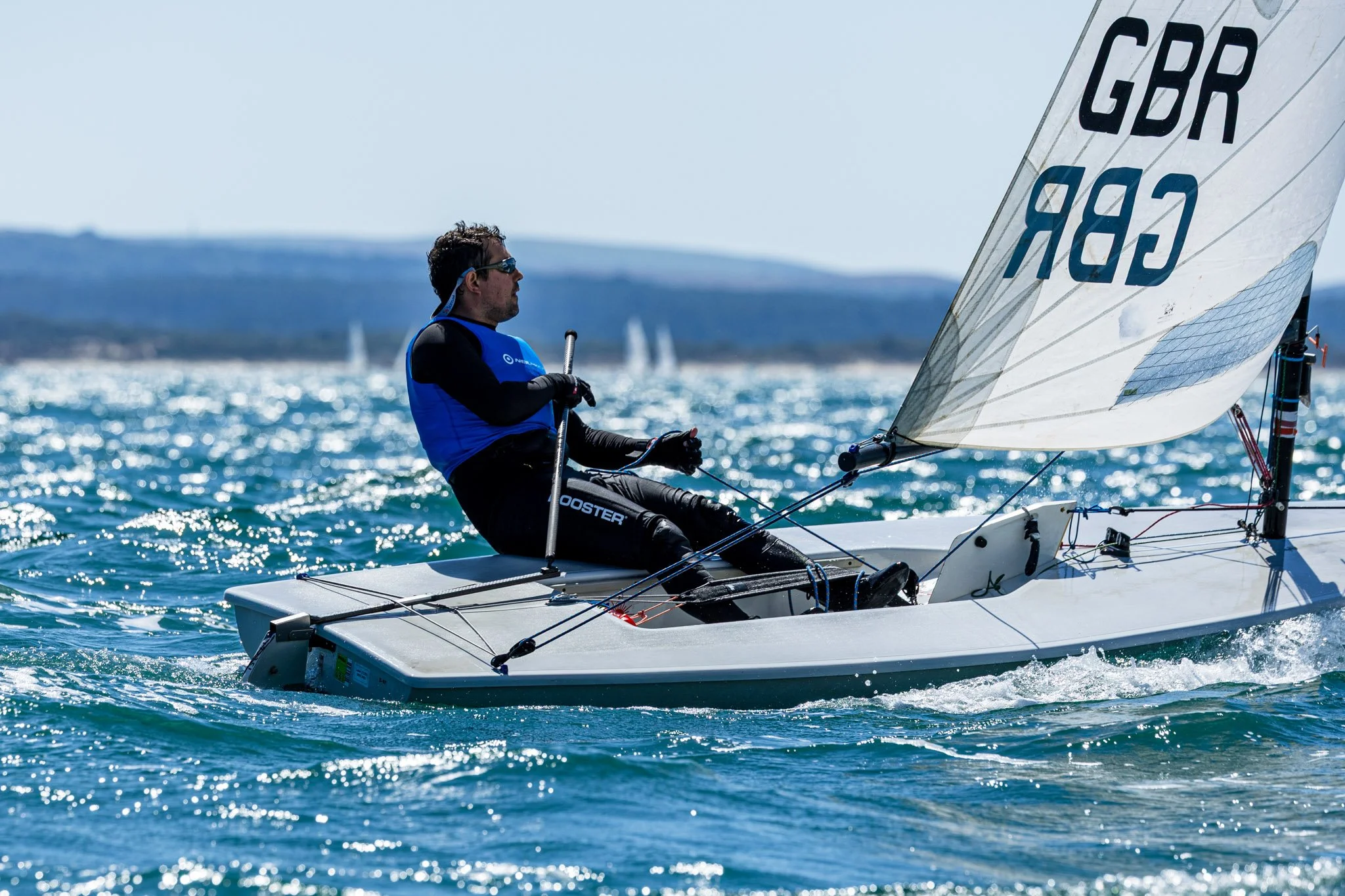
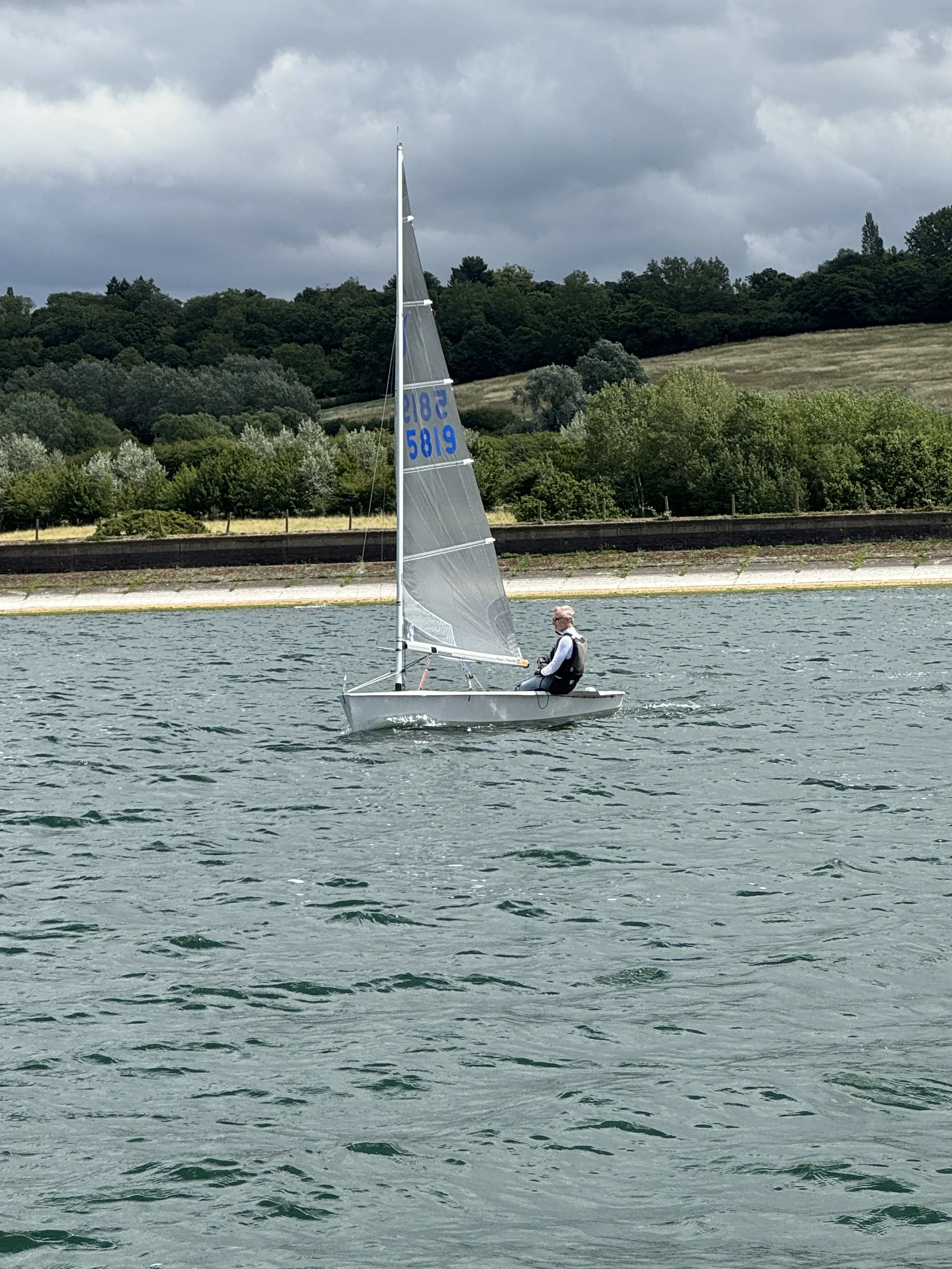
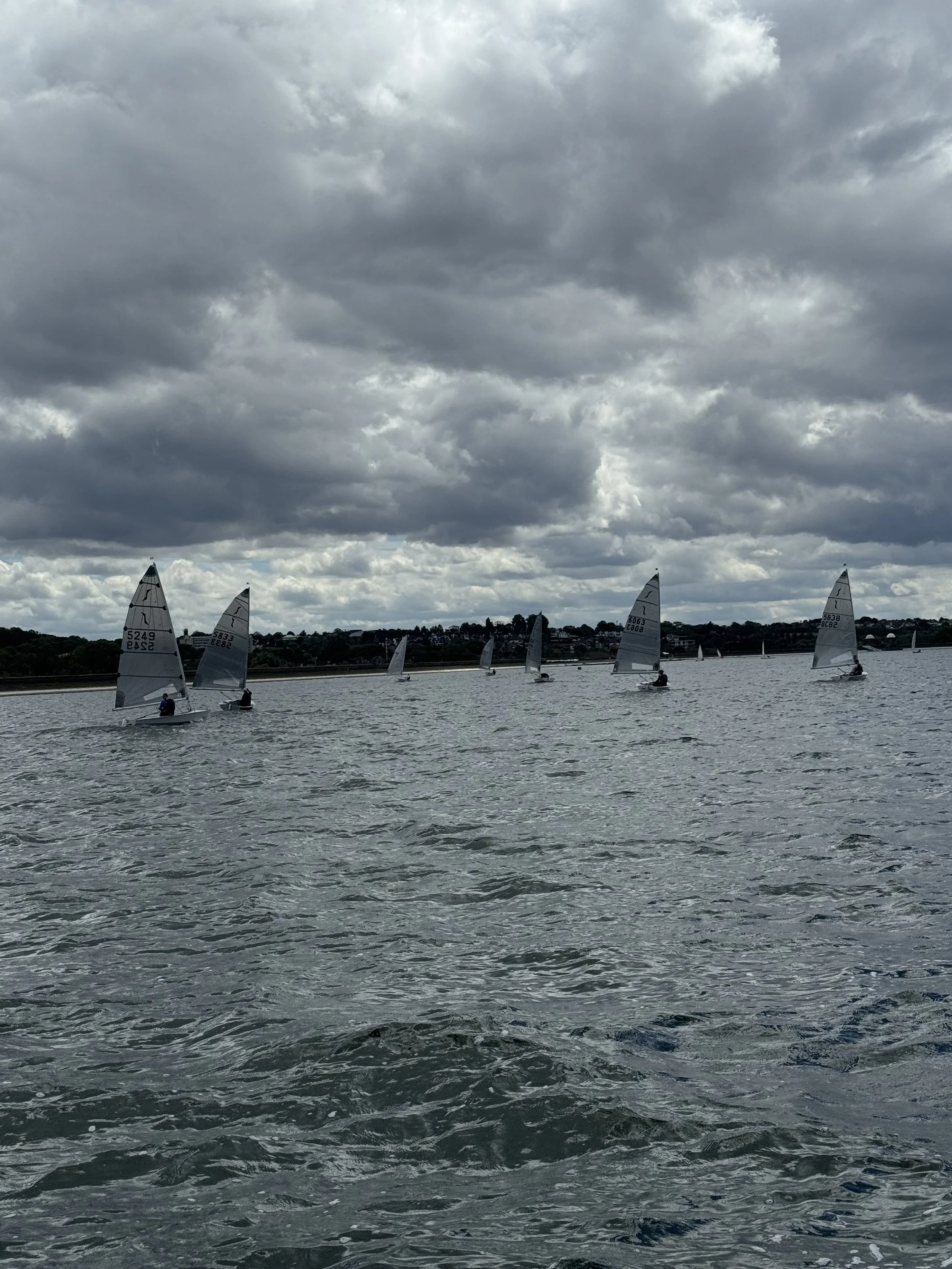
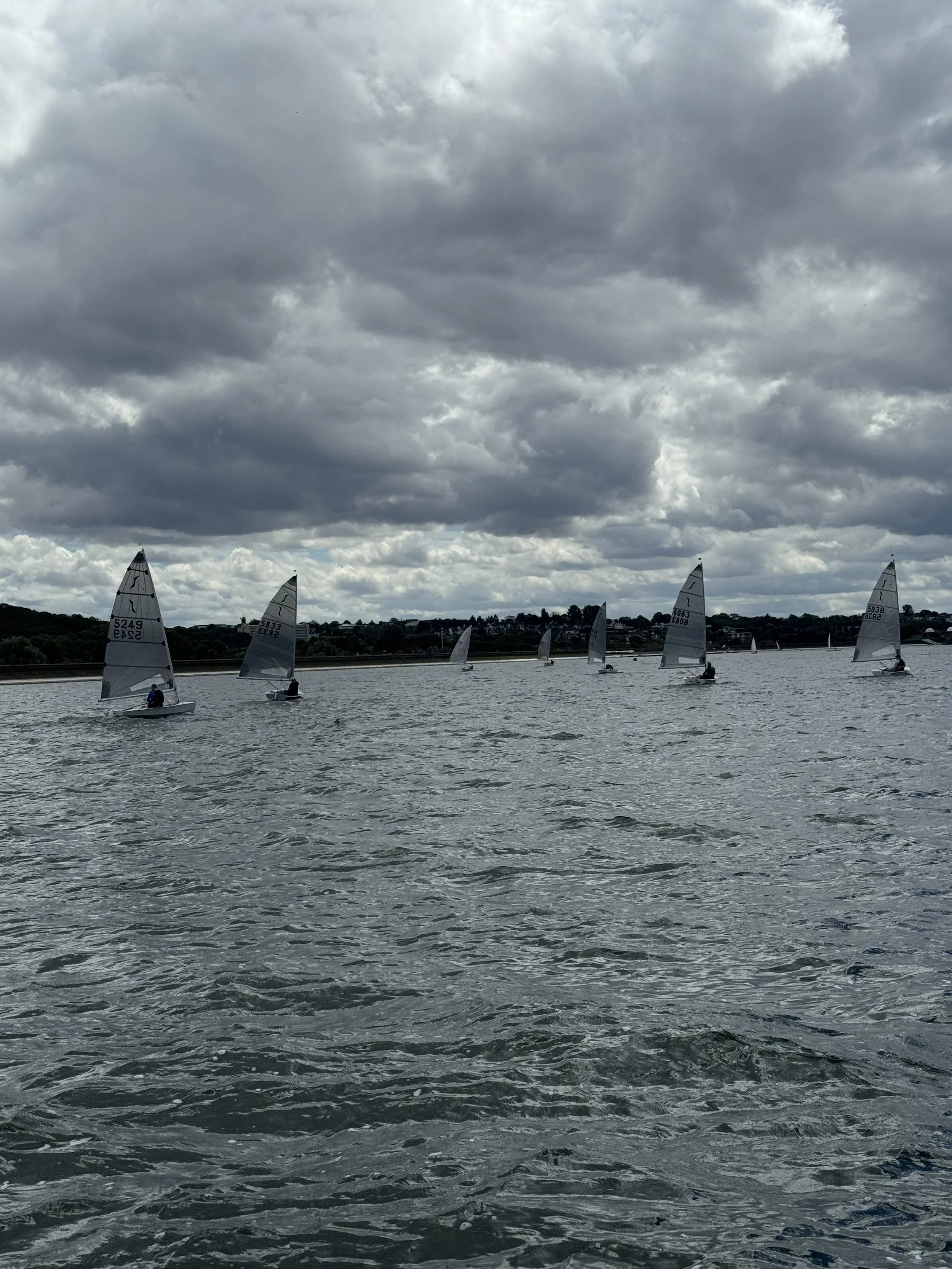
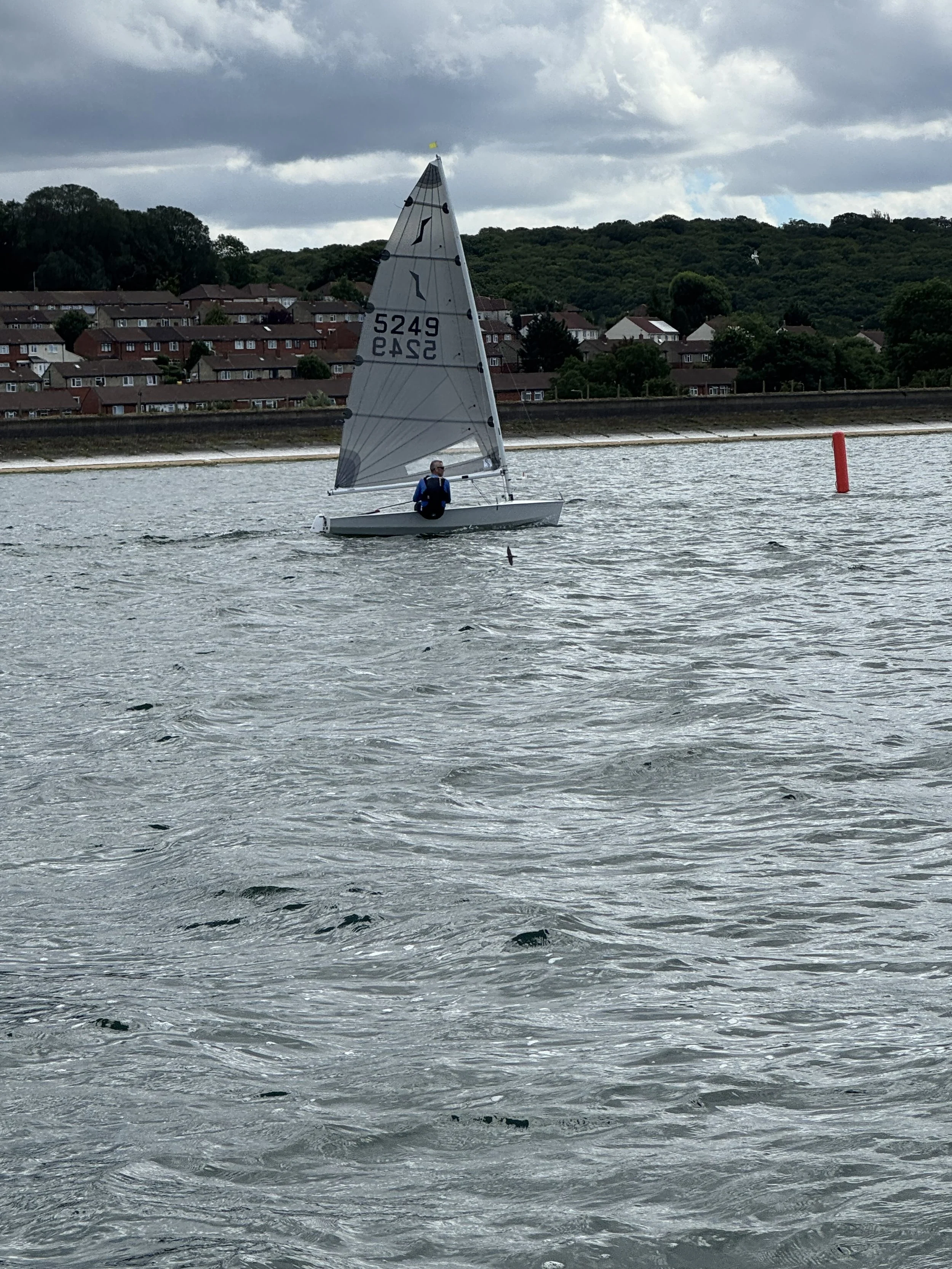
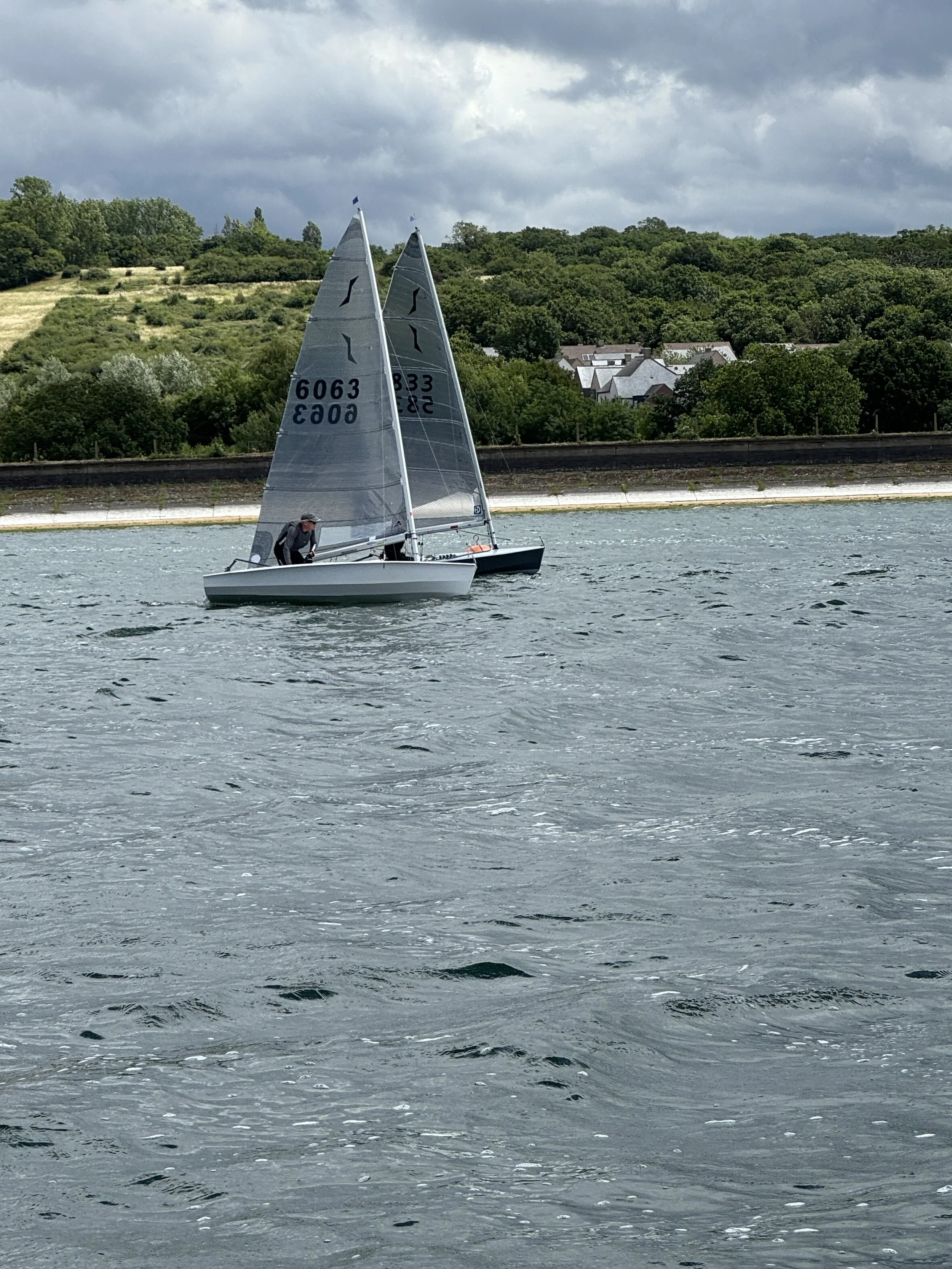
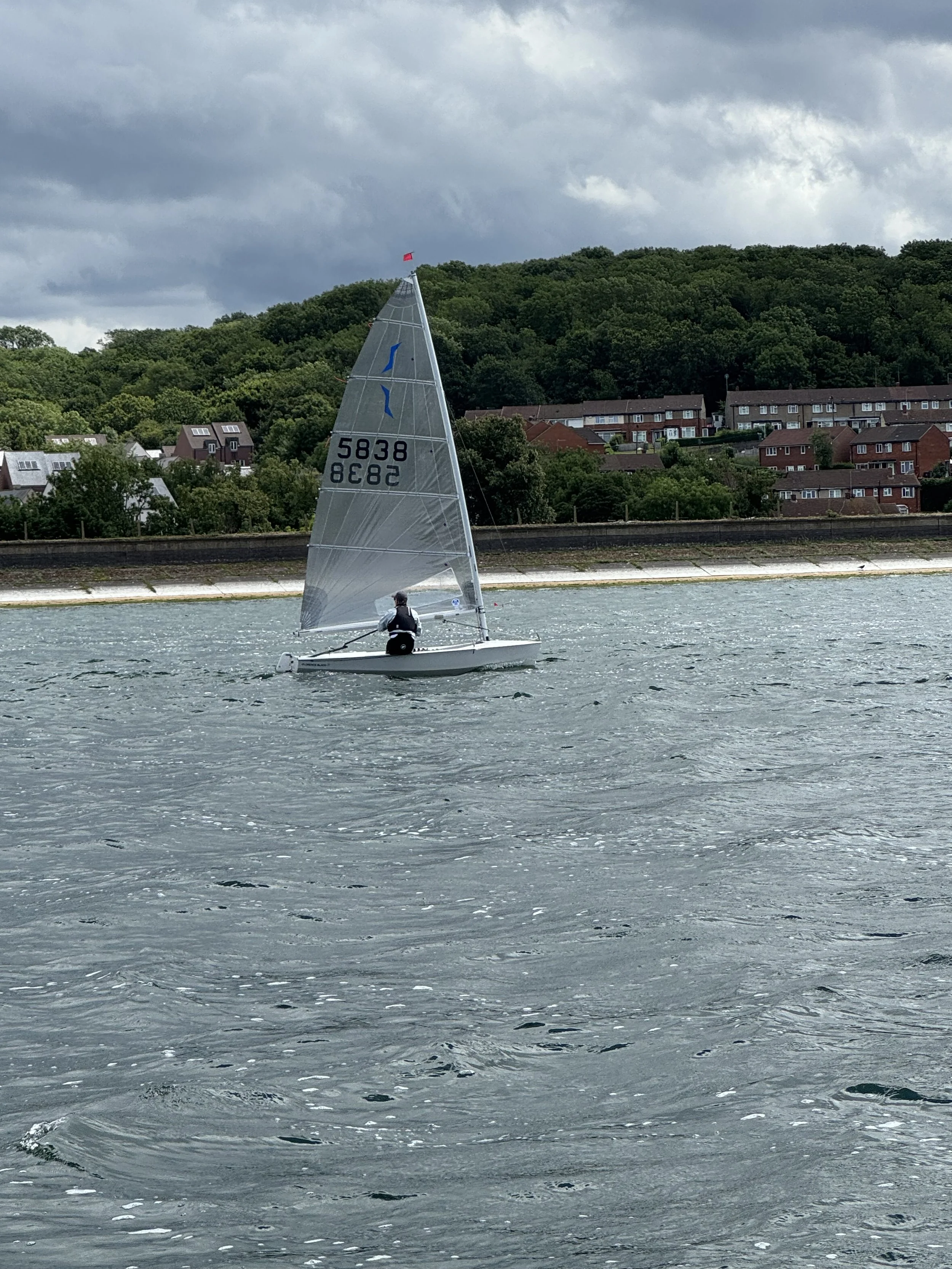
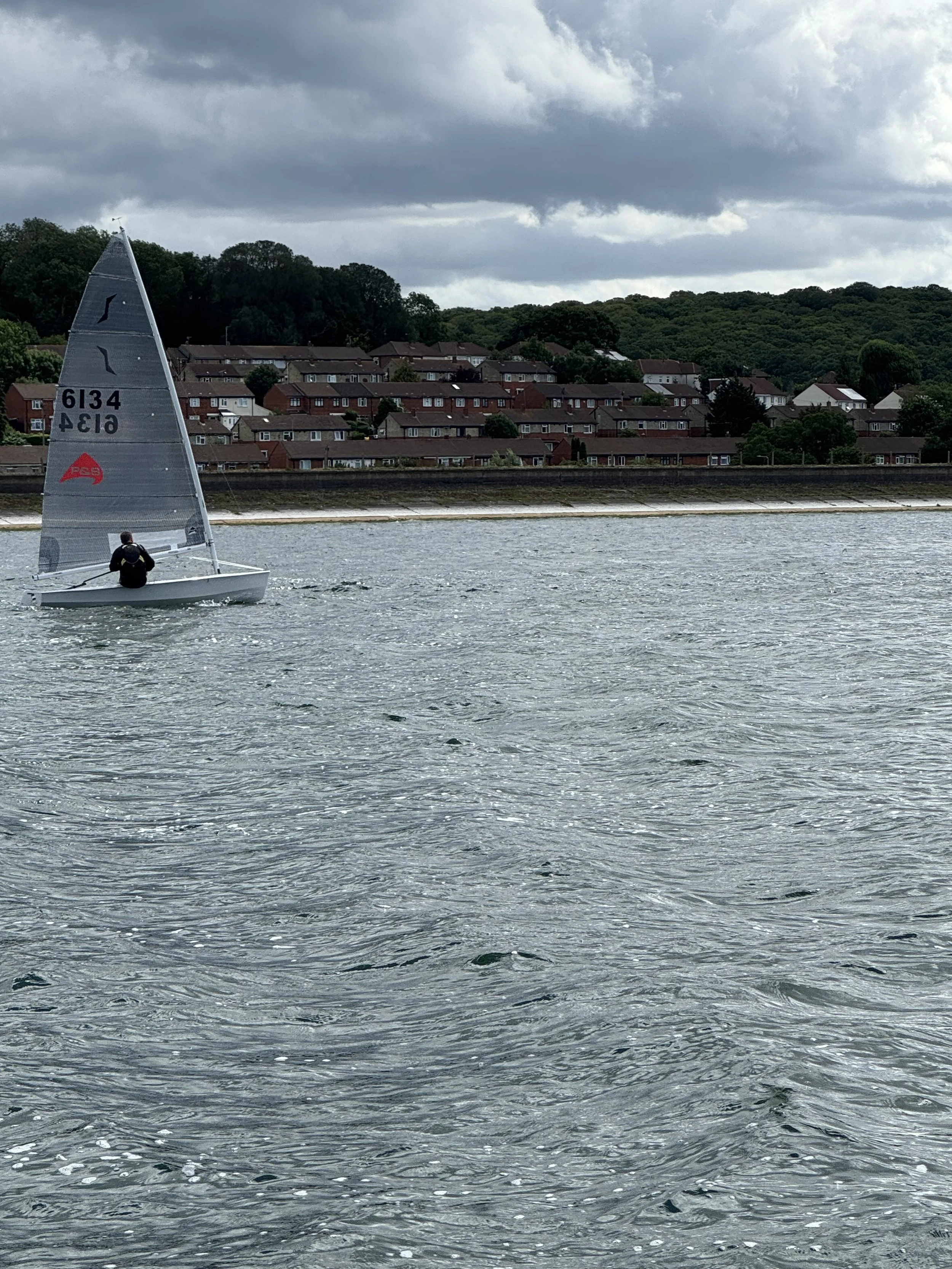
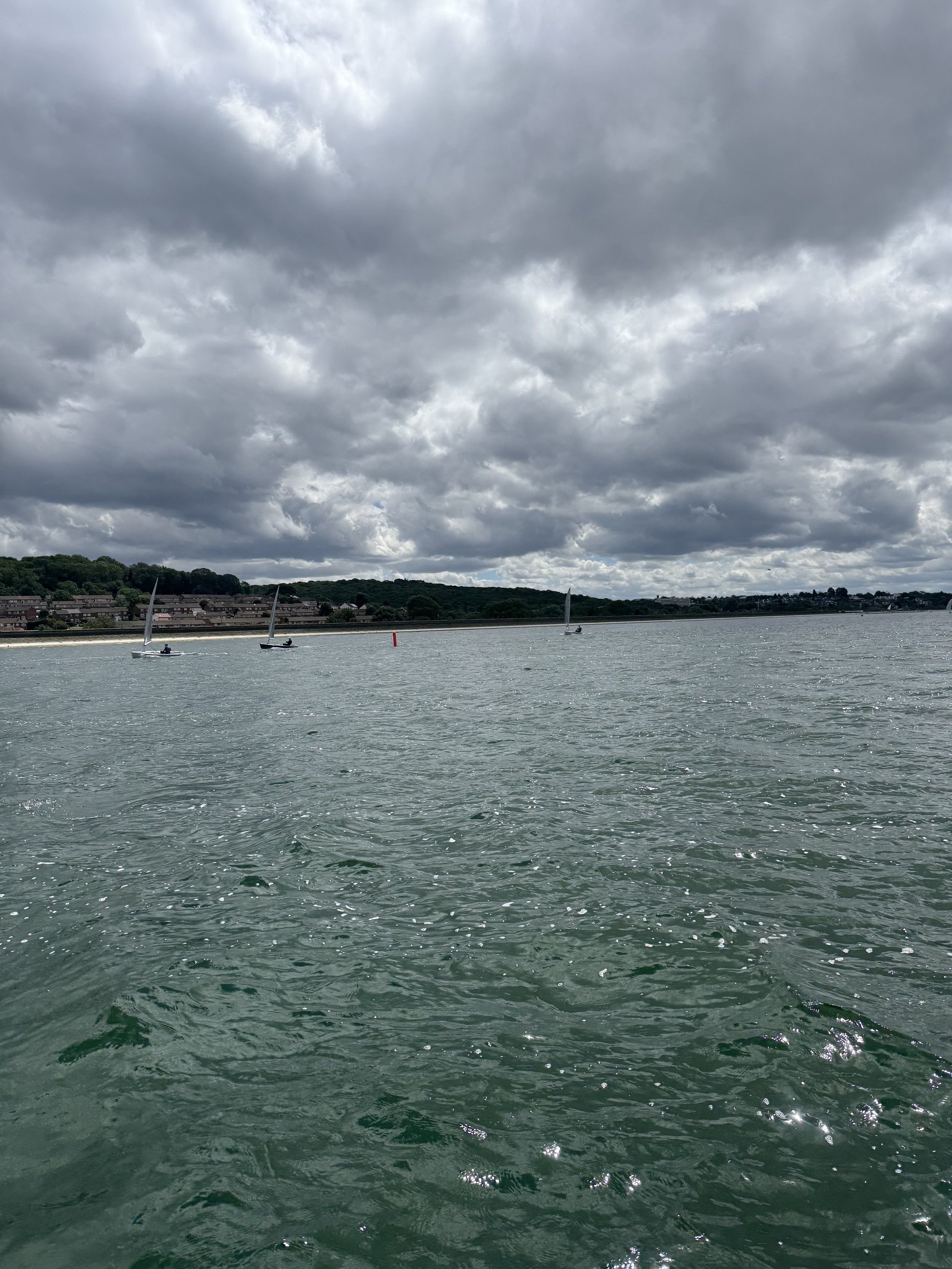
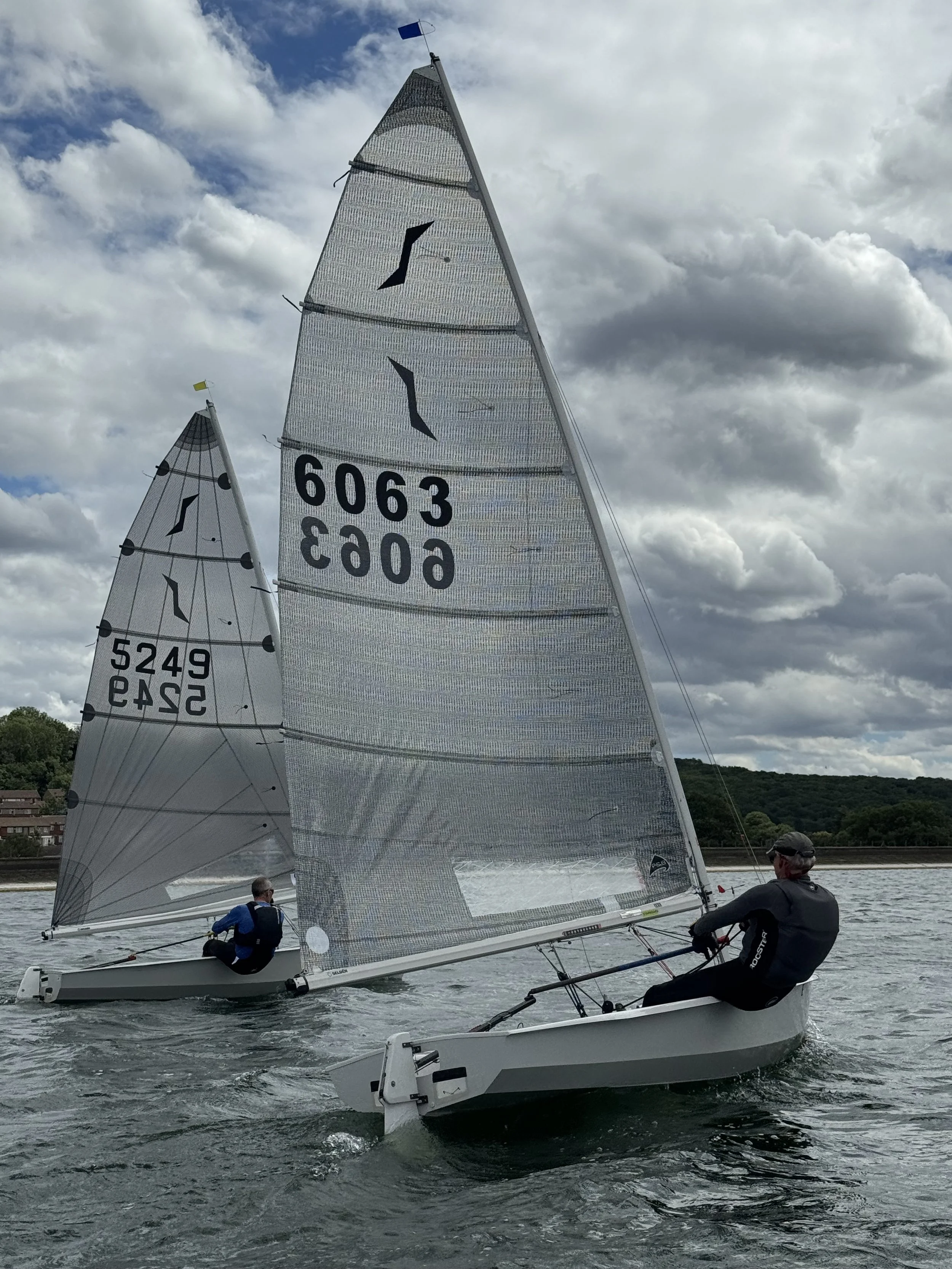
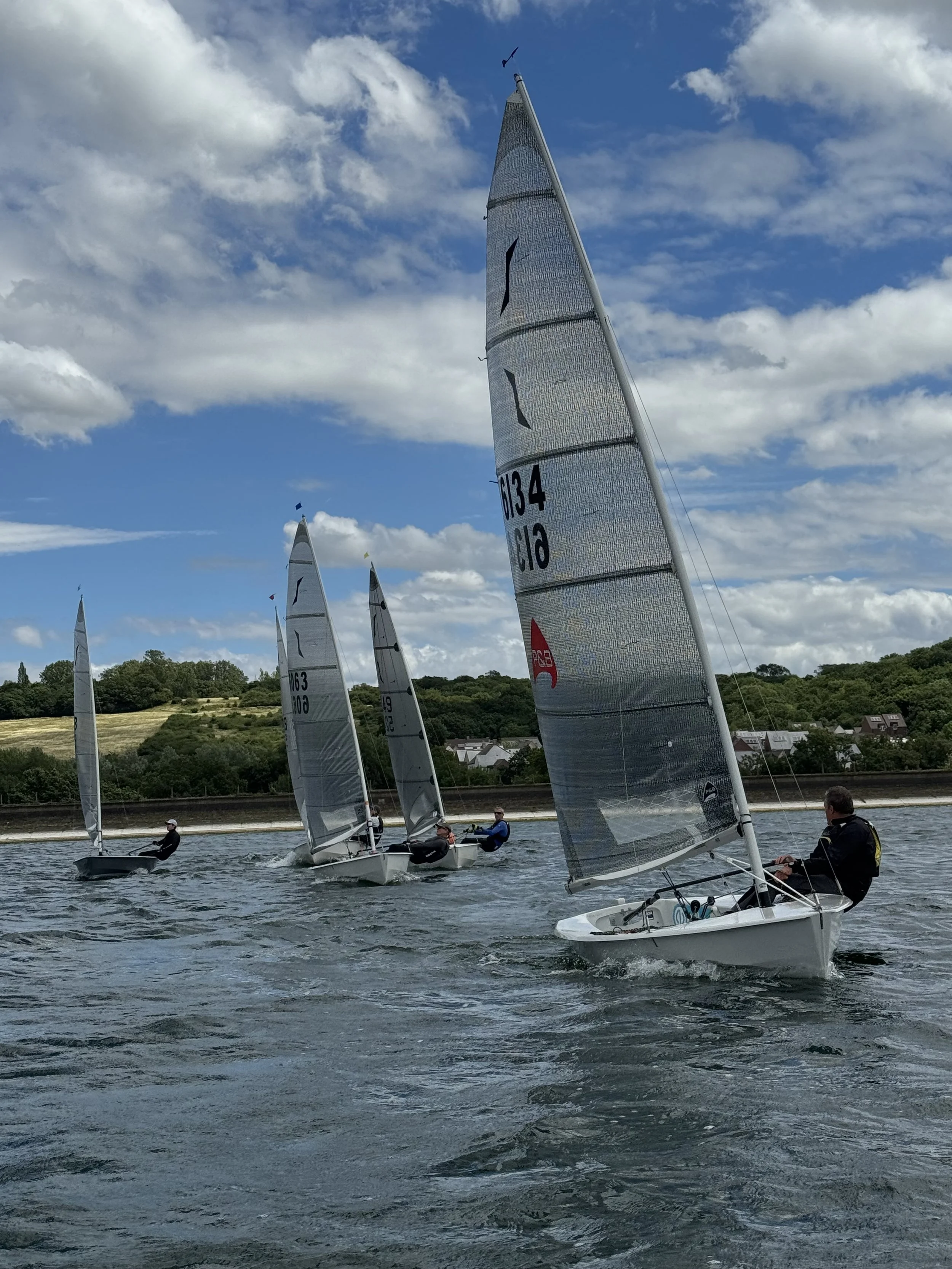
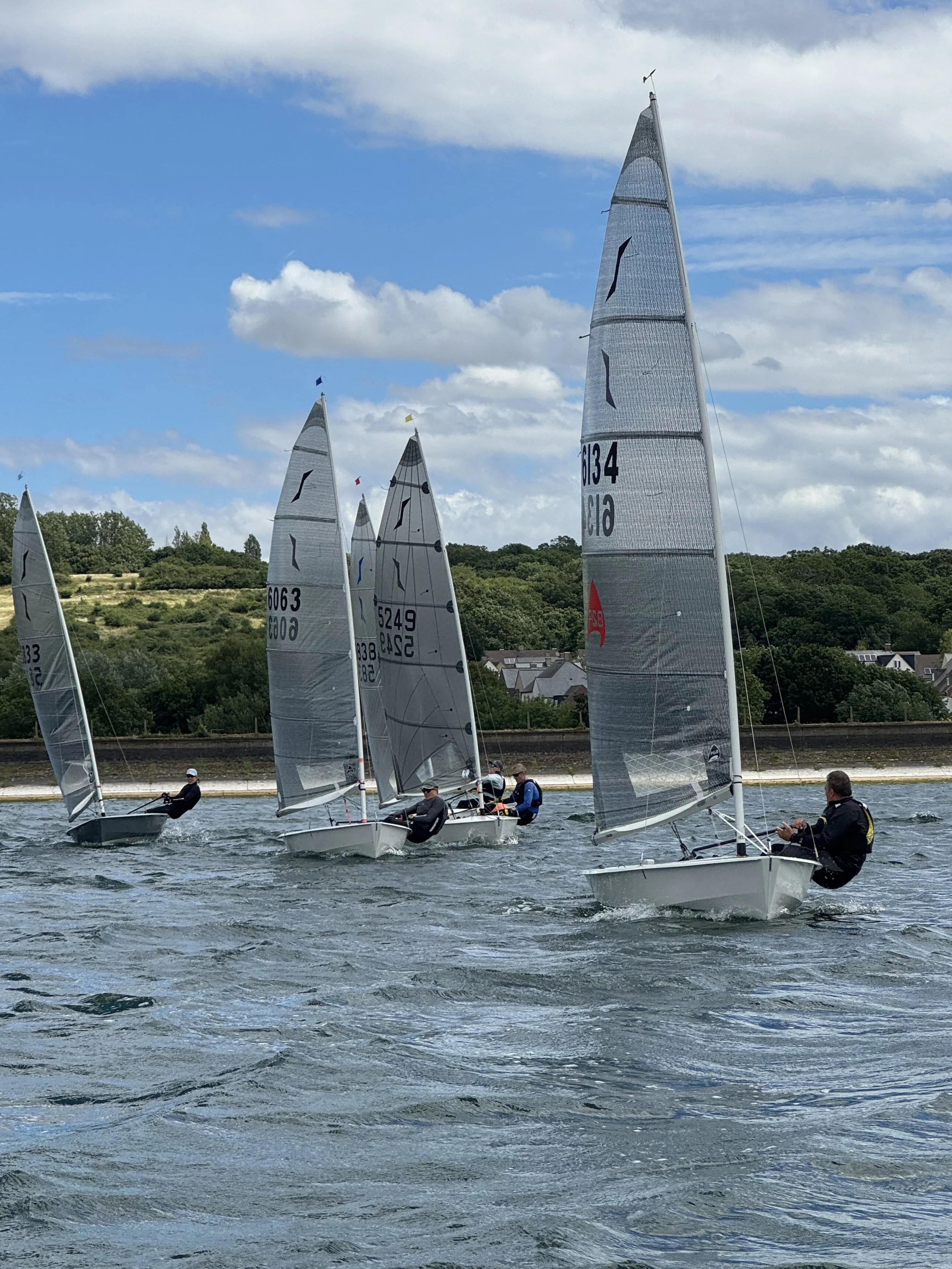
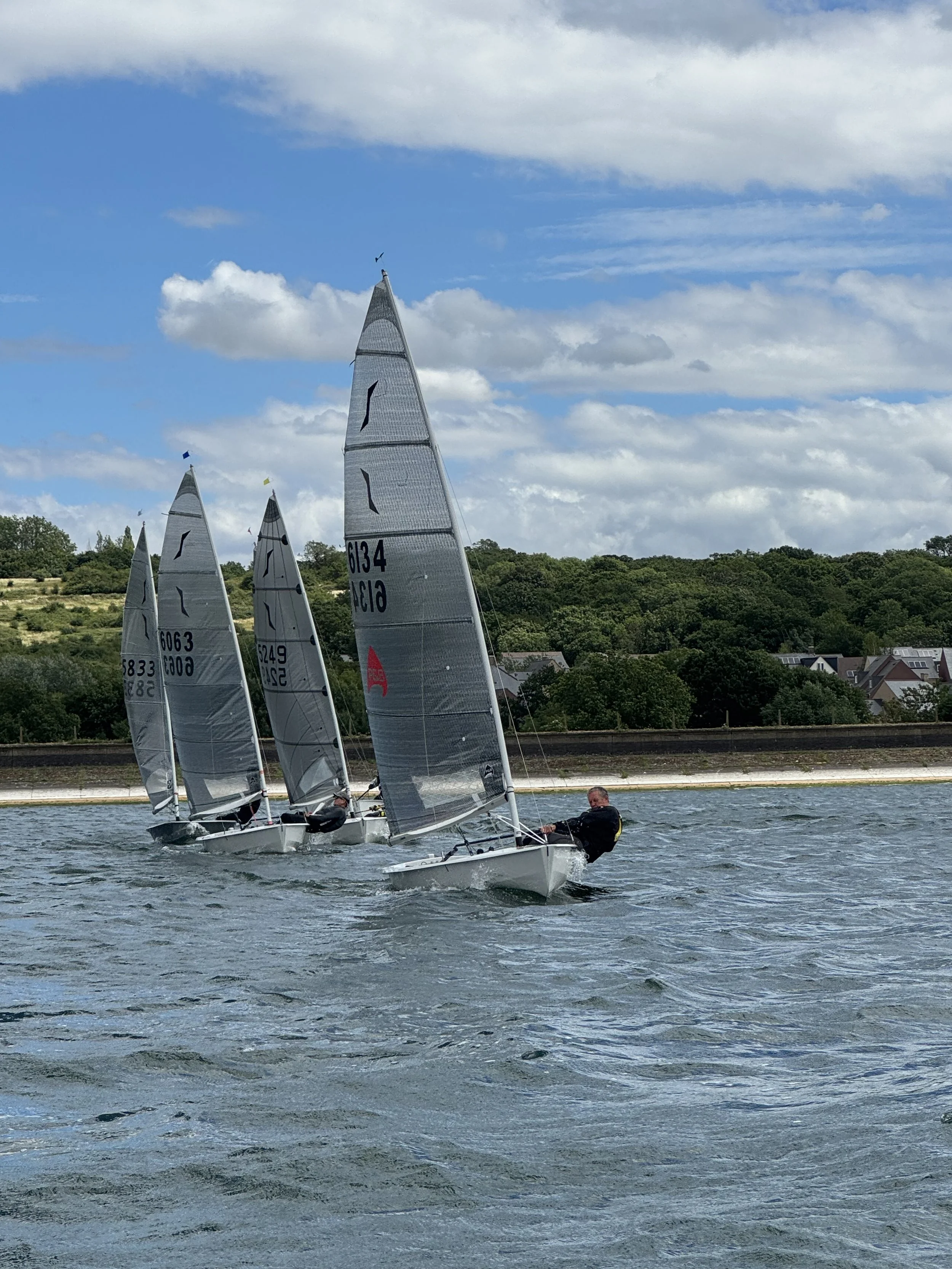
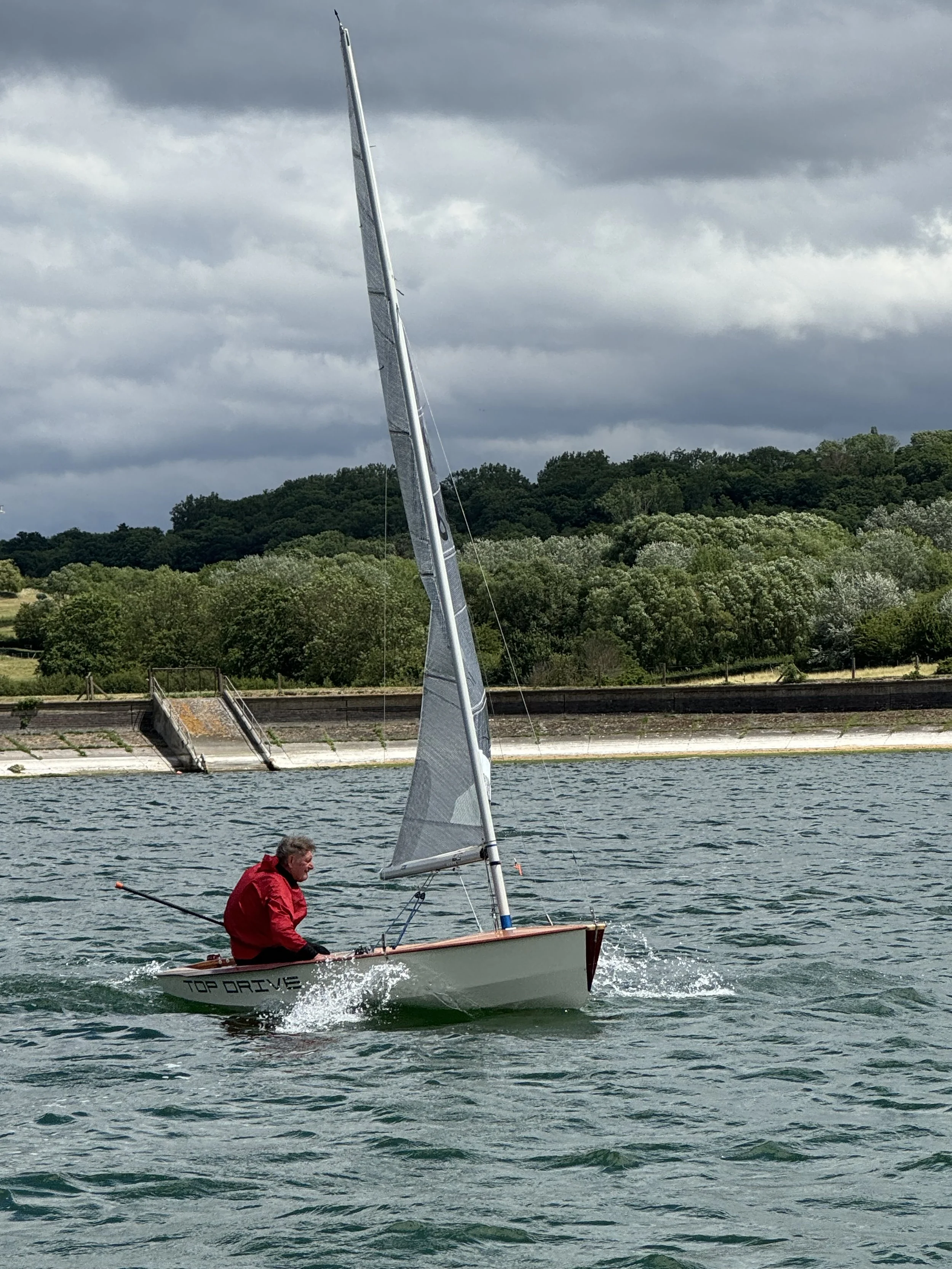
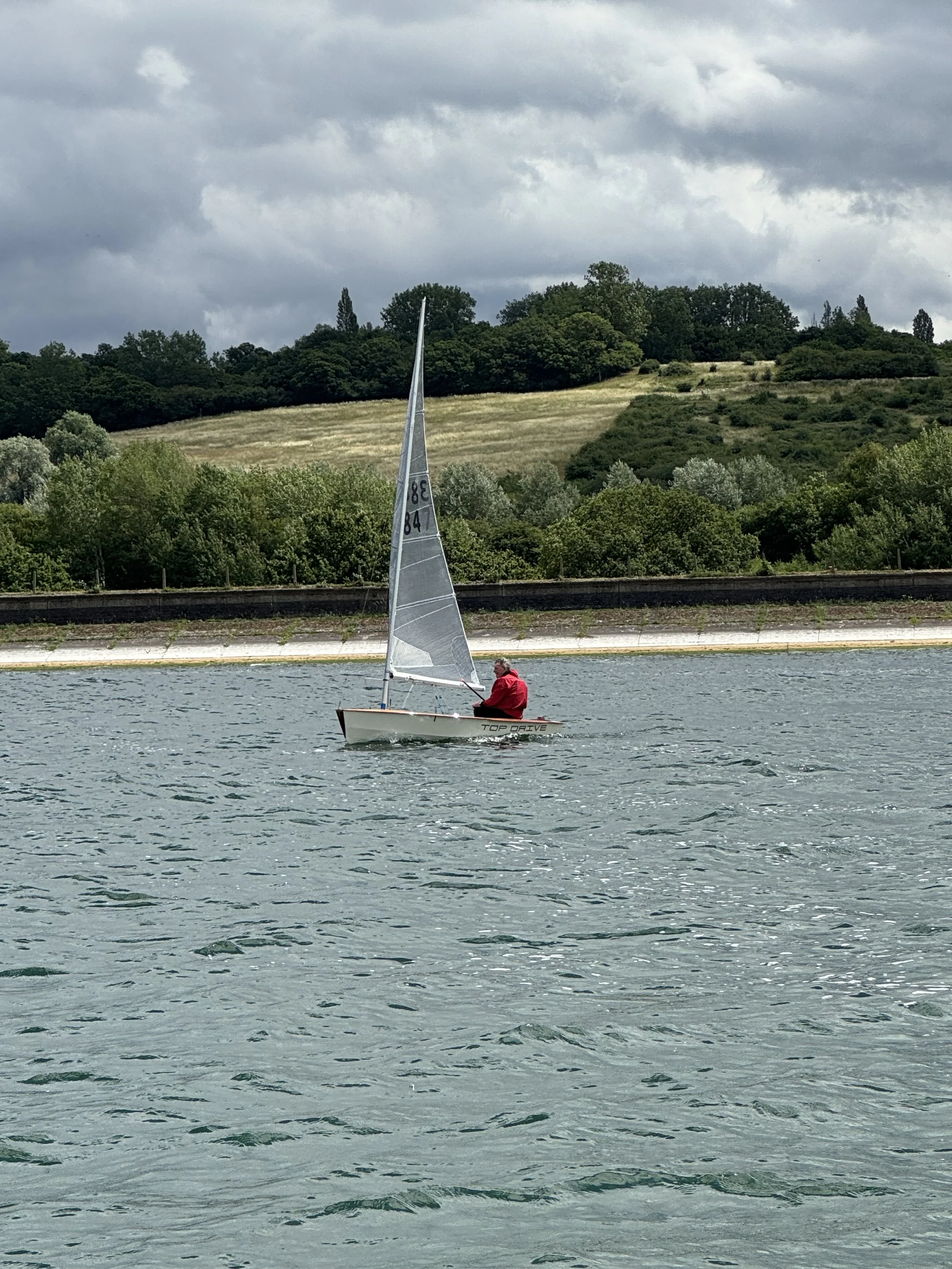
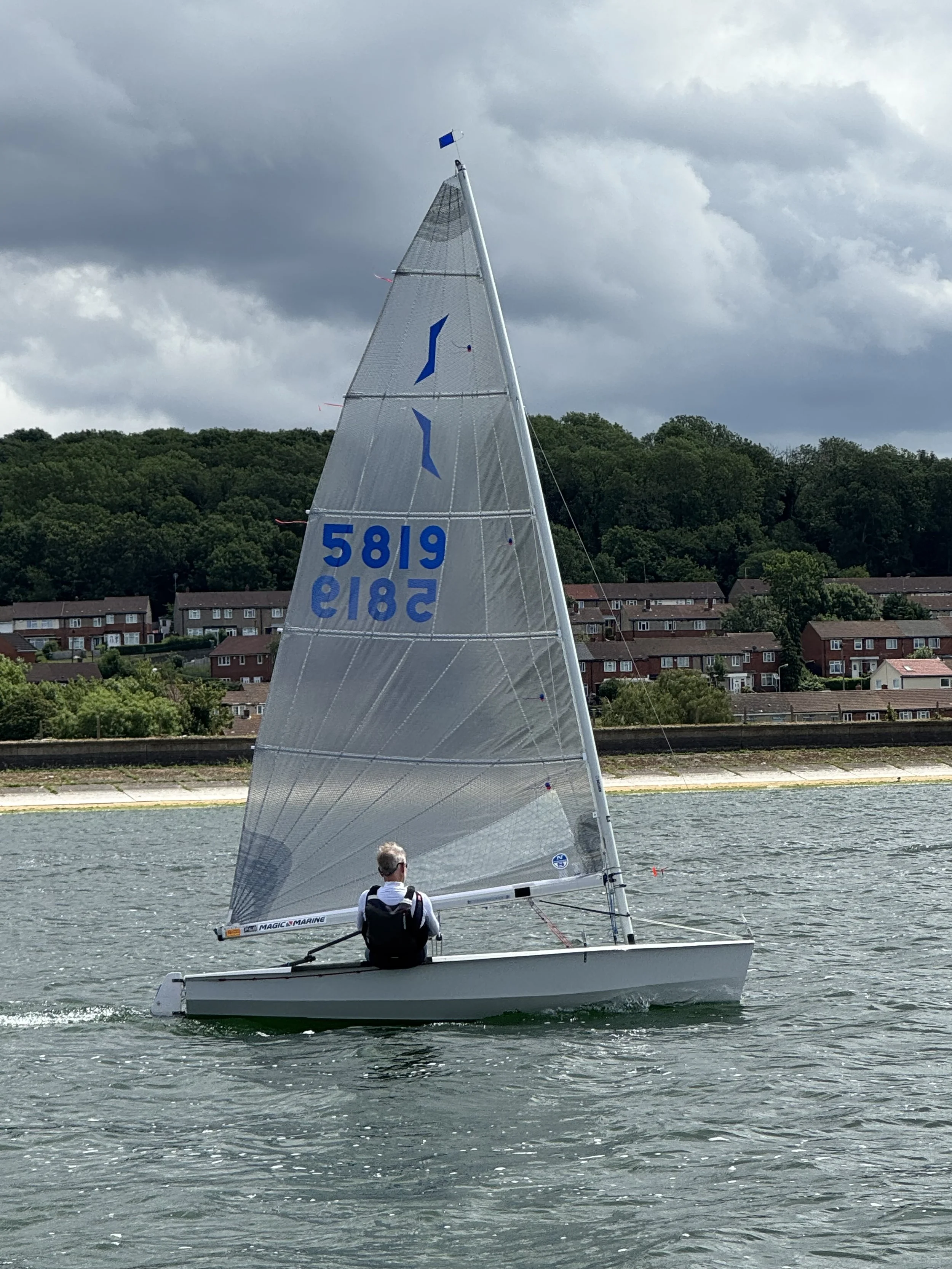
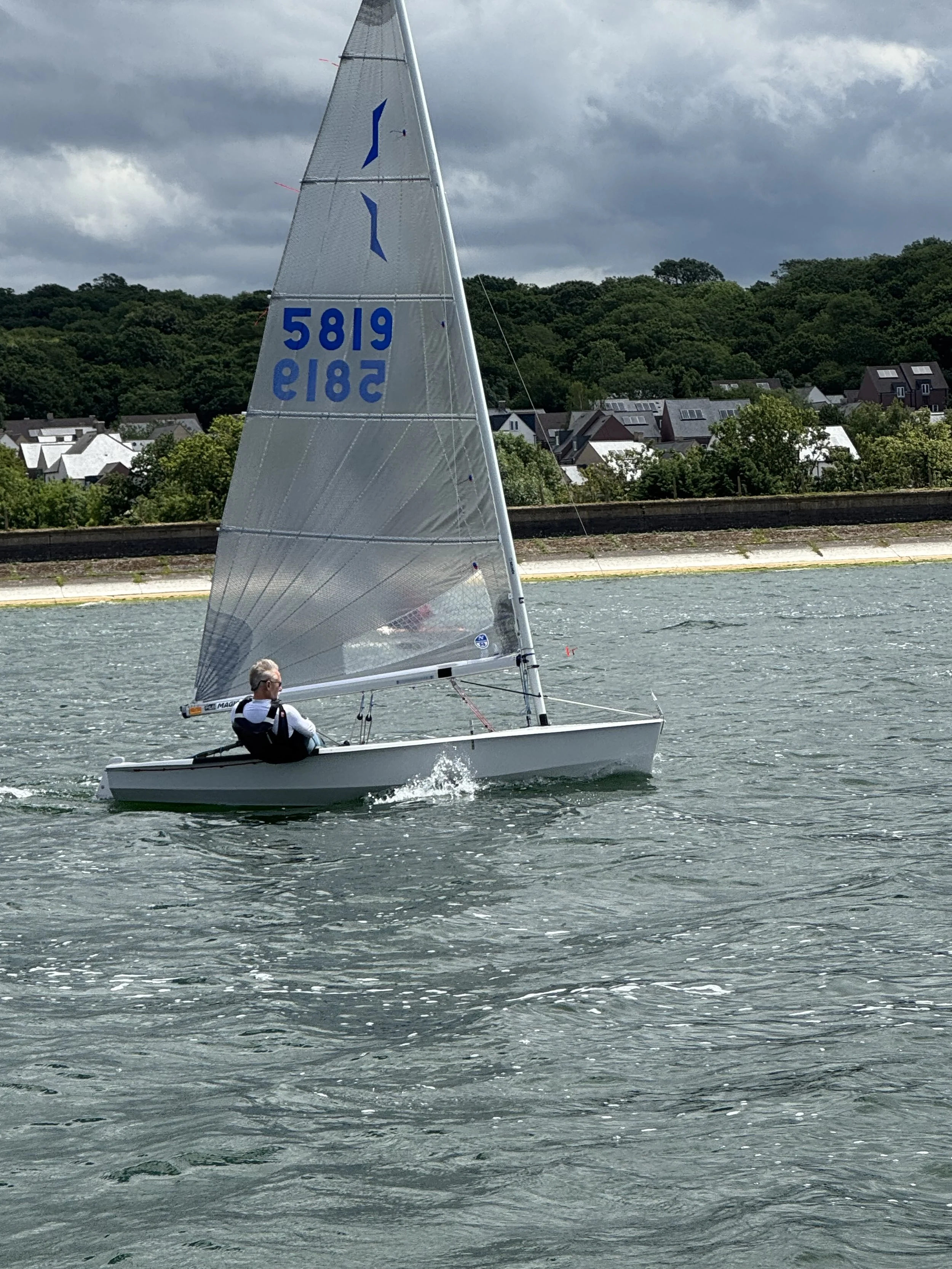
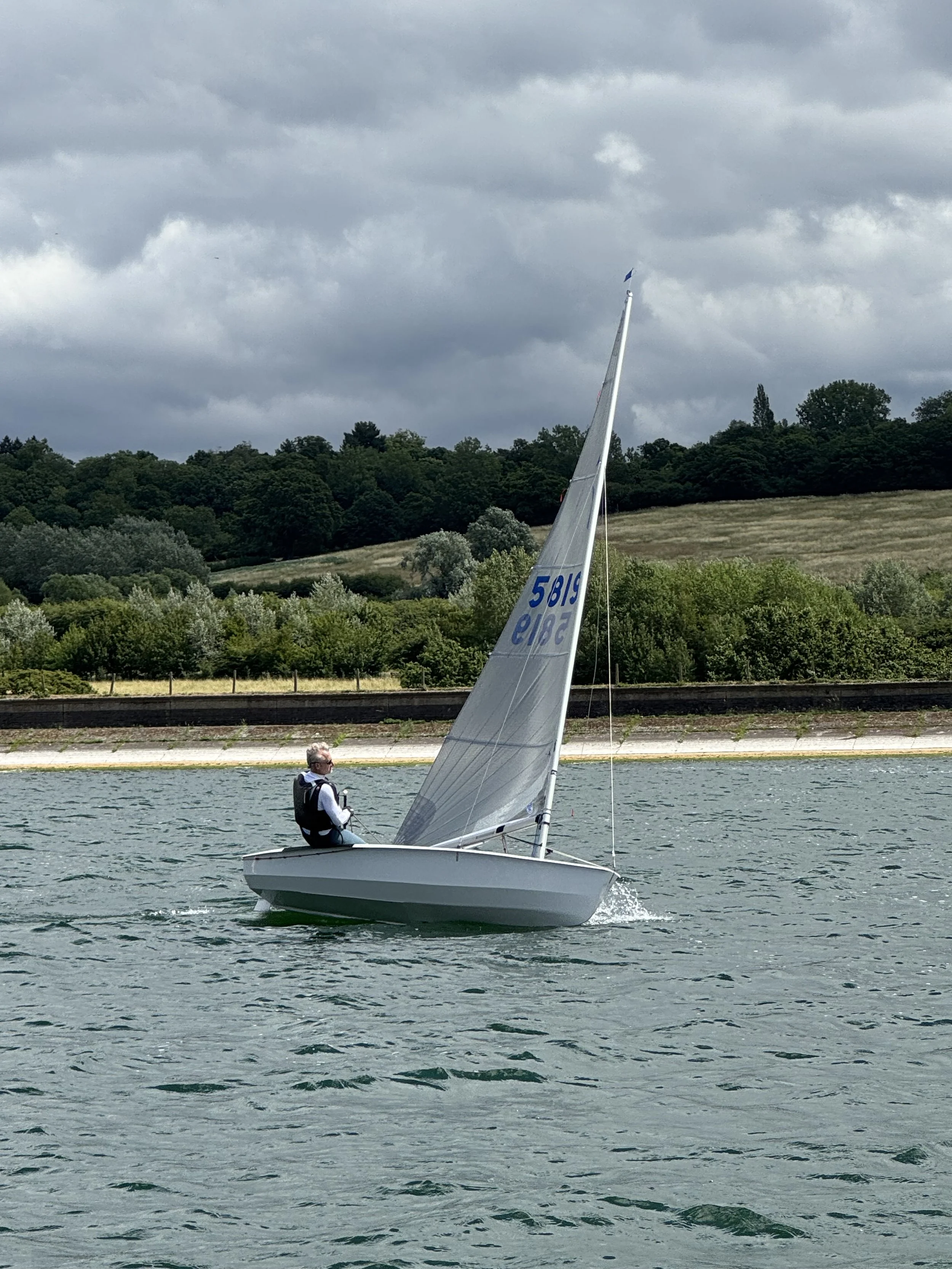
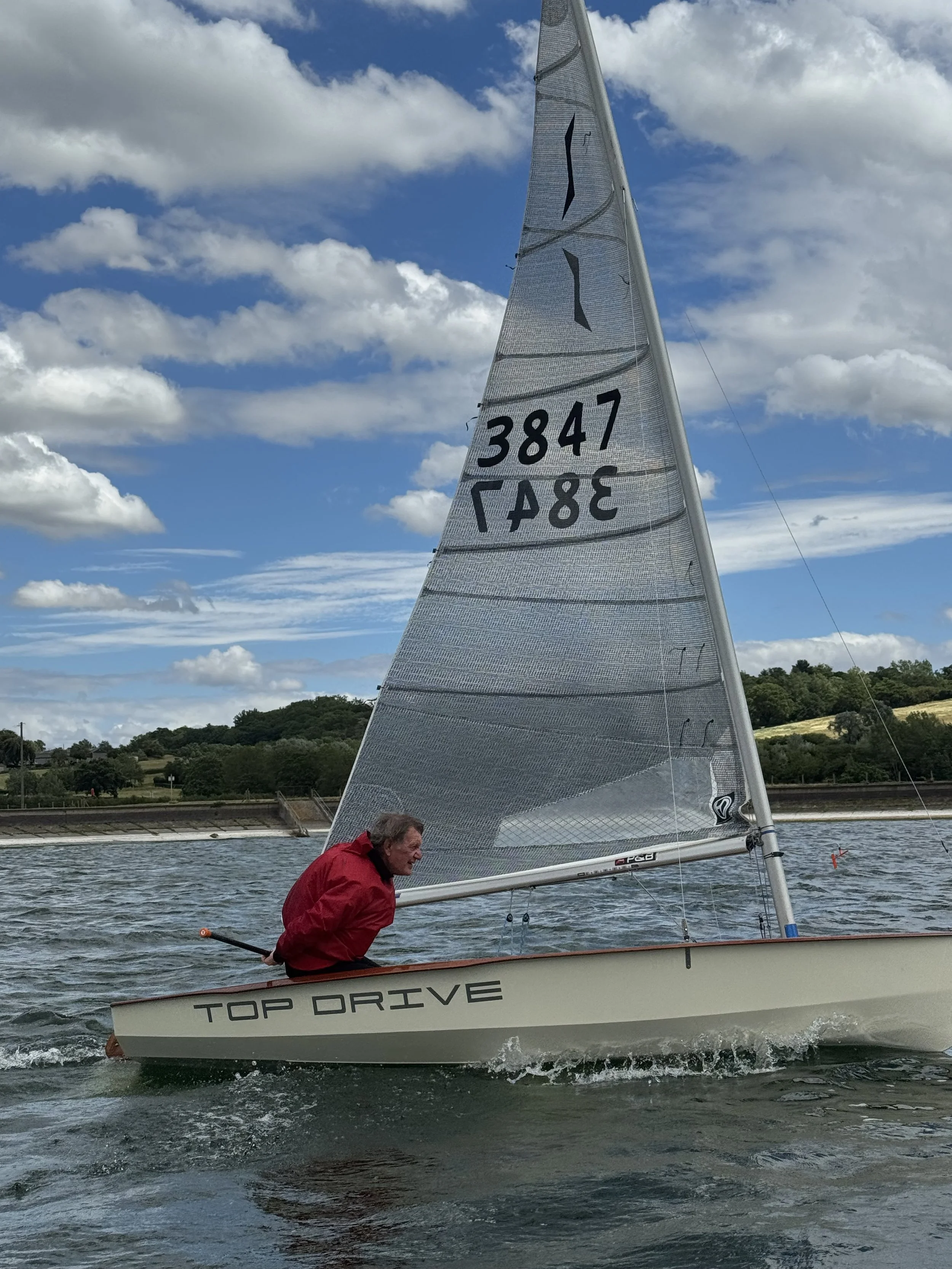
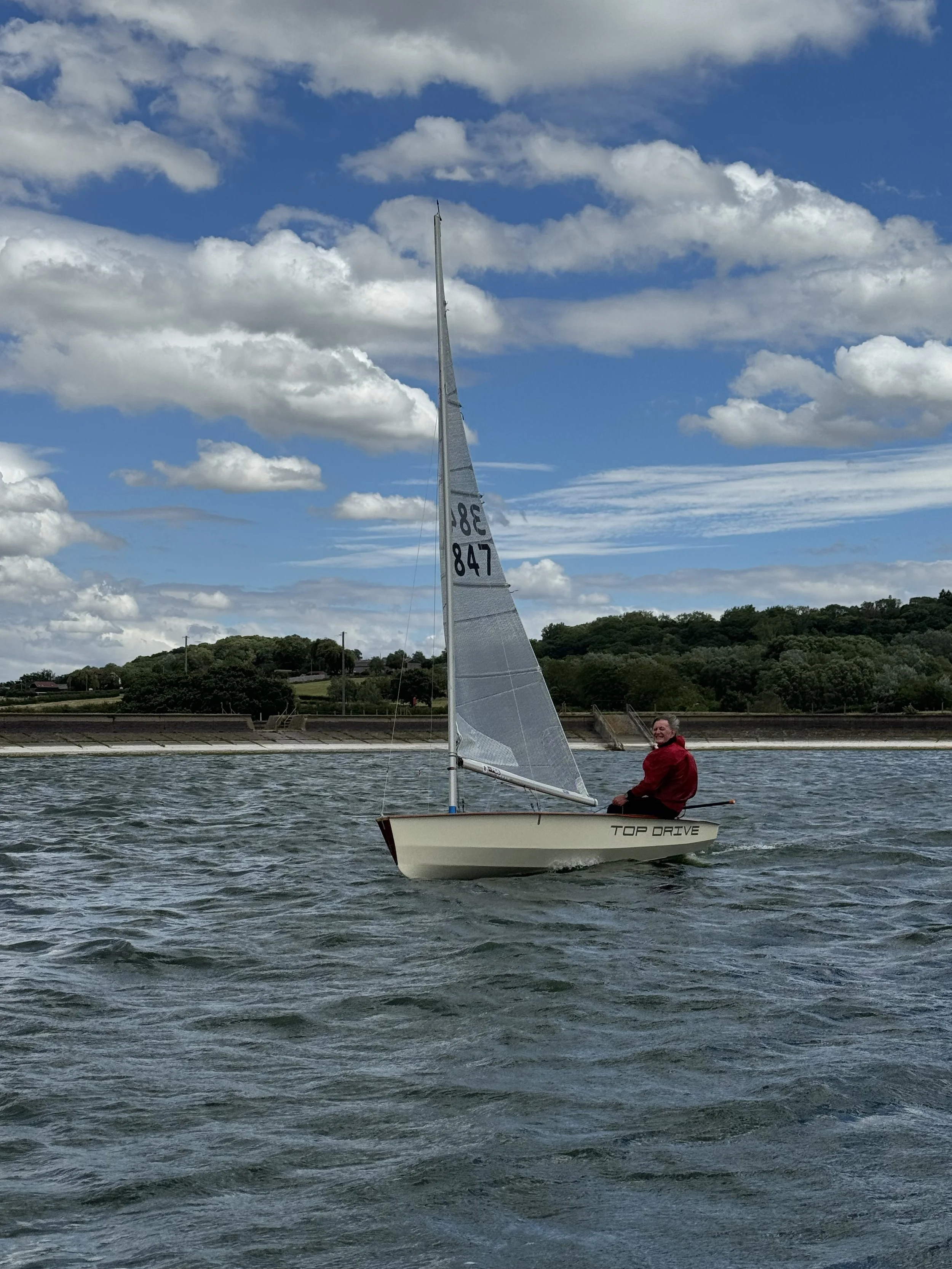
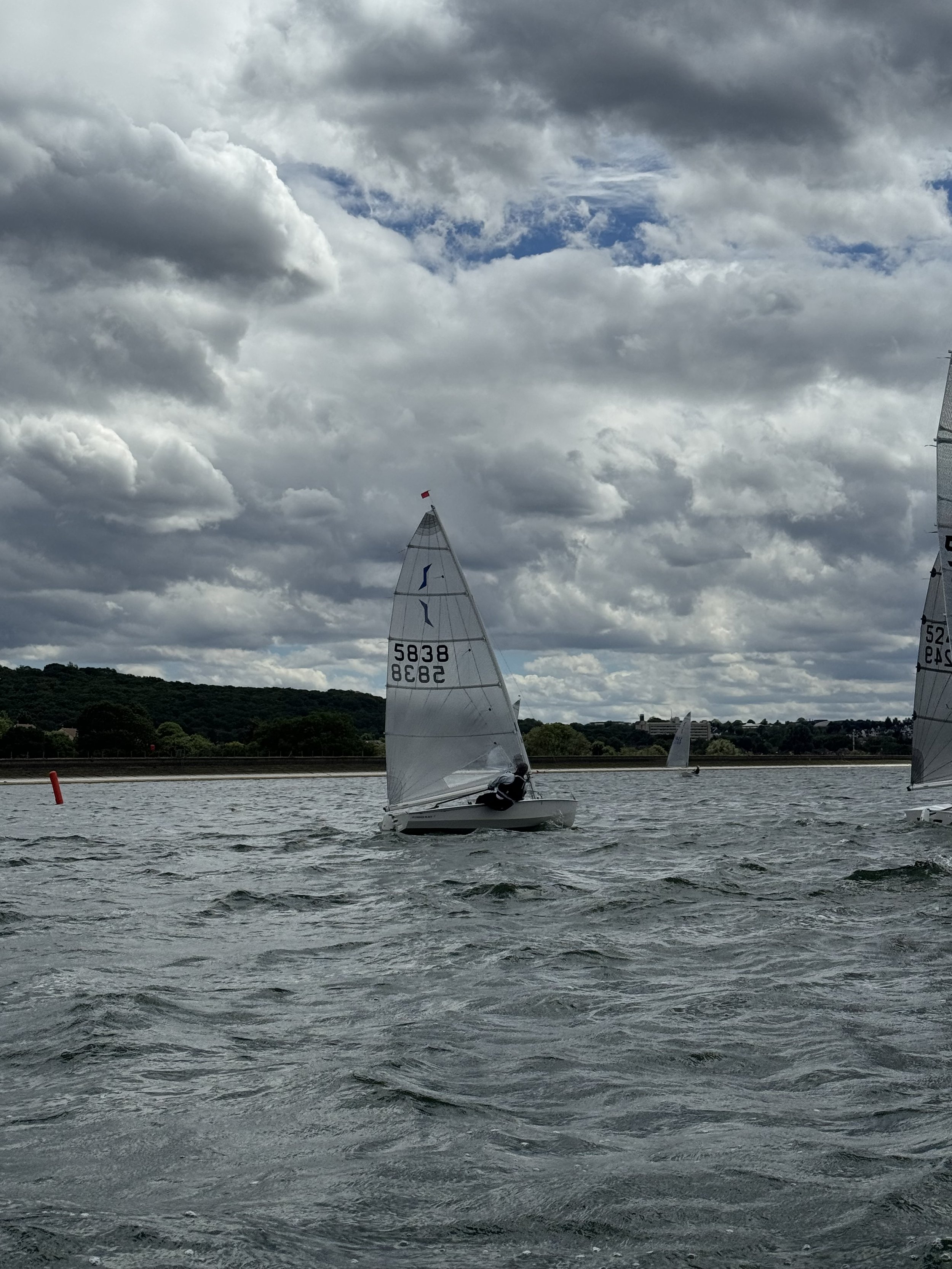
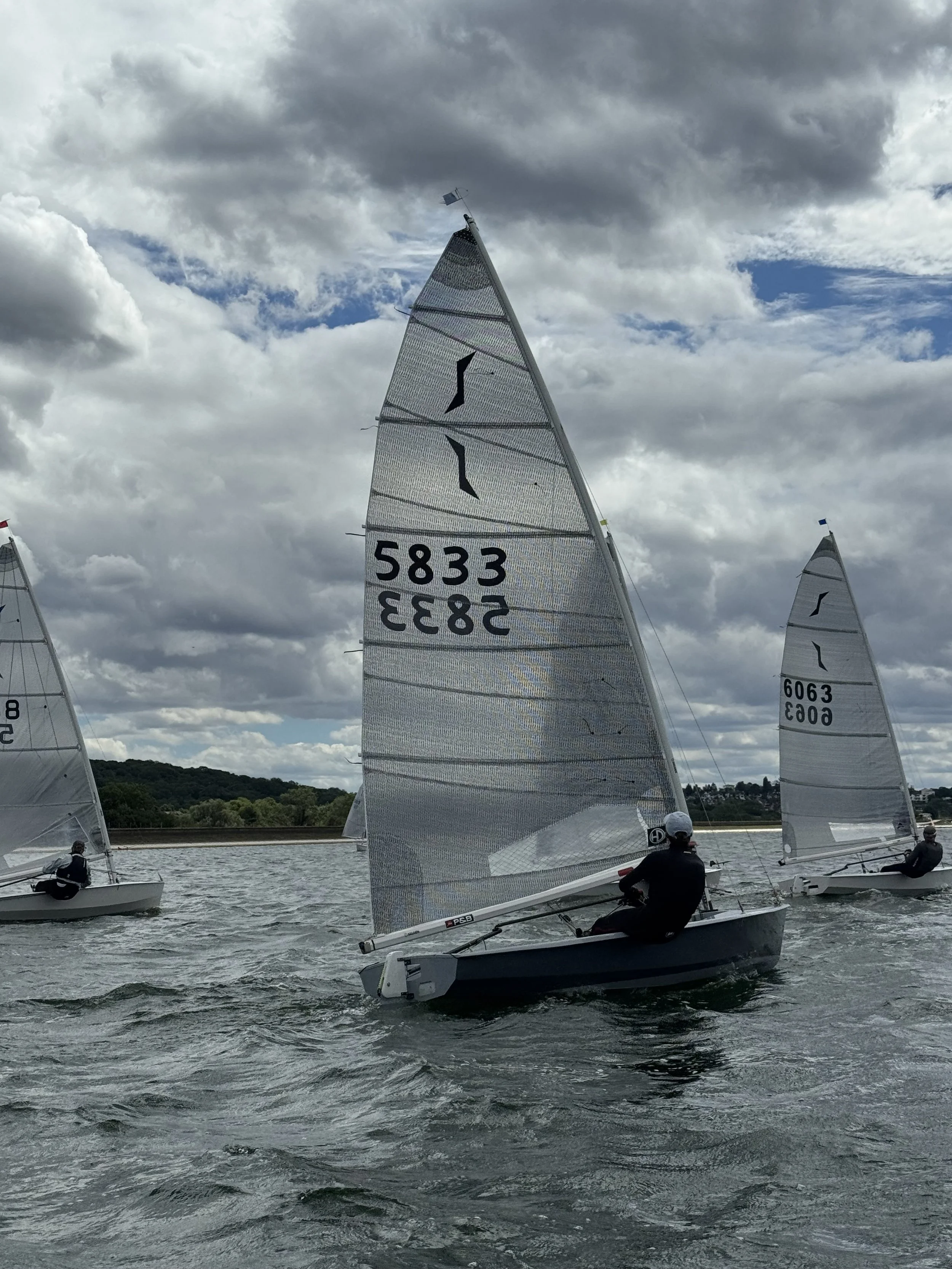
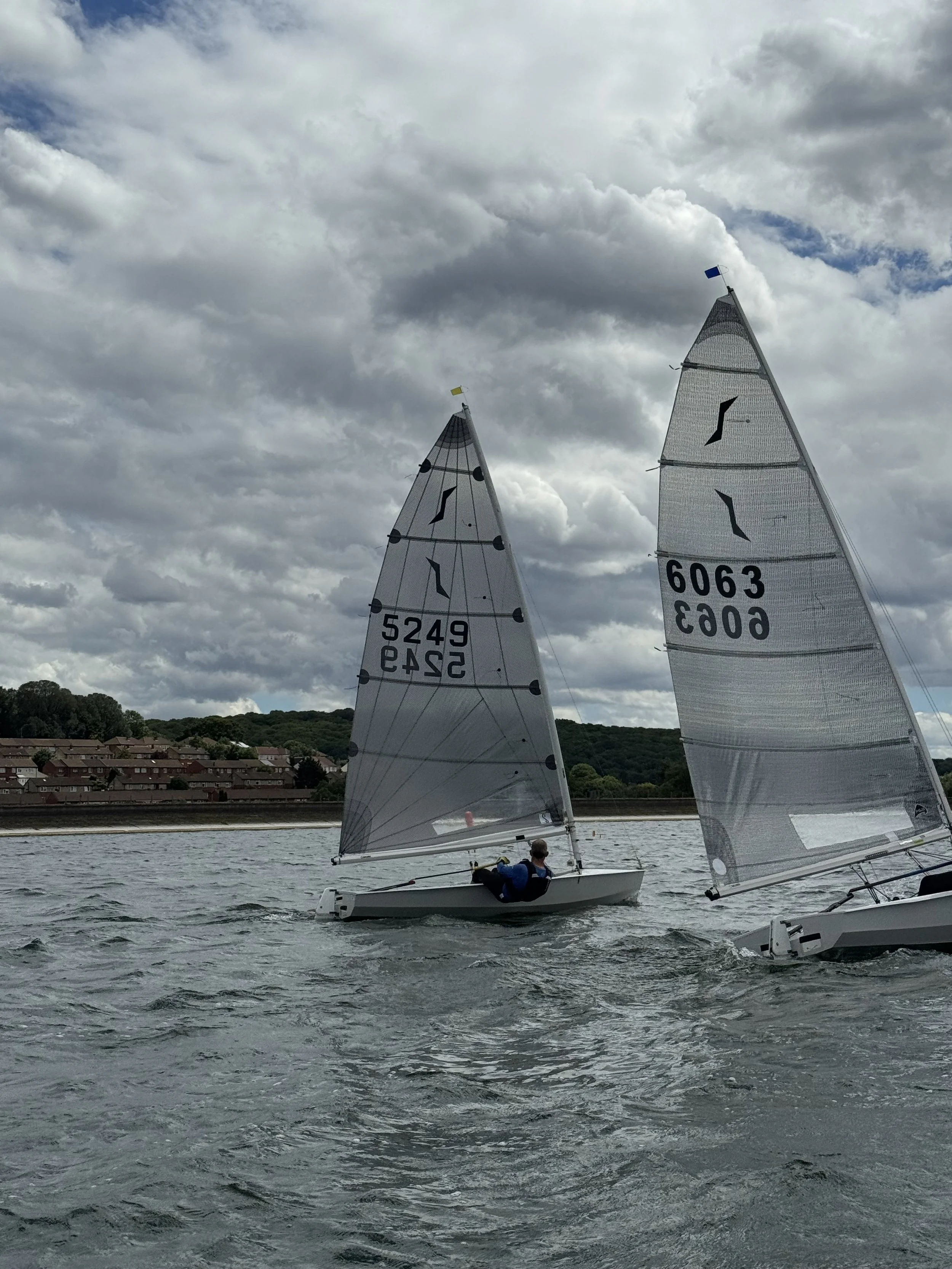
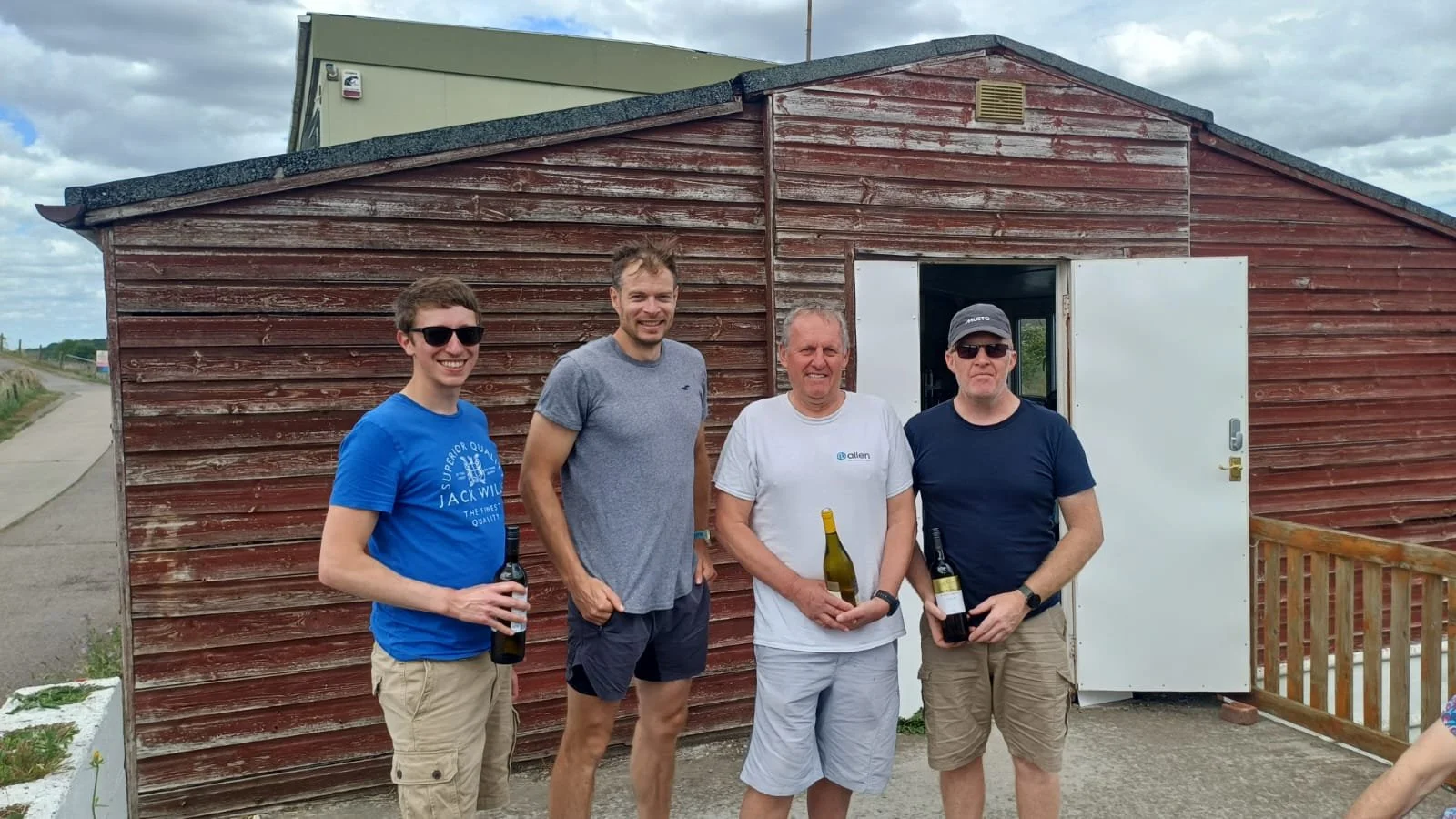
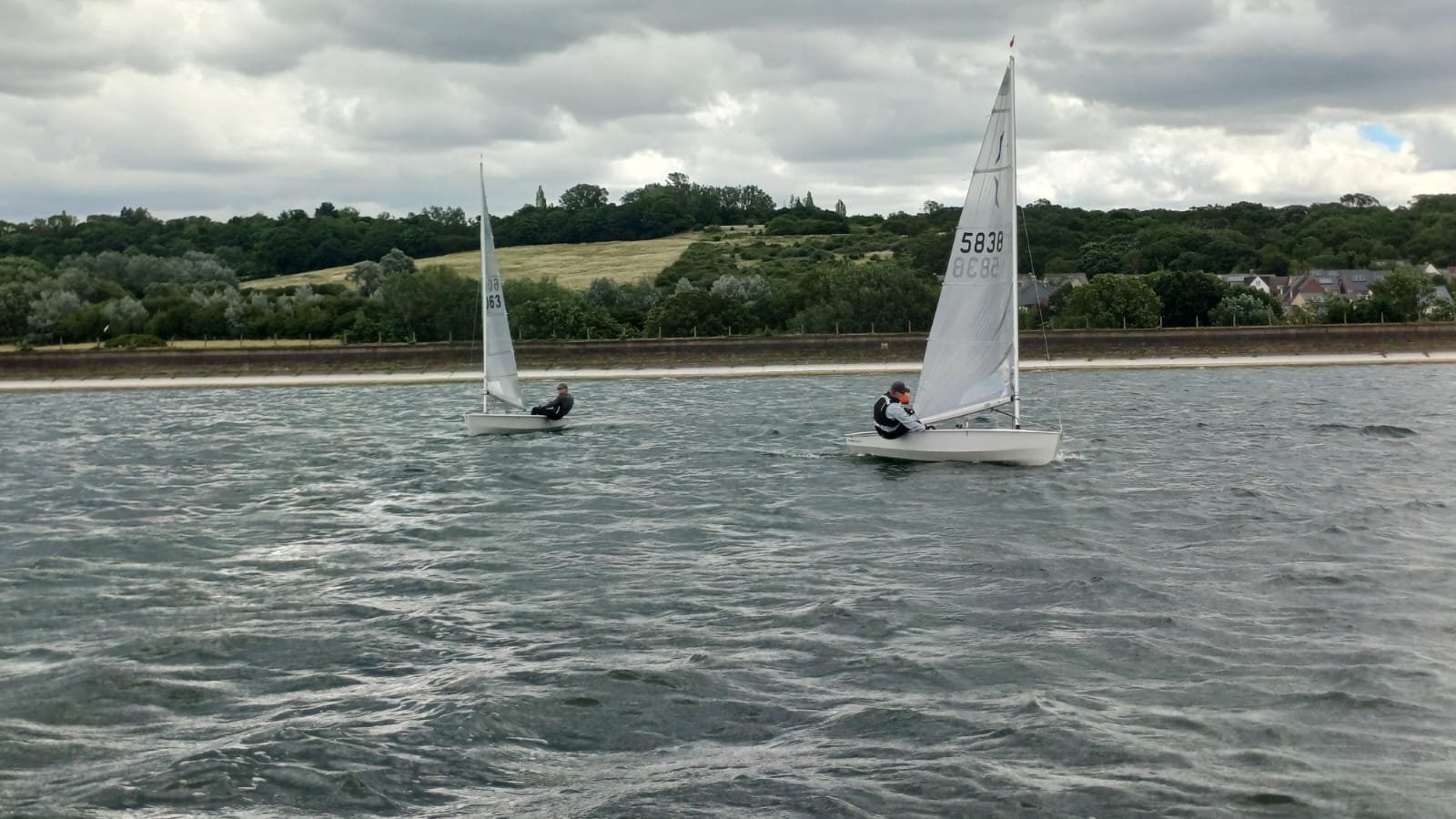
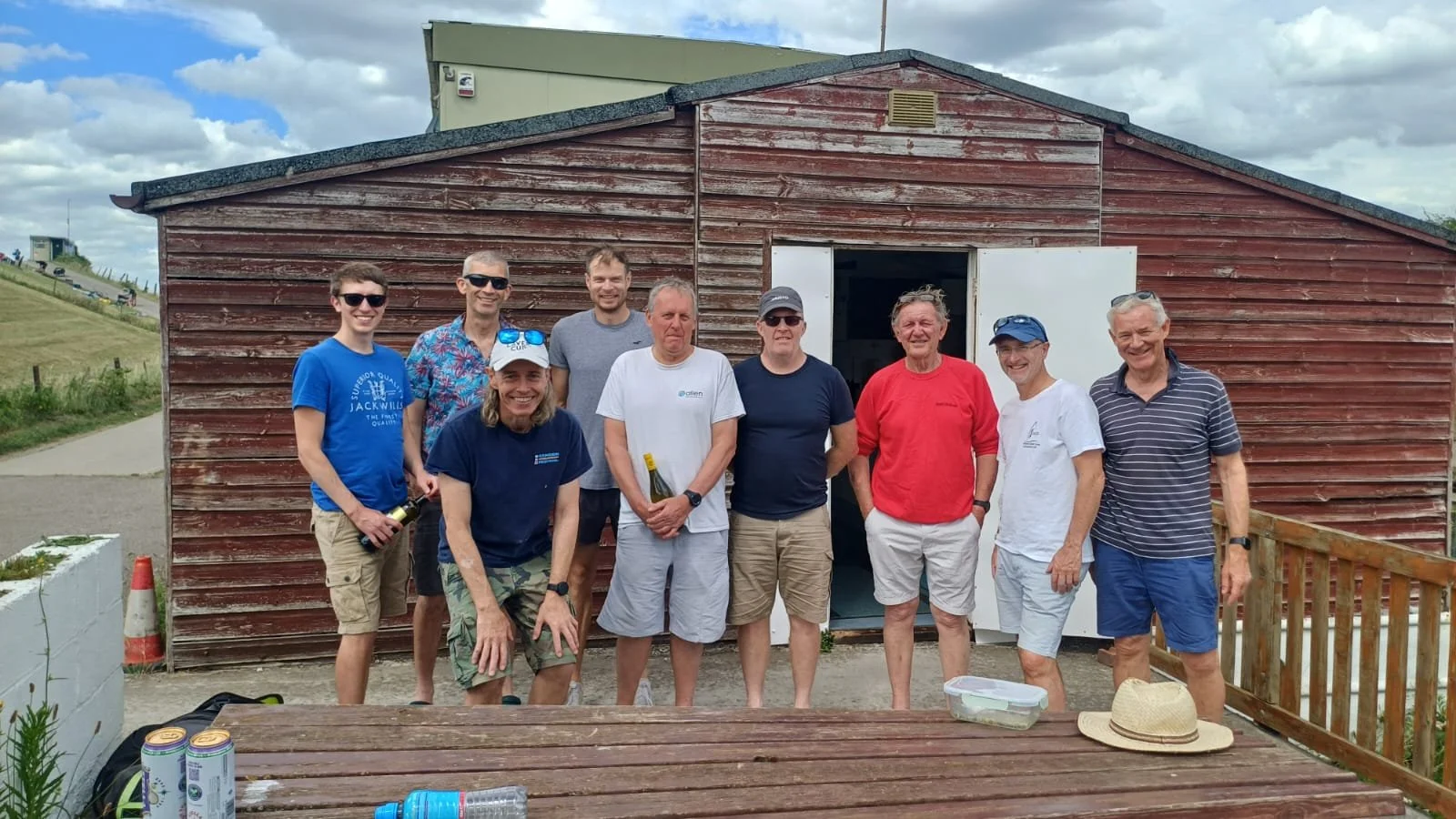
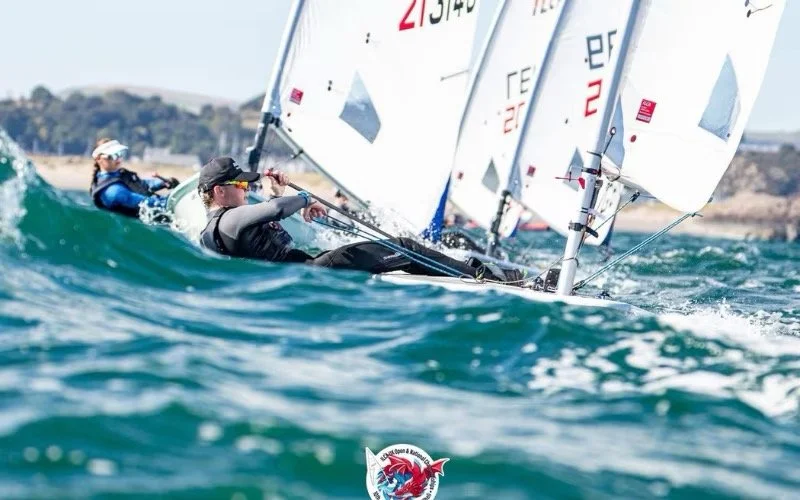
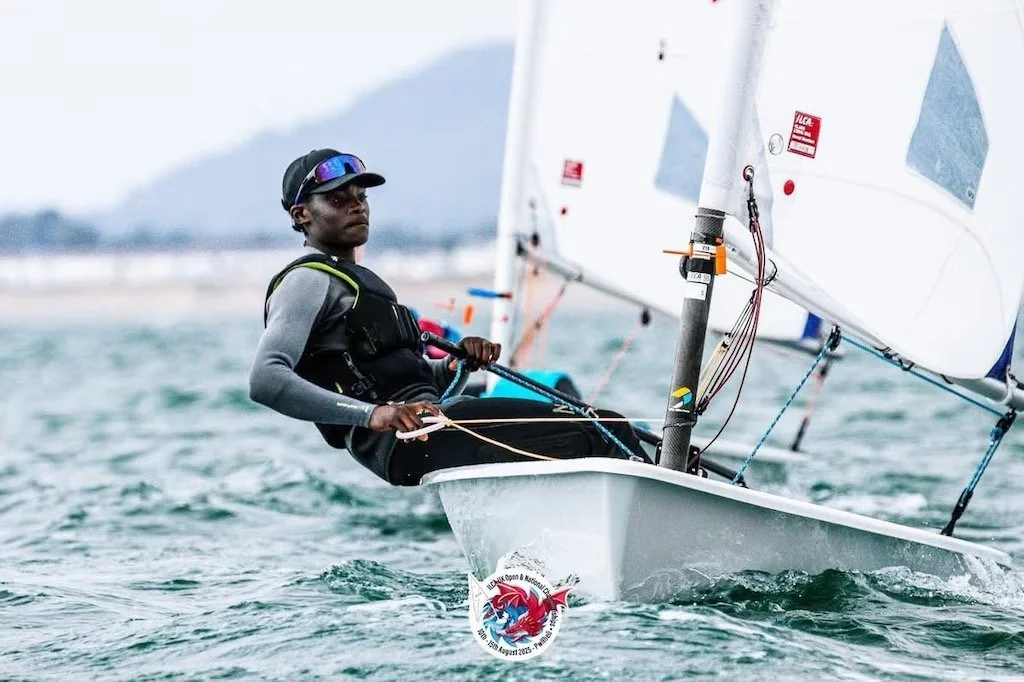
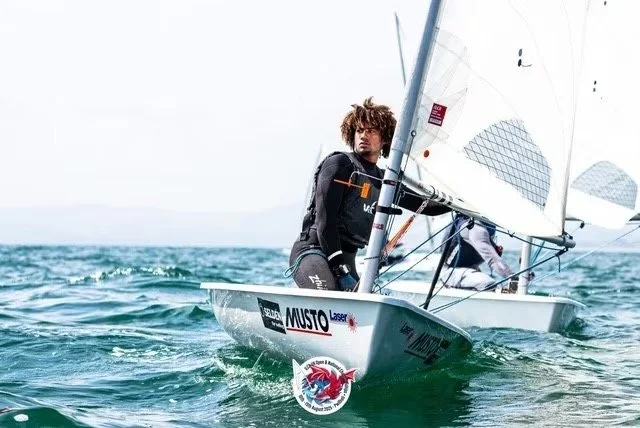
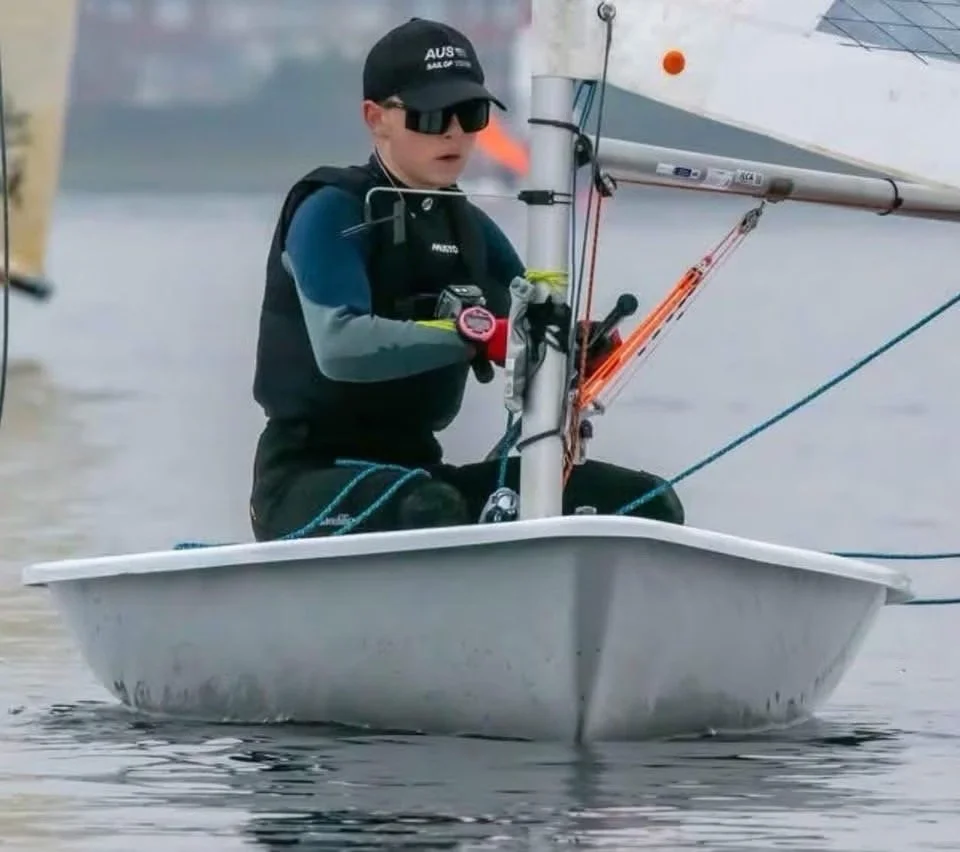
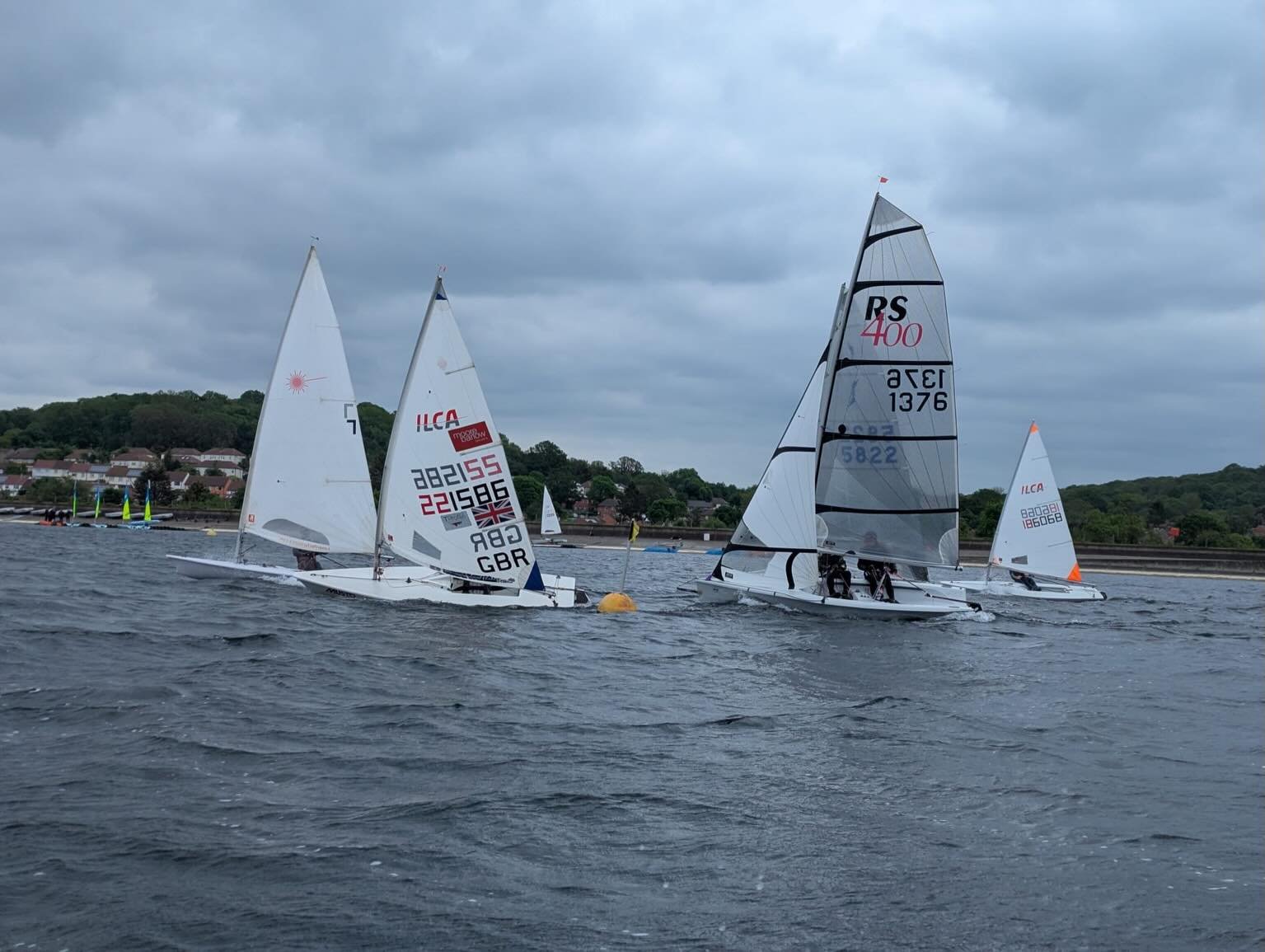
Exciting finale to ILCA First Sunday summer series.

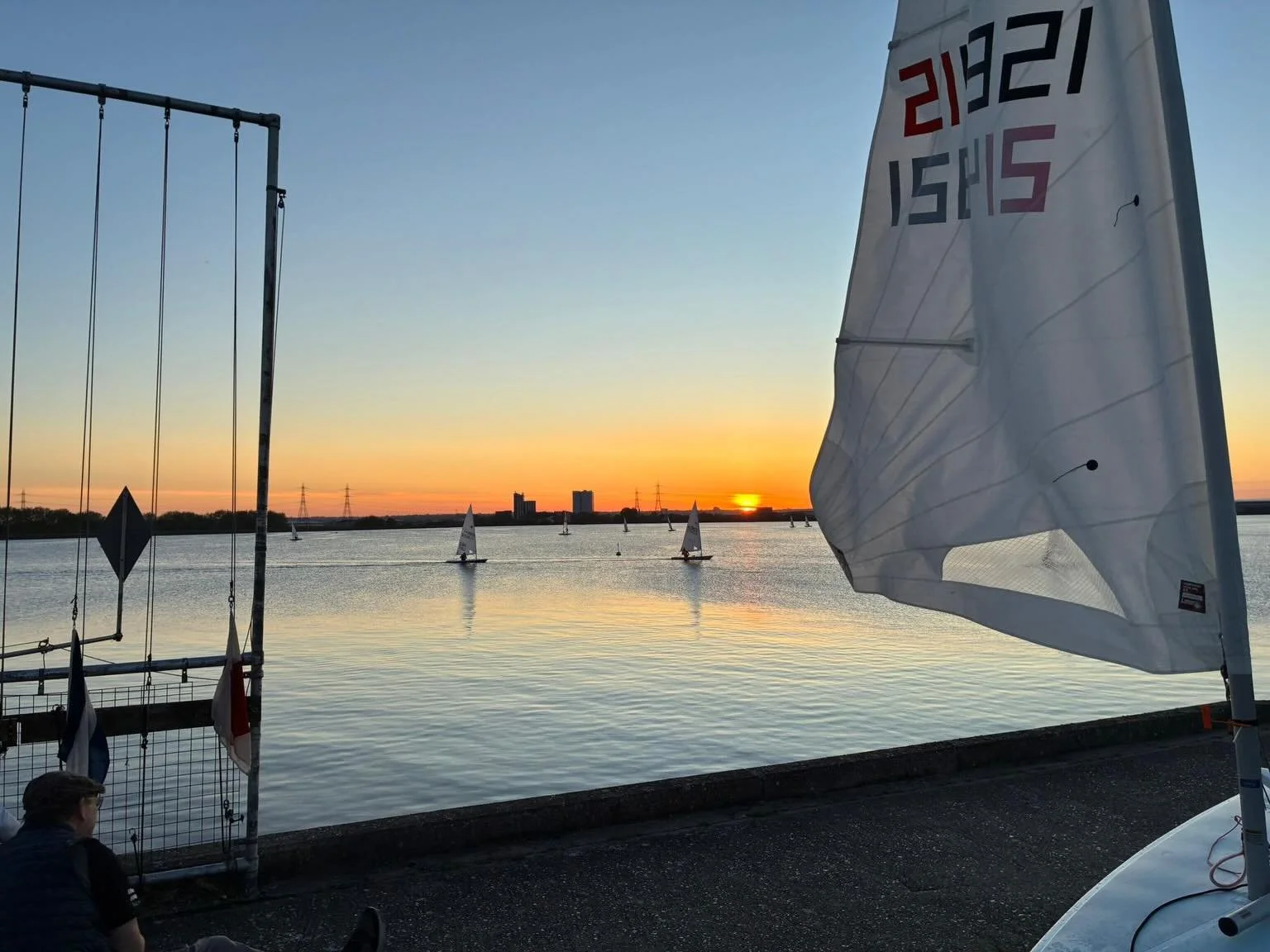
The summer series of King George’s ILCA First Sunday concluded today, 06-Sep-26.

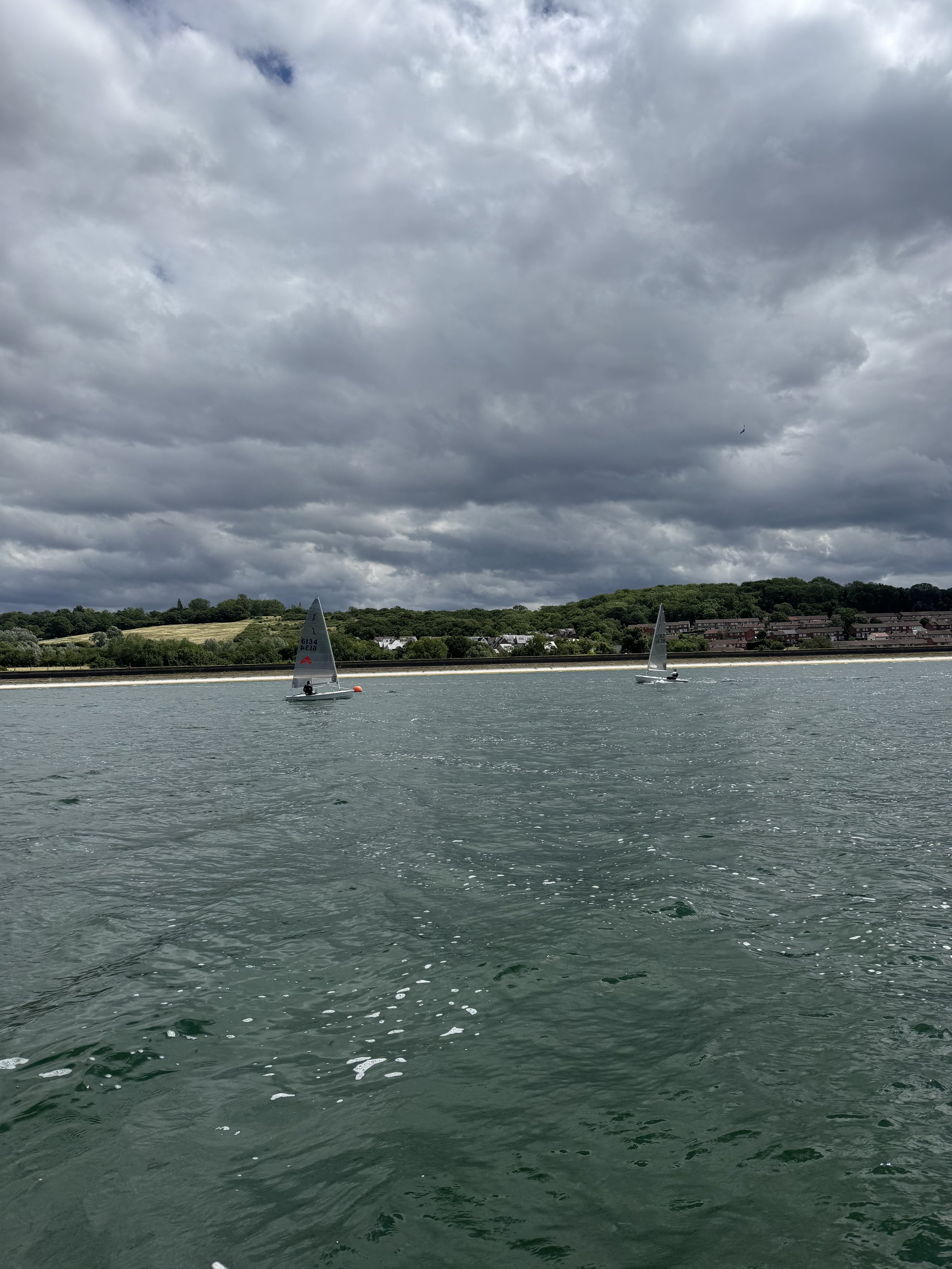
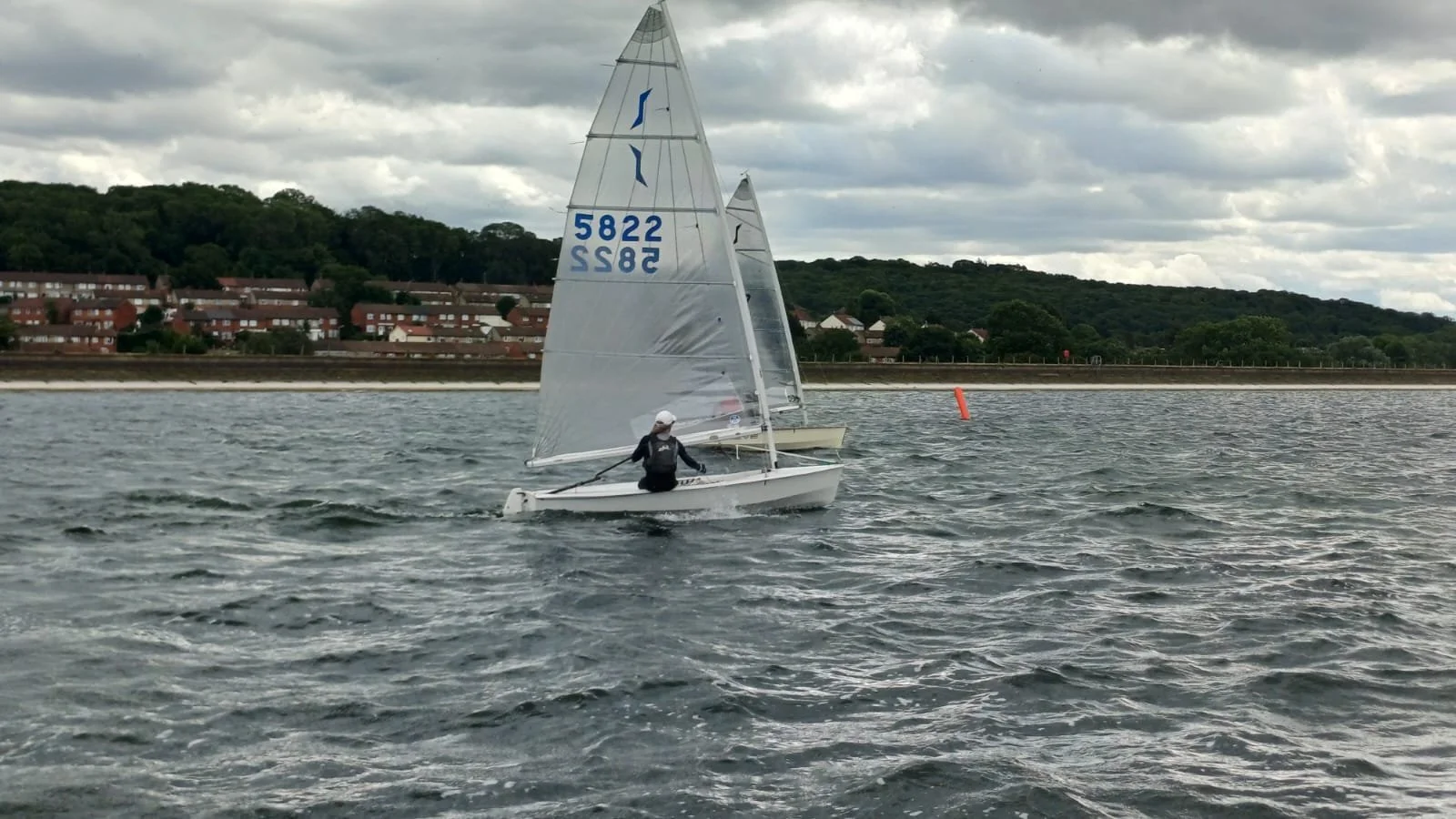
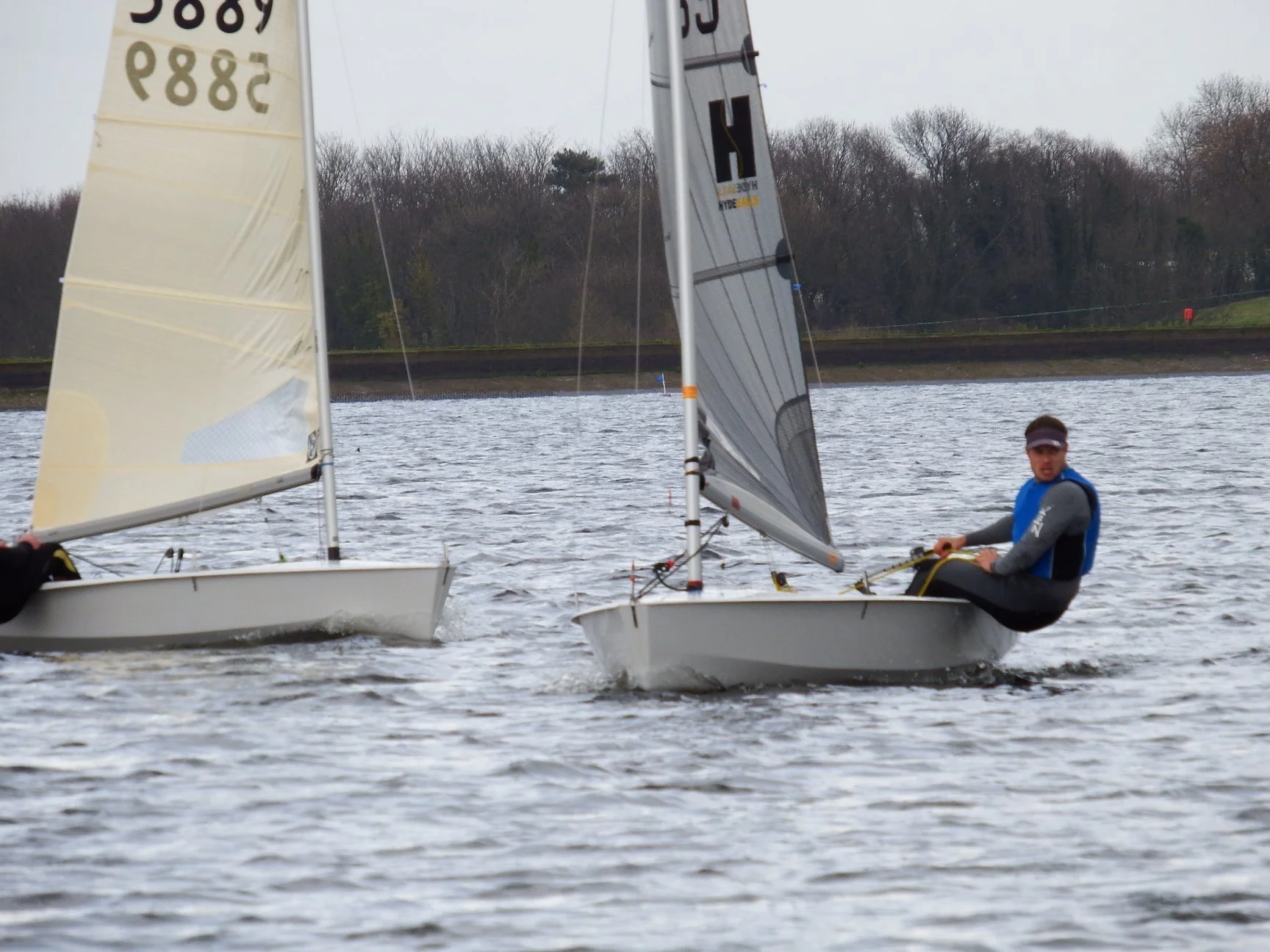
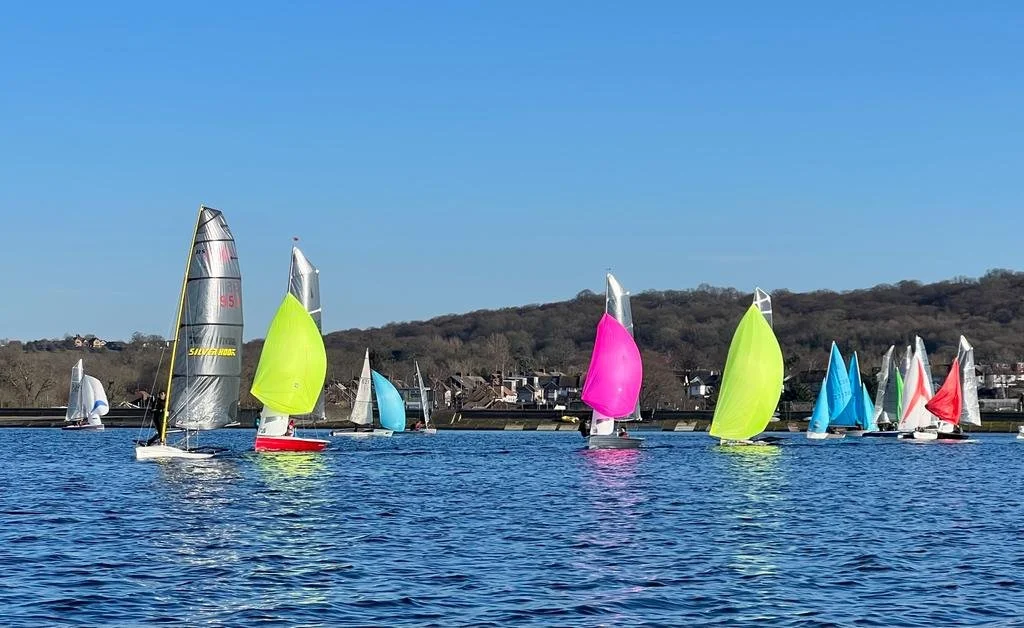
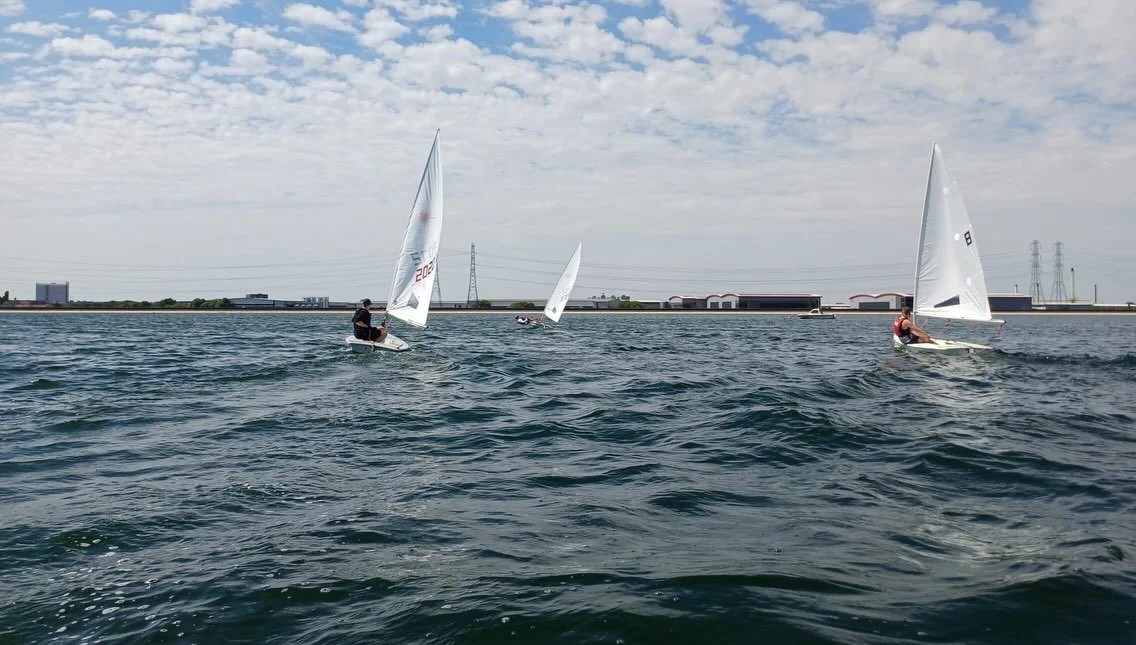
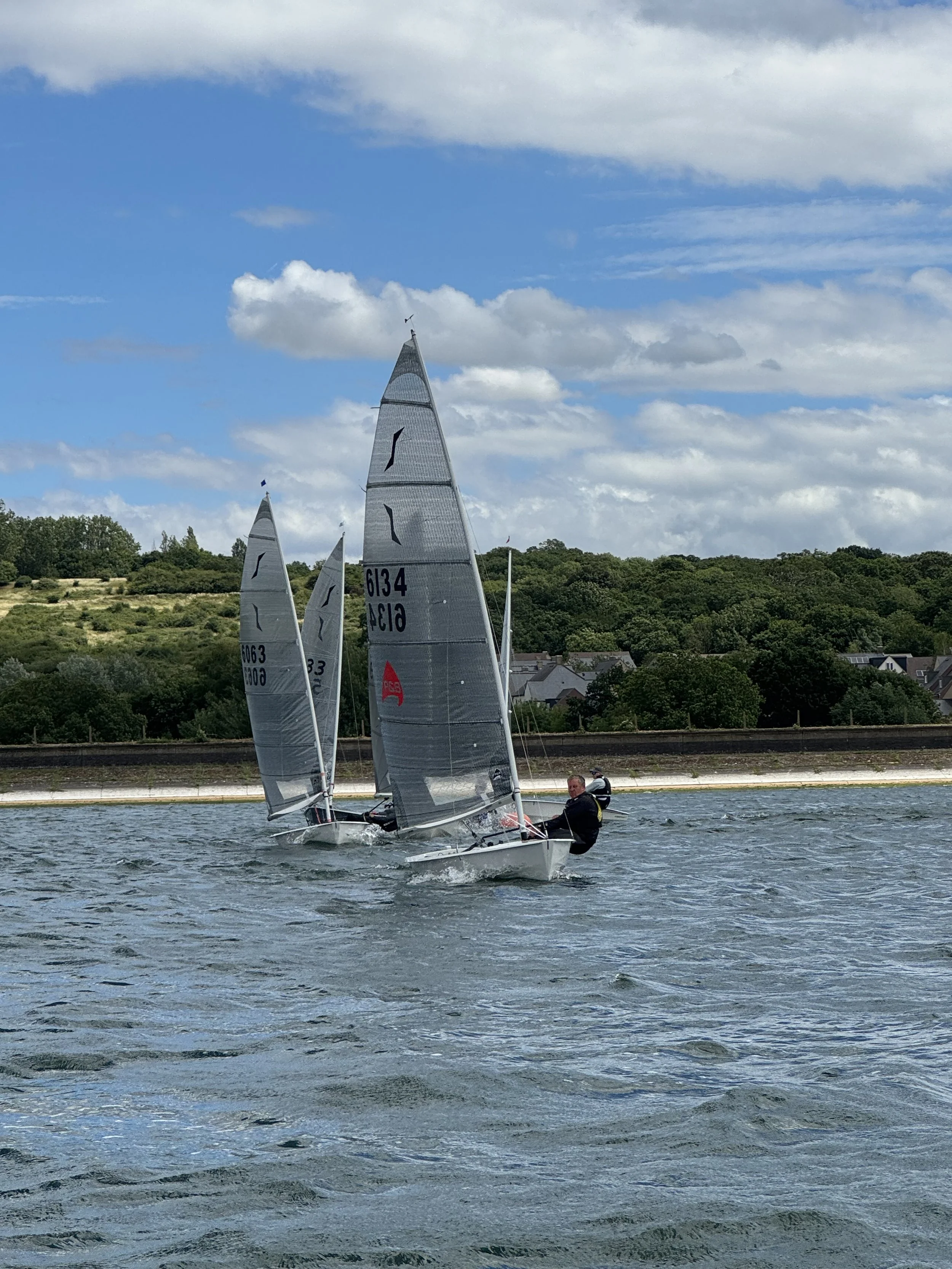
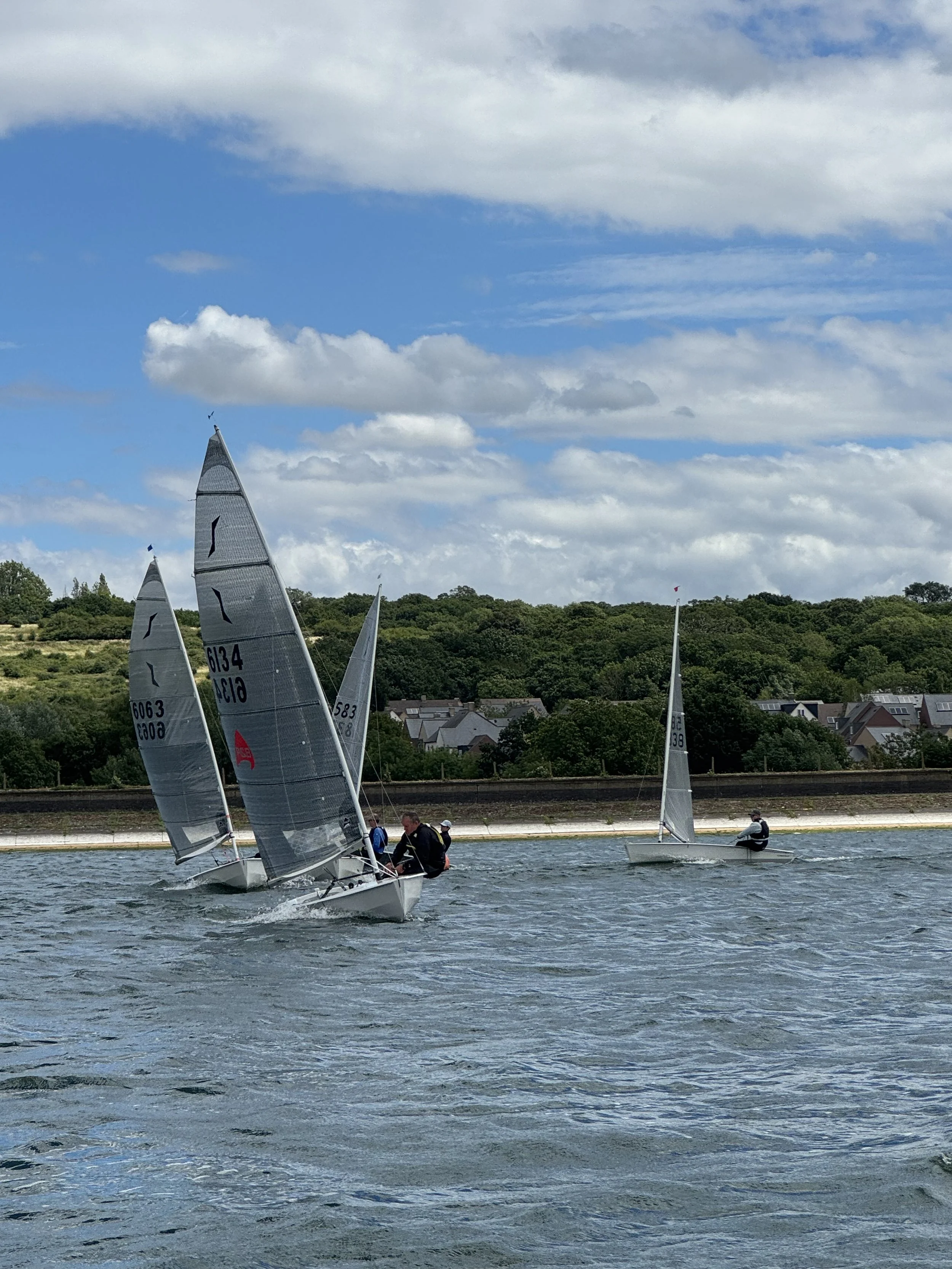
Thirteen ILCAs were greeted by a warm, sunny, and breezy day. The leader board was close at the top coming into the final day.

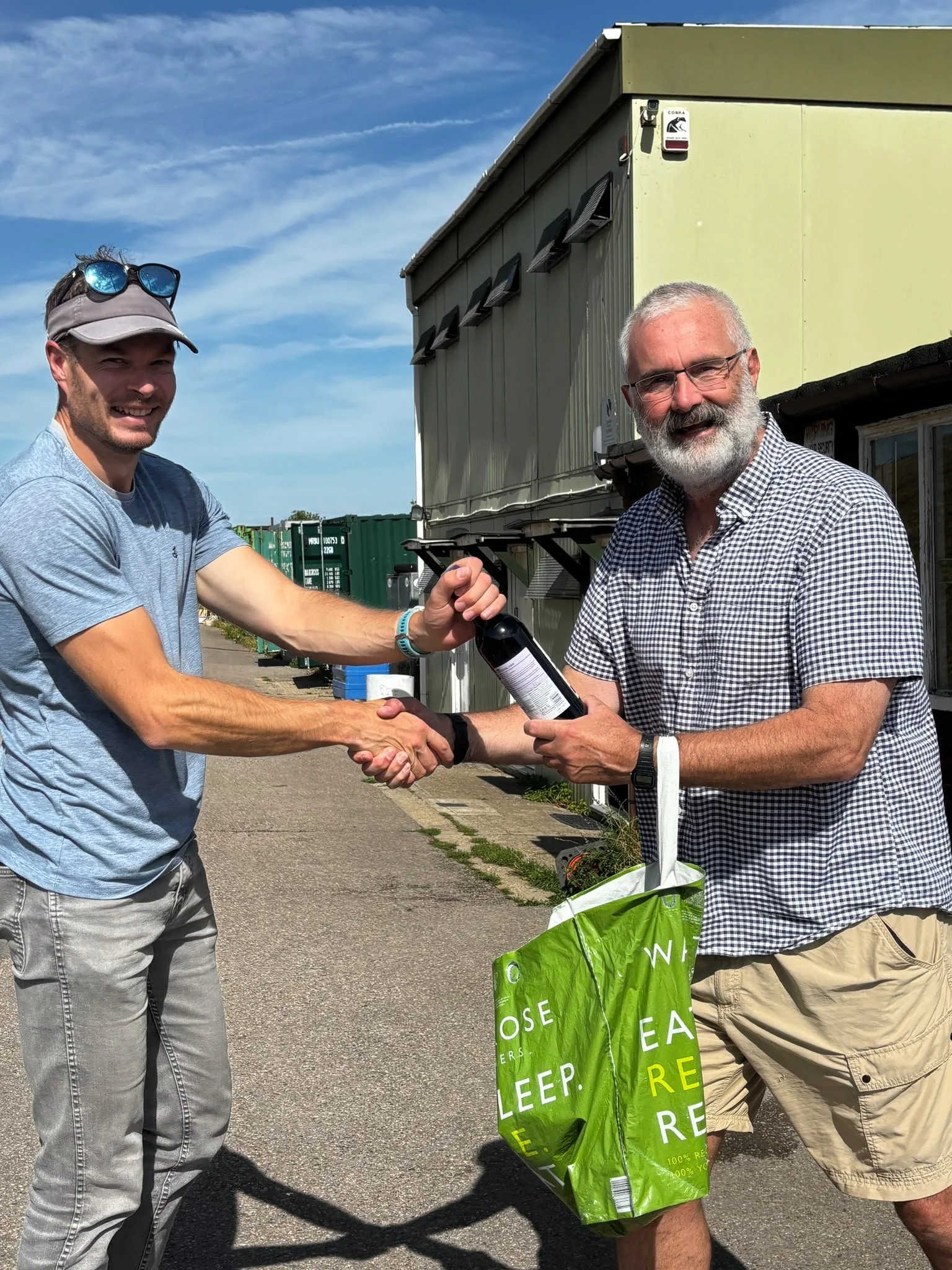
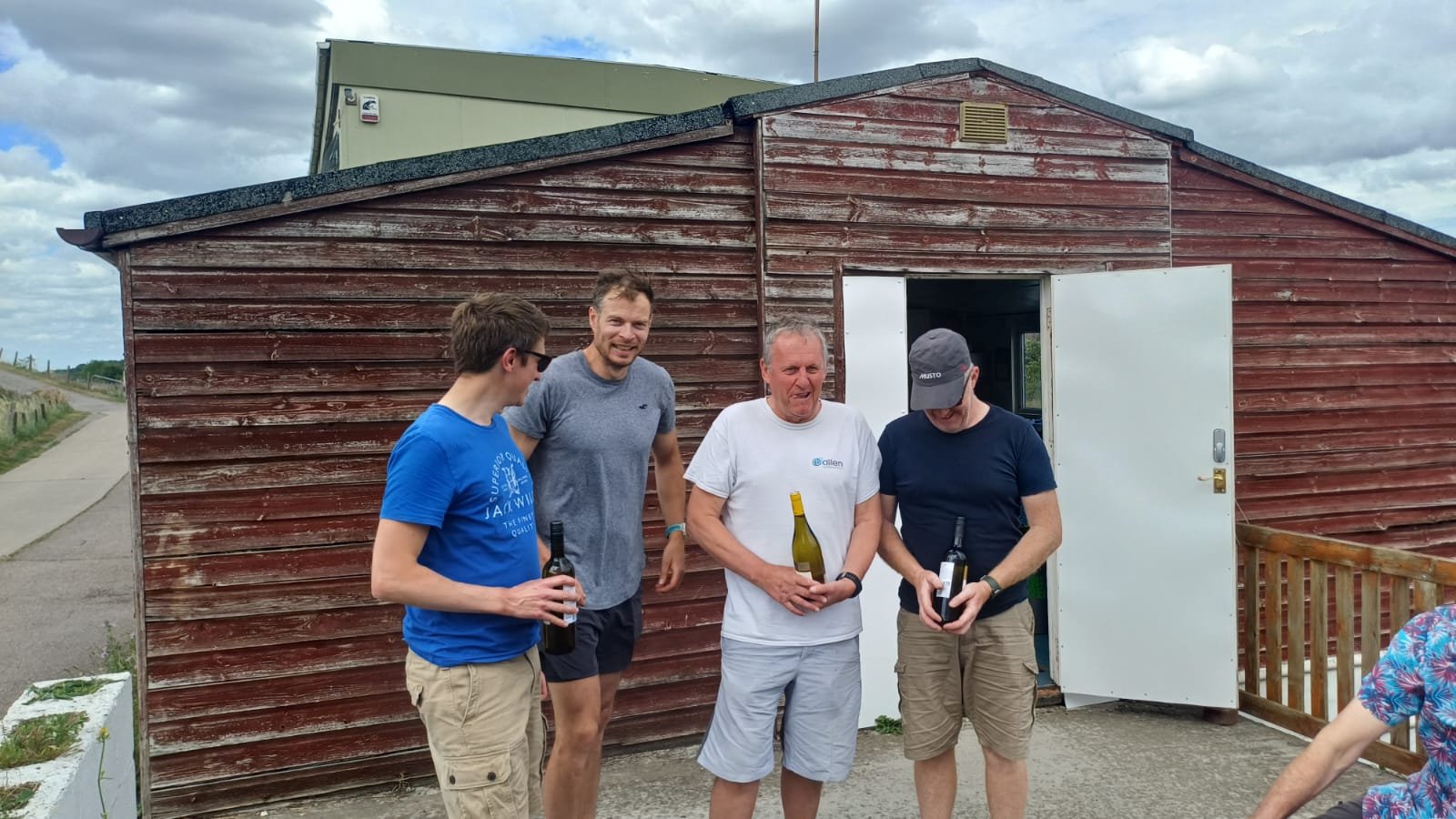
It remained a three way contest until the final race with Pete taking the line and the series.

Pete got a bottle of wine, but everyone at the prize-giving got a prize.

Click on this link for the final results.

The winter series starts on the first Sunday of October, and we aim to have two races each month until March.

ILCA First Sunday

We have been running ILCA First Sunday for a couple of years now. Because we can't all sail every Sunday, we all try to make the first Sunday of the month the day we make sure we sail our ILCAs, so there is always competition. It has really boosted our ILCA fleet, and not just on the first Sundays. We run it as a separate competition, with summer and winter series. And there are prizes, not big prizes, but everyone attending the prize-giving gets one.

ILCA Women flourish in strong winds at King George Sailing Club

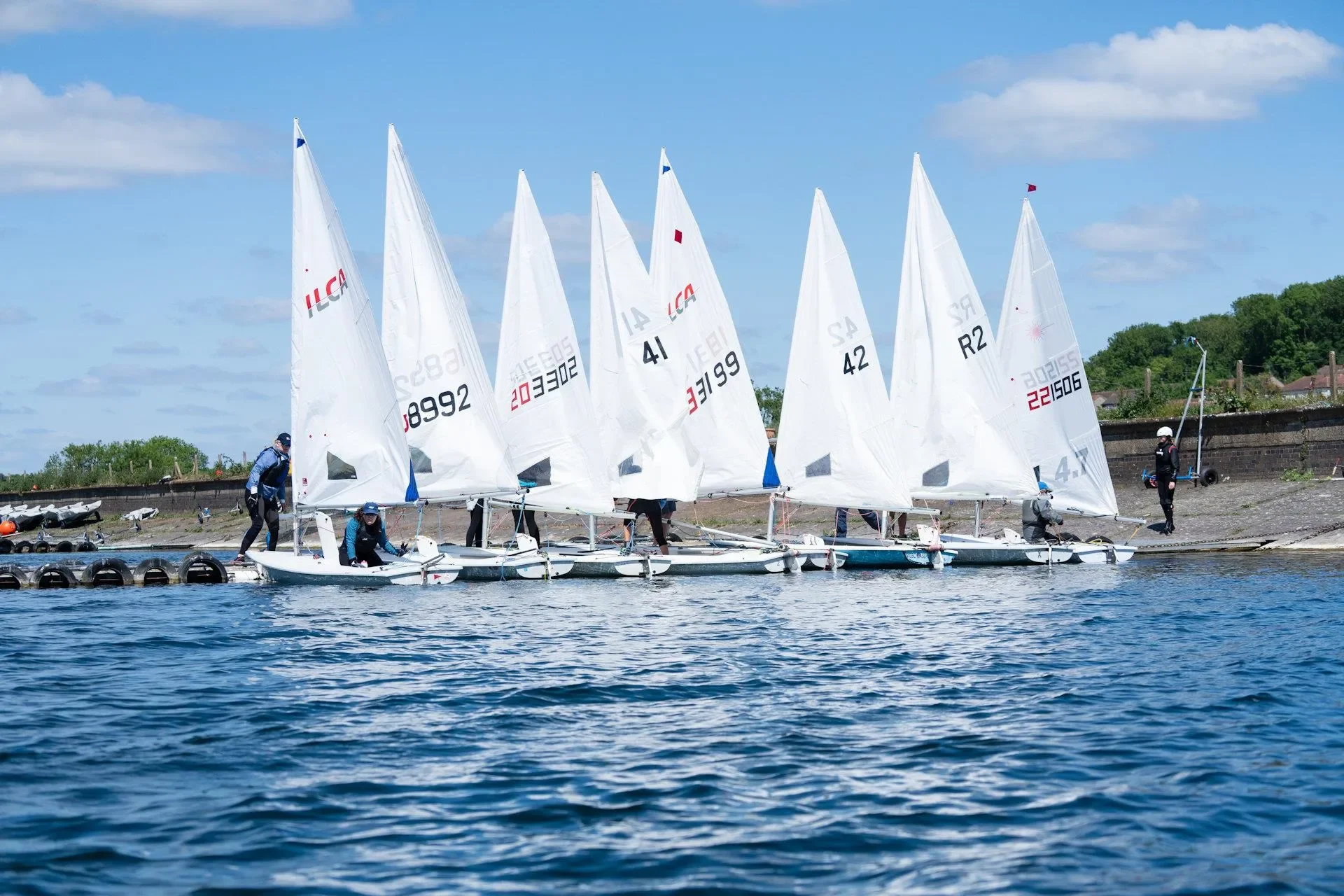
The latest ILCA Women Coaching session took place on 26 July at King George Sailing Club (KGSC) in East London.

Originally scheduled for mid-July, Lead Coach Georgina Povall made the pragmatic call to postpone after 36°C heat and the threat of lightning were forecast. But Georgina’s drive, alongside the energy of KGSC organiser Abi Woodman, ensured the clinic was rapidly rescheduled. Renowned ILCA Coach Eve Kennedy stepped up to run the day, supported by Mick Keates from KGSC, who joined Eve in the safety boat.

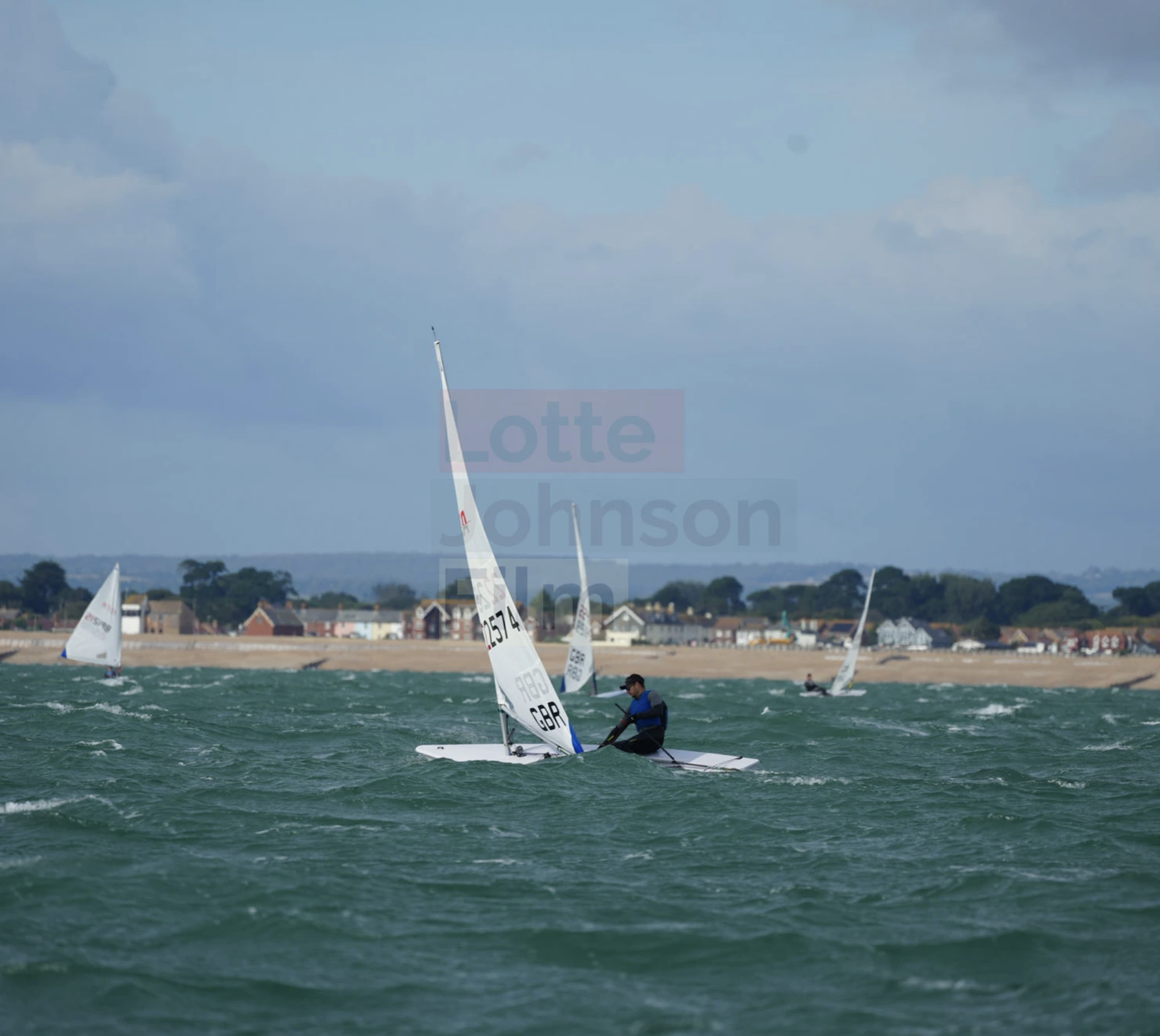
ILCA Women's Coaching Weekend at King George SC with SailingFast and Wildwind © Lotte Johnson / www.lottejohnson.com

ILCA Women's Coaching Weekend at King George SC with SailingFast and Wildwind © Lotte Johnson / www.lottejohnson.com

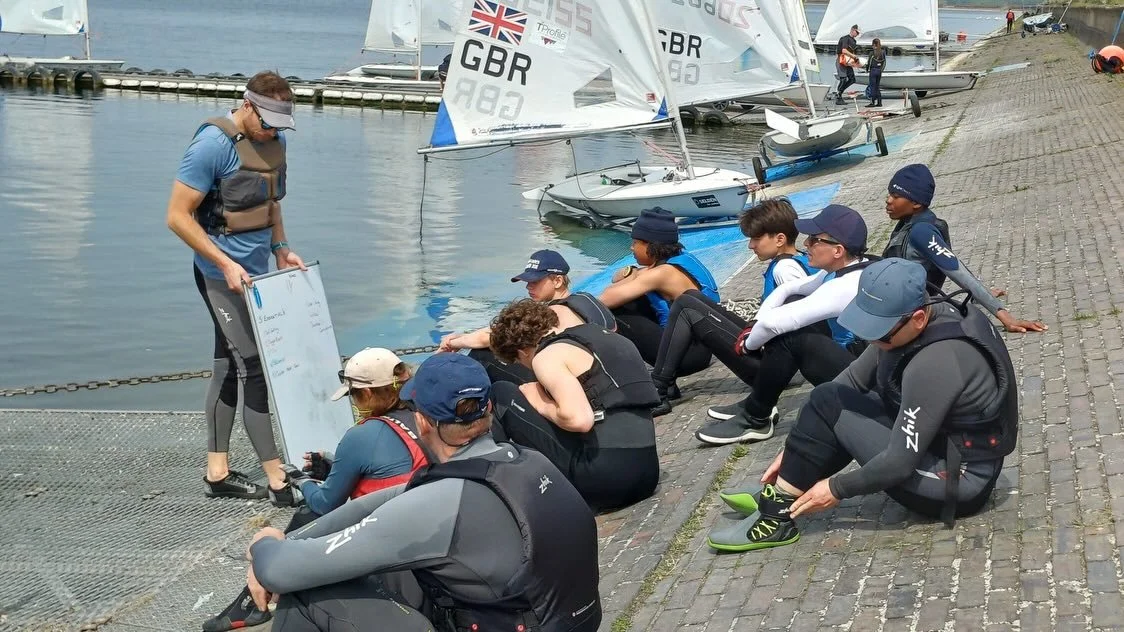
The weather forecast was, again, the hot topic. It was a breezy day, with gusts up to 27 knots. A brief squall even passed through, although it was the only rain to appear all day and it was perfectly timed to arrive while the tight-knit group of five participants were briefed in the classroom. Perfect timing!

Holly Winship shared her experience of the day.

“Eve outlined our morning agenda, focusing on points we mentioned we were keen to work on: a faster upwind leg, gybing, downwind practise and overall confidence building. First exercise: the trusty triangle sausage course. The strong, sweeping gusts ensured we were all a little out of our comfort zone from the start, with regular capsizes in all directions: a powerful injection of the confidence-building we had requested! Everyone righted themselves, dusted themselves down and hurtled off again.

“After an early, re-fuelling lunch, Eve ran through boat controls and their particular importance in stronger winds. In short, we needed to be using dramatically more kicker and downhaul. We were also shown some videos of our sailing which were very helpful to see. The triangle sausage was broken down into parts, with each mark rounding becoming a separate drill. The repetition helping to cement what we’d learned and undo bad habits. The wind eased a little, then filled in again in the final hour of sailing, with many white horses making an appearance.

“I left KGSC tired and aching, but thoroughly satisfied. Thank you very much Eve!”

Three of the five participants were sailing club boats. They are well maintained at KGSC, but pulling on enough downhaul with a 2:1 system is a losing battle. Luckily, programme sponsor Sailingfast has supplied full sets of top-grade rigging, which meant all five boats on the water had a high-performance 8:1 downhaul fitted, ensuring every sailor had the mechanical advantage needed to pull the cringle down to the gooseneck and keep their boat sailing.

The ILCA Women’s Coaching Programme is designed to tackle the barriers experienced by women sailors, creating a space for women of all abilities to experience top-level coaching and take their sailing to the next level. Drawing on her experience of coaching national ILCA and Topper women’s fleets, Eve Kennedy noted that "when younger female coaches face condescension or are talked over in mixed environments, it filters down. Creating a dedicated, all-female training space allows sailors to drop their guard, make mistakes and build genuine confidence."

Further ILCA Women Coaching events are scheduled at Grafham Water Sailing Club and Queen Mary Sailing Club. Keep an eye on the ILCA Calendar for further details.

The programme is also expanding across the country. If your club is interested in hosting an ILCA Women Coaching event, email hello@ilcawomen.uk.

Our thanks go to Eve Kennedy, Georgina Povall, Abi Woodman, Mick Keates for an exceptional clinic, and to Sailingfast and Wildwind for their vital, ongoing sponsorship of the programme.

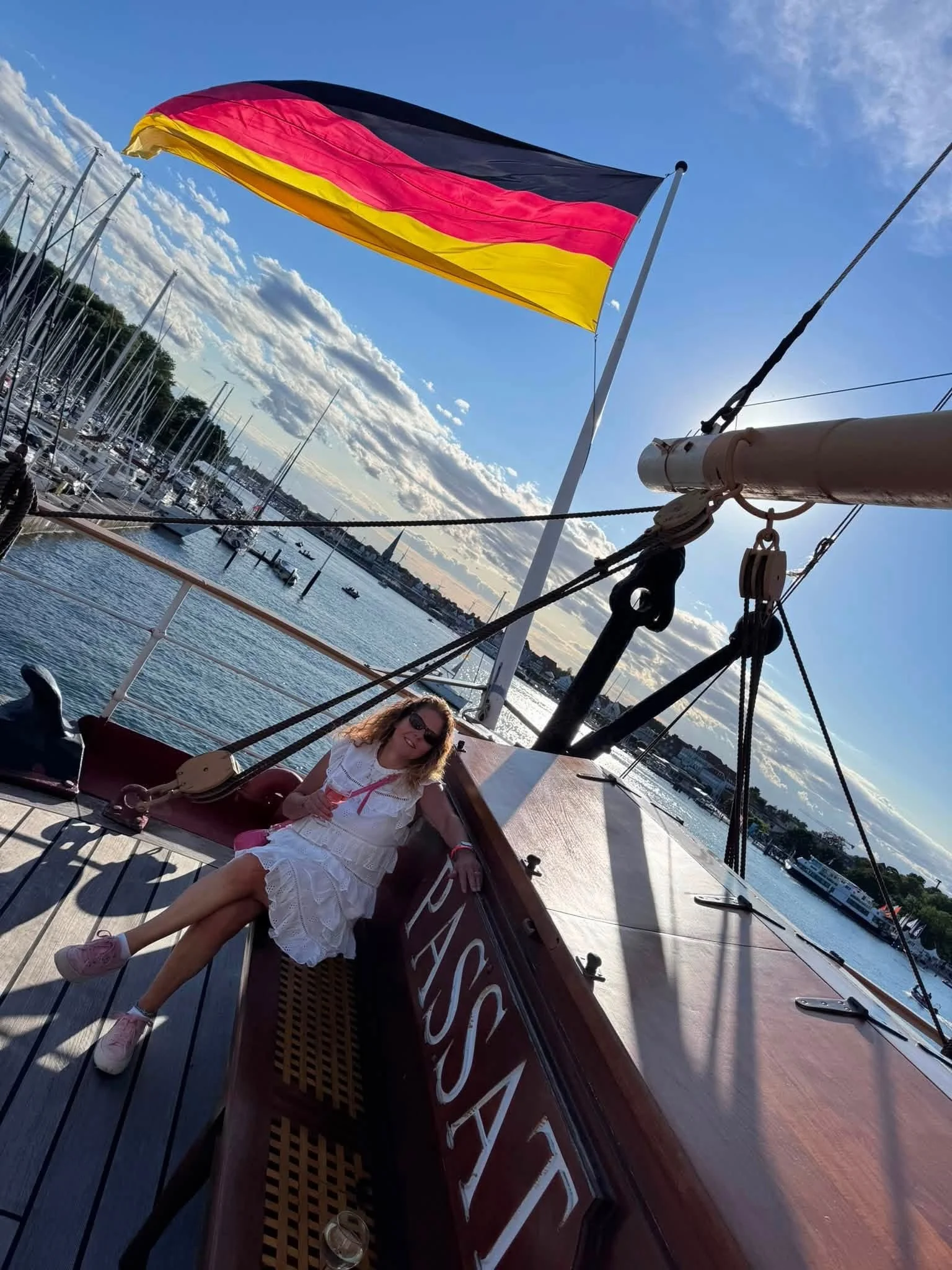
King George Sailors travel to Travemünde

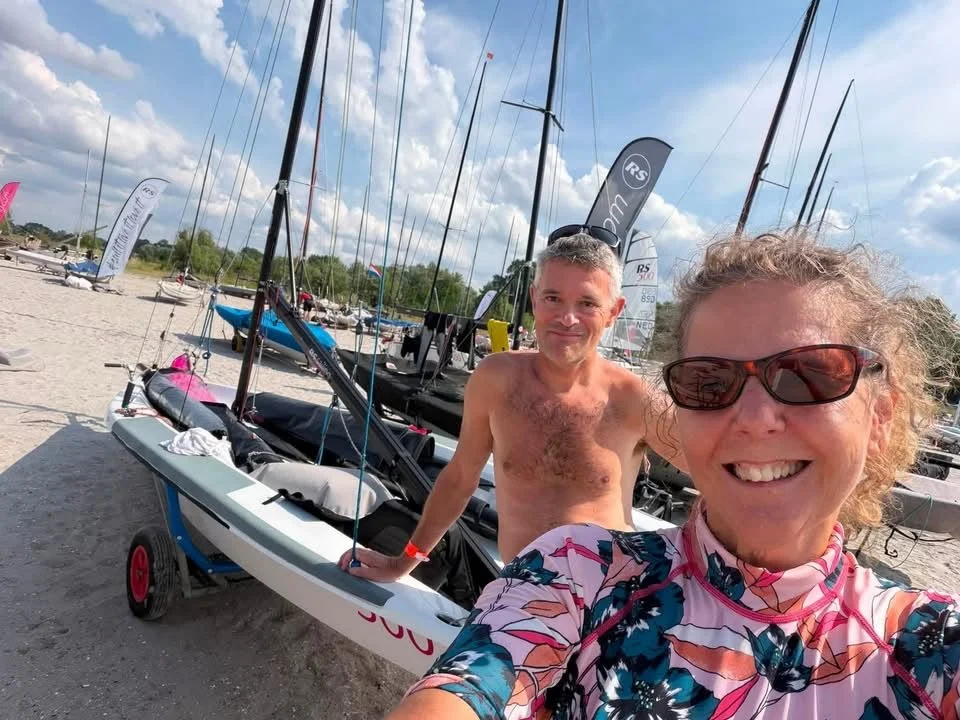
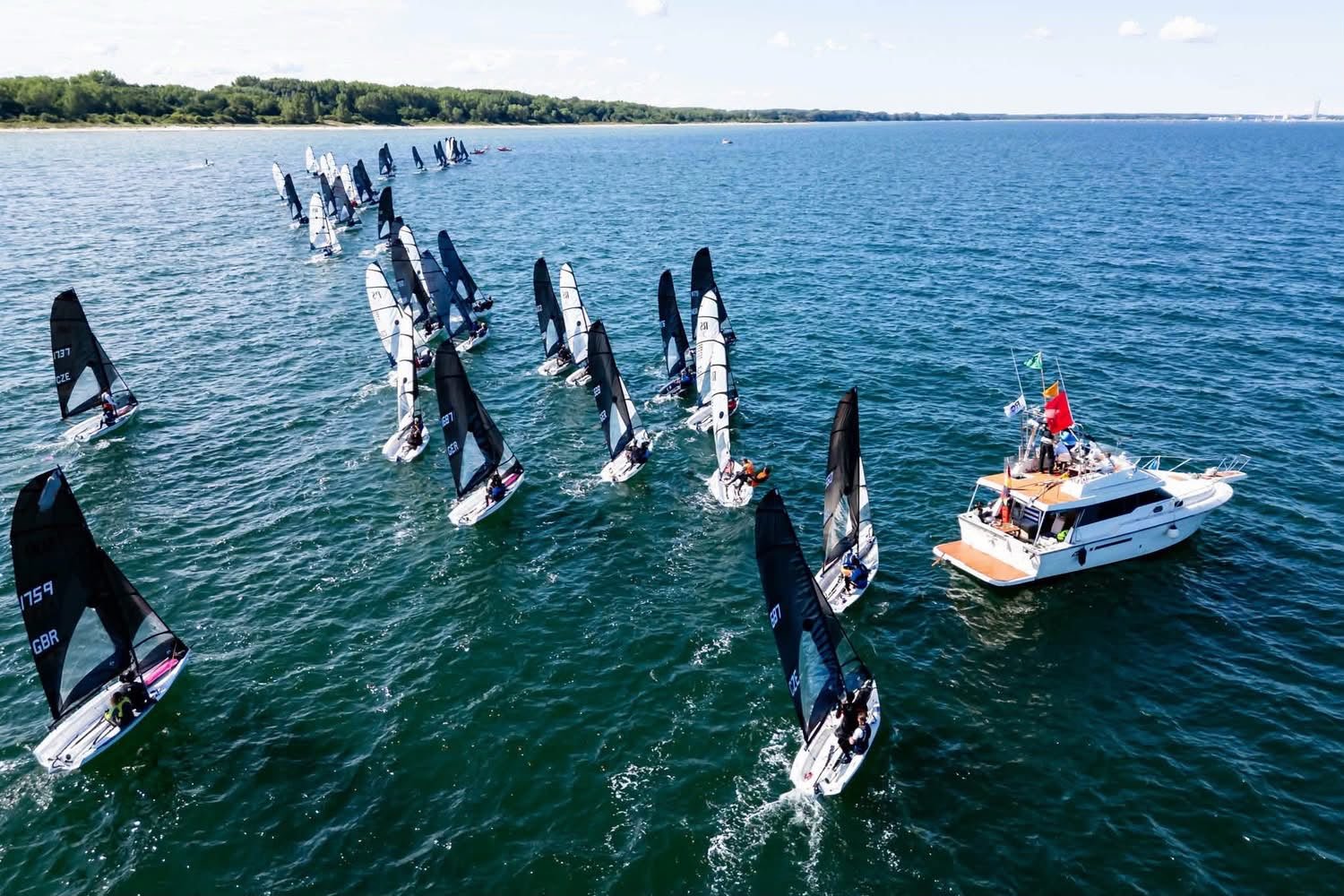
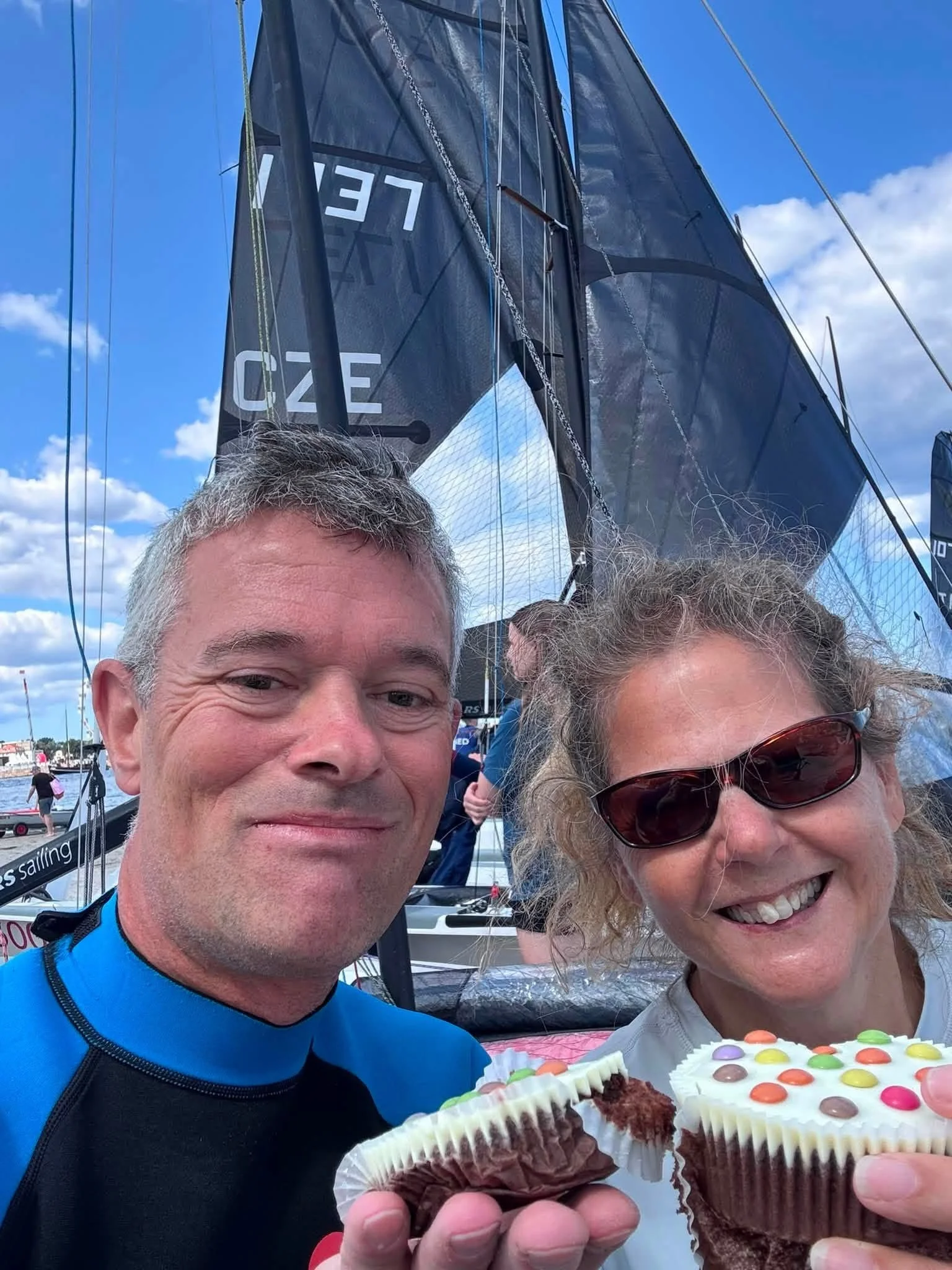
When I saw the announcement for the RS Games last year it immediately piqued my interest - I’m not sure if it was the mention of all the parties, the location in Travemünde or the sailing! I suggested to David, my husband and crew, that we should attend - he was immediately sceptical but a conversation with Stuart at Better Sailing convinced him we should go. David and I upgraded our Vago for a RS500 18 months ago.

The Games were taking place in northern Germany (coinciding with Travemünde Woche) - so there were a few logistics involved. The biggest issue was getting our boat there. Whilst we’re equipped to tow it did seem quite a faff, especially as we decided to do a bit of extra touring around as we were going all of that way. Anyway, Vince mentioned to me that “Spanner” had asked him if we wanted our boat transporting as he had a double stack trailer. We accepted the offer. Plain sailing we thought! Yes, our boat got there, but a few days before we read the race notice - we’d never sailed in what I’ll now call a “proper” race before - I thought what we did at KGSC was, but a European championships turns out to have a bit more to it - as many of you will all know. It turned out that our sail numbers had been placed on in the wrong place - there was a frantic peel and hoping they would re-stick in the right place, fortunately they did. We also found that we needed GBR letters. At this stage there was no time to get them mailed and after a phone round no one had any. Panic stations! Fortunately Spanner came to our rescue again and brought some letters out for us.

Our boat arrived and we set to work on getting it rigged. At this stage some of the other British 500 sailors realised we were rookies and came and pointed out issues and offered useful advice.

The first day of racing arrived. We got to the beach early for the briefing - quite a few bits went over our heads - what’s that about the Uniform flag? The briefing was in English but we didn’t necessarily follow it all! Anyway our strategy was to keep out of everyone else’s way and follow the fleet.

The wind on day one was seeing gusts into the high 20s which we thought was too much for us. We’d decided not to go out but Spanner convinced us we should give it a go as if we could do just one race then we’d get a score on the board. We started to prepare our boat when Michiel, RS commercial director and an enthusiastic 500 sailor. came and gave us a hand. He said we should change the position of the shroud pins which whilst it would give us less rig tension would mean we could pull on shed loads more kicker and depower the rig - who knew?! Well I guess most of you guys do but it was all news to us!

So we launched our boat and made an attempt to head to our course, “Charlie” which was some distance from the beach. After our fifth capsize and with the Coastwatch boat following us we decided to head home. It was a wise decision - four masts were broken that day - RS had only brought two spares along as that was considered a reasonable number by everyone there.

Day two arrived. Another windy day. We got ready early, took our brave pills, and got on the water. Spanner told us that it took him about 40 minutes to get to the course, we were closer to an hour. The starting sequence was a bit of a mystery still, especially as this red and white checked flag appeared! Anyway my strategy was to stay on starboard and stay a row back so I wasn’t windward boat - remember we wanted to stay out of trouble and just try and finish some races. I’d never seen a start line do long and I ambled down towards the pin which seemed to be the favoured end. The race was two laps of a nice simple course - apart from you couldn’t see the windward mark from the start - we were issued with a bearing on the committee boat but we didn’t have a compass, however, we were just able to follow the rest of the fleet! Once at the windward mark we bore away to a spreader mark and then back to a gate at the downwind mark - another first for us. We finished the race, but in last place. The wind picked up more and we took the decision to abandon the remaining races and get home.

Day three saw a change in wind direction but the waves didn’t change direction. Racing was postponed. We then saw the committee boat sail back into the harbour. A while later our RO appeared and explained that racing couldn’t go ahead as two of the ribs had lost their anchors in the huge swells. We then set about having some beach games with some of the fleet - great fun but my wheelbarrow race skills are even worse than my sailing!

With the arrival of day four we were relieved to see calmer seas. Again we set out promptly to allow plenty of time to get to our course. Just before launching we’d heard a ship sounding its horn but there was no sign of it as we were crossing the shipping lane. Suddenly there was another very loud horn - I looked over my shoulder and a huge ferry was about 50m behind us. Talk about a rabbit in the headlights! We refrained from raising our spinnaker until we were well clear! As we arrived at the committee boat the first race was about to start. This time we actually understood what was going on as one of the other competitors had kindly explained things to us. There was a general recall and this time because they didn’t want any more faffing the black flag was displayed. We started nearer the committee boat which wasn’t the best place but we were just pleased to be on the course. We were losing ground on the fleet and by the second lap we were the last boat to the windward mark. However, we weren’t too far behind a German boat. I decided that that staying on starboard didn’t seem to be the optimum course and so we gybed and went the other way. It’s never clear until you get back down to the mark whether you made the right decision - it turned out we had and just pipped the young German guys at the line!

The wind had already dropped on the second lap and then we sat around for quite a while waiting for the wind to pick up, it didn’t! We all had to be towed back in.

Day five was our final day and the strong winds had returned. We somewhat reluctantly headed out. We sailed downwind to the start, got there just in time for the start. Capsized at the start, fortunately in nobody’s way, righted ourselves and started on port at the pin end so was able to make up a bit of lost time. When we got to the point of needing to gybe we decided to sail on and tack round - the couple that came seventh said they’d done the same having seen boats ahead upside down. We somehow managed to finish the race - in last place but finishing was a win to us! We started the second race but decided to abandon as the wind was getting stronger - gusts were hitting 30 knots. We’d sailed 4.5 miles to get to the start of the race, but were struggling to make much progress upwind going back to the beach - we sailed 12.5 miles back and lost count of the capsizes. We were broken by the time we got back on the beach but nothing that a fish Brötchen and a hot chocolate couldn’t fix!

We were very surprised when we saw the final results - we weren’t last! We’d beaten the young Germans that we‘d overtaken!

Would we do it again? Definitely! There were lots of parties, five to be precise. That’s two more than the number of races we participated in!

We learnt so much about the specifics of our boat and met loads of new people. We’ve just signed up for Chichester Harbour Week so our learning journey will continue.

How to Improve Your Sailing: Stop Just Sailing and Start Training

The best way to become a better sailor is not necessarily to spend more time on the water. It is to make the time you already spend on the water more purposeful.

Have you ever come ashore after a day's sailing knowing that you were not quite as quick as you could have been, but without being able to put your finger on exactly why?

Perhaps another boat seemed to point higher into the wind. Perhaps you lost ground through every tack. Maybe your downwind sailing felt untidy, or you found yourself constantly reacting to the boat rather than being one step ahead of it.

It is an experience most sailors recognise.

The obvious answer is to go sailing more often. And, of course, time on the water matters. But simply repeating the same sailing habits over and over again does not necessarily make us better sailors.

A more effective approach is to train deliberately.

That means identifying something you want to improve, learning what good technique looks like, practising it deliberately on the water, and then reviewing what happened.

In other words:

Learn. Practise. Observe. Review. Repeat.

There is now a wealth of excellent sailing instruction available without having to book a coach or attend a training camp. DVDs, digital downloads and online video can give sailors access to high-quality coaching whenever they want it.

Two particularly useful resources are Rooster Sailing's Boat Whisperer instructional material and the International Sailing Academy's extensive collection of tips, tricks and videos.

The important thing, however, is not simply to watch them.

It is to use them as part of your training.

Start with one thing

One of the biggest mistakes we can make when trying to improve our sailing is attempting to improve everything at once.

We go afloat determined to sail faster, tack better, steer better, improve our sail trim, read the wind, hike harder and make better tactical decisions.

Within ten minutes, we have forgotten most of it.

Instead, choose one thing.

It could be as simple as:

  • maintaining speed through a tack;

  • steering smoothly upwind;

  • keeping the boat balanced in gusts;

  • improving your downwind steering;

  • becoming more consistent with gybes;

  • learning to recognise changes in wind pressure; or

  • improving your sail trim.

The objective does not even have to be complicated.

Rather than saying, "I want to be faster today", say:

"For the next 20 minutes, I am going to concentrate on steering smoothly and keeping the boat moving through every tack."

That is something you can actually practise.

And importantly, you can succeed at the exercise even if you do not win the race.

Learn before you go sailing

One of the advantages of modern sailing video is that we no longer have to wait until the next training session to learn.

Rooster's Boat Whisperer collection, for example, includes separate instructional material covering tactics, upwind and downwind sailing, available as DVDs and digital downloads. Rooster's current search results list Boat Whisperer Tactics, Upwind and Downwind material, including digital versions.

That makes these resources particularly useful as preparation for a sailing session.

Suppose you know that you are struggling with your upwind speed.

Rather than simply going sailing and hoping it improves, spend some time beforehand studying the subject.

Watch how an experienced sailor handles the boat.

Look at the relationship between steering, sail trim and boat balance.

Notice what happens when the wind increases or decreases.

Then go afloat with one or two specific things to try.

You have turned a video into a lesson.

Don't just watch — watch like a sailor

There is a difference between watching sailing video for entertainment and watching it to improve.

When watching instructional footage, pause occasionally and ask yourself questions.

Where is the sailor looking?

What is the boat doing?

How much is the tiller moving?

When does the sailor trim or ease the sail?

What happens to the boat when a gust arrives?

How is the sailor moving their body?

What happens immediately before and after a tack or gybe?

These observations are often more valuable than simply listening to an explanation.

The next time you go sailing, try to reproduce just one of the things you noticed.

You may be surprised how much easier it is to understand a technique once you have seen it performed repeatedly.

Use the International Sailing Academy as your online coach

The International Sailing Academy provides another useful source of material, particularly for sailors who want to concentrate on individual aspects of boat handling and performance.

Its ILCA Tips & Tricks library covers a wide range of subjects, providing sailors with a way of exploring particular techniques rather than having to work through a single fixed course.

This is particularly valuable when you have identified a weakness.

Perhaps you are comfortable sailing in a straight line but struggle in waves.

Perhaps your tacks are inconsistent.

Maybe you lose speed whenever the wind becomes lighter.

Instead of searching randomly for advice, choose the problem and study that specific area.

The International Sailing Academy also has a YouTube channel, making shorter pieces of instructional material readily available when you want a quick reminder or a different explanation.

Think of these resources as a library that you can dip into whenever you need them.

Your best coach might be a camera

One of the most powerful training tools available to the ordinary sailor is also one of the simplest: video of yourself sailing.

Watching an expert sailor is useful.

Watching yourself can be even more revealing.

What we think we are doing and what we actually do are often two different things.

You might believe that you are steering smoothly, only to discover that the tiller is constantly moving.

You might think you are completing your tacks efficiently, only to see that the boat loses a significant amount of speed during every manoeuvre.

You might feel that you are sitting in the right position, but video may show that your body movement is affecting the balance of the boat.

You don't need hours of footage.

A friend with a phone can record a few minutes of upwind sailing, several tacks, some downwind sailing and a few gybes.

Then watch it later.

But again, don't try to analyse everything.

Choose one question.

What am I doing with the tiller?

Or:

What happens to the boat when I tack?

Or:

How quickly do I respond to a change in the wind?

The aim isn't to criticise yourself.

It is to find something specific that you can improve.

Upwind: speed is about consistency

Upwind sailing often exposes weaknesses because there is nowhere to hide.

A small steering error, poor sail trim or badly timed movement can cost speed.

It is tempting to concentrate entirely on pointing as high as possible.

But pointing high is not necessarily the same as sailing fast.

A good training exercise is to concentrate on speed first.

Feel what the boat is doing.

Watch the sails.

Pay attention to the tell-tales if you use them.

Notice the effect of small steering movements.

Try sailing slightly freer and allowing the boat to accelerate. Then gradually head up again.

The objective is to develop a feel for the boat rather than relying entirely on a fixed steering position.

This is where instructional footage can be particularly valuable. Watch how an experienced sailor reacts rather than simply looking at where the boat is pointing.

The aim is to develop an instinctive connection between wind, sails, steering and boat speed.

Tacking: make the manoeuvre part of the training

Tacking is another area where deliberate practice can produce rapid improvement.

Instead of treating a tack as something that simply happens while sailing, practise it as a separate skill.

Ask:

  • Is the boat at good speed before the tack?

  • Is the turn smooth?

  • Am I moving at the right moment?

  • How much speed do I lose?

  • How quickly does the boat accelerate afterwards?

Try doing a series of tacks with the sole objective of making each one as consistent as possible.

The winner is not necessarily the sailor who performs the most spectacular tack.

It is the sailor who can repeat a good tack again and again.

Consistency is speed.

Downwind: don't switch off

Downwind sailing can sometimes feel like the easy part of the race.

The apparent lack of effort can be deceptive.

There is still plenty to work on: steering, sail trim, boat balance, body position, wind pressure and decisions about when to gybe.

This is an area where the Boat Whisperer Downwind material can be particularly useful because it allows you to study the technique away from the distractions of actually trying to keep the boat moving.

Rooster Sailing – DVD and digital sailing instruction

Then take one idea onto the water.

Don't try to copy everything.

Instead, concentrate on what happens when you make a particular steering or trim adjustment.

Does the boat accelerate?

Does it slow down?

Does the helm become lighter?

Does the boat become easier to control?

Over time, these observations become feel.

And feel is one of the things that separates a competent sailor from a really good one.

Sailing faster is not just about equipment

It is easy to become distracted by equipment.

A new sail.

A different control line.

A new tiller extension.

A better-fitting wetsuit.

Perhaps even a new boat.

Equipment certainly matters, particularly when racing at a high level. But changing equipment will not automatically correct poor technique.

Before spending money to solve a performance problem, ask a simpler question:

Do I actually know what the problem is?

If you don't, more equipment may simply make an existing problem more expensive.

Learning to recognise what the boat is telling you is far more valuable in the long term.

Learn to recognise the wind

Better sailors are not simply better at controlling their boats.

They are also better at noticing what the wind is doing.

Look at the water.

Watch other boats.

Notice darker patches approaching.

Look at flags, trees and ripples.

Feel changes in pressure on your face.

Then compare what you see with what happens to the boat.

If the wind increases, what happens?

If it decreases, what happens?

Does the boat accelerate immediately, or does it need a change in steering or sail trim?

The more attention you pay, the more information you start to receive.

Eventually you stop consciously analysing every change.

You simply start to feel it.

Don't forget tactics

Boat handling and boat speed are only part of sailing.

If you are racing, tactical awareness matters too.

Rooster's Boat Whisperer Tactics material provides another way to study the decisions that sit alongside boat handling.

The important thing is to connect tactics with boat speed.

There is little benefit in making a brilliant tactical decision if you then lose several boat lengths because your tack was poor.

Equally, there is little point in being the fastest boat on the water if you repeatedly sail the wrong side of the course.

Improvement therefore needs to happen on several levels:

Boat handling.

Boat speed.

Wind awareness.

Tactics.

The trick is still to work on them one at a time.

Build your own training programme

You don't need a formal coach standing beside you every time you sail.

You can create a simple training cycle yourself.

Before sailing

Decide what you want to improve.

Find a relevant instructional video or article.

Watch it carefully.

Choose one or two things to concentrate on.

During sailing

Practise the technique.

Repeat it.

Try to notice the effect of each change.

Don't worry if it isn't perfect immediately.

After sailing

Ask yourself three questions:

What improved?

What didn't?

What will I try next time?

Then go back to the instructional material.

Watch it again.

You will often understand something differently after experiencing it on the water.

That is where the real learning happens.

A simple training session

The next time you have a spare half-hour on the water, try this.

Five minutes: get settled.

Sail normally and get a feel for the conditions.

Ten minutes: practise one technique.

Perhaps tacking, steering or sail trim.

Repeat it several times.

Ten minutes: experiment.

Change one variable.

Steer slightly differently.

Trim slightly differently.

Change your body position.

Notice what happens.

Five minutes: review.

Ask yourself what produced the best result.

It is a remarkably simple approach.

But it is much more likely to produce improvement than spending the entire session sailing around without a particular objective.

The sailor who keeps learning keeps improving

Perhaps the most important change is psychological.

Good sailors are rarely finished learning.

Even highly experienced sailors continue to look at technique, analyse video, discuss ideas and experiment.

The difference is that they have learned how to learn.

They don't necessarily expect every session to be perfect.

They expect every session to teach them something.

That is an important distinction.

The next time you go sailing, don't simply ask:

"Did I sail well?"

Ask:

"What did I learn?"

Then find something to work on.

Watch an instructional video. Study another sailor. Film yourself. Try a different technique. Make a note of what happened.

Then do it again.

Because becoming a better sailor isn't about finding one magic tip that suddenly makes you faster.

It is about making small improvements, understanding why they work, and turning them into habits.

Stop just sailing. Start training.

And the next time you come ashore, make sure you know exactly what you are going to work on when you go afloat again.

Useful resources

Rooster Sailing – Boat Whisperer DVDs and Digital Downloads

International Sailing Academy – Tips & Tricks

International Sailing Academy – YouTube

Always adapt sailing exercises to your boat, experience and conditions, and put safety first.
King George Sailors at the Topper Worlds

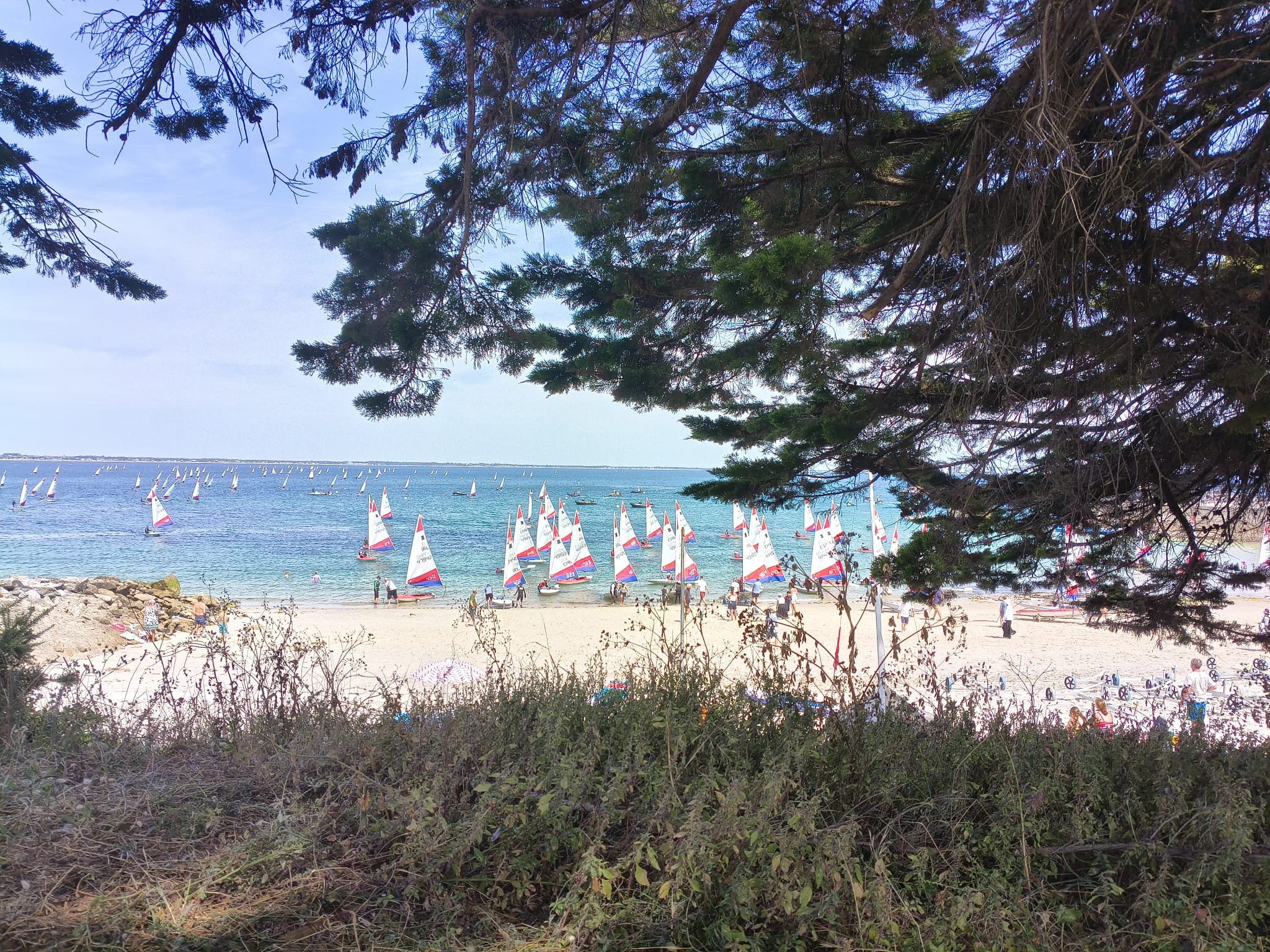
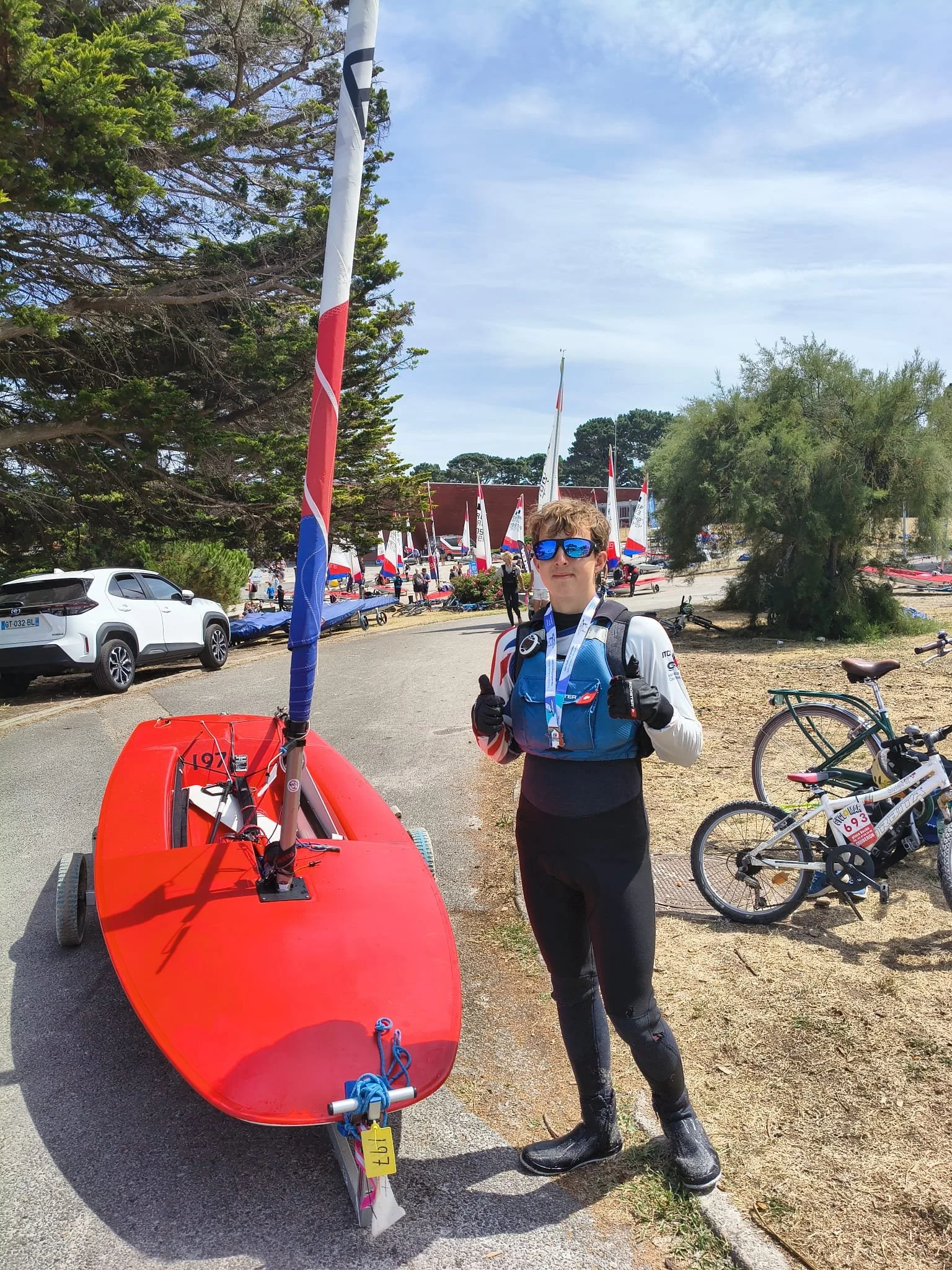
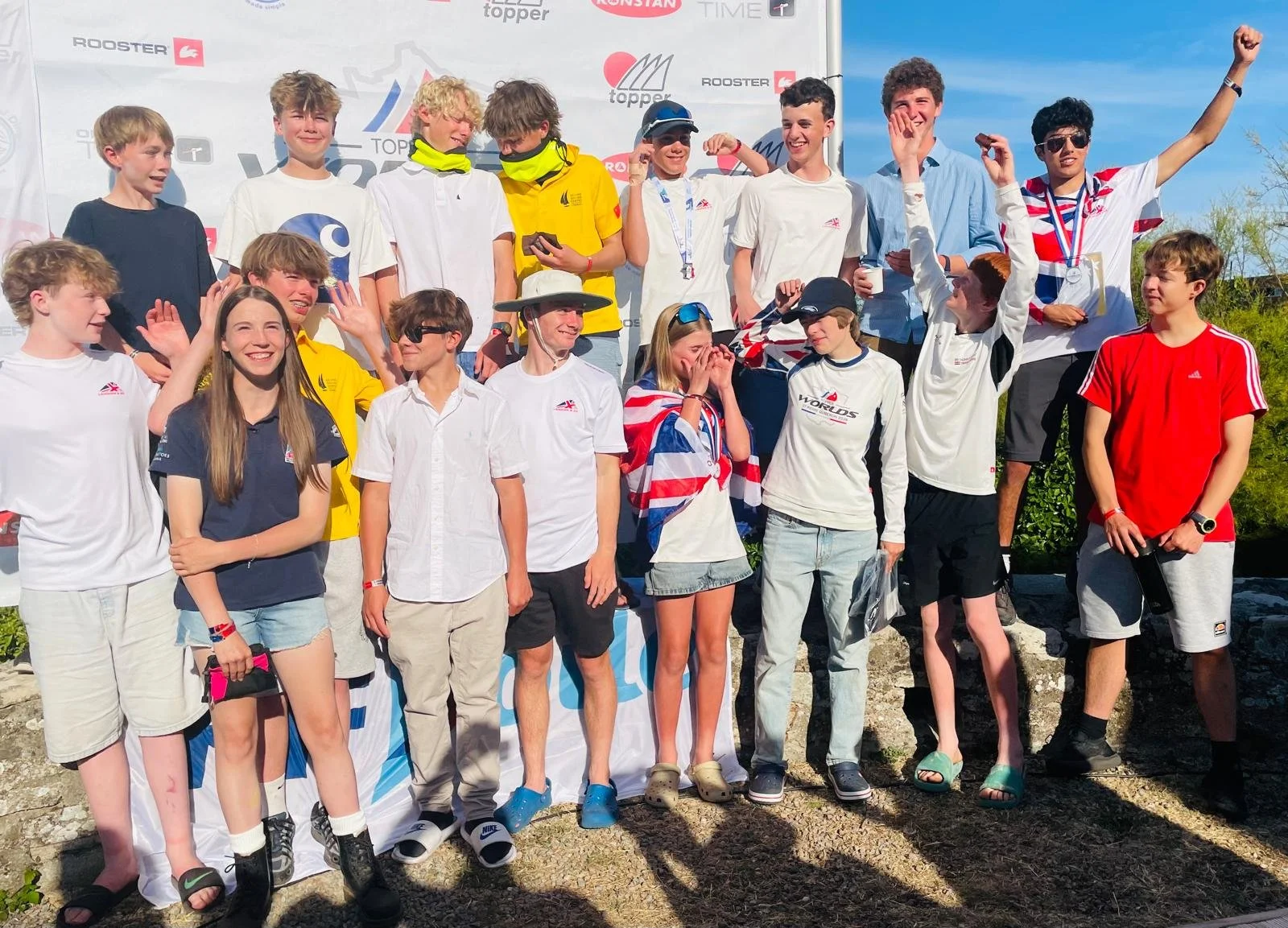
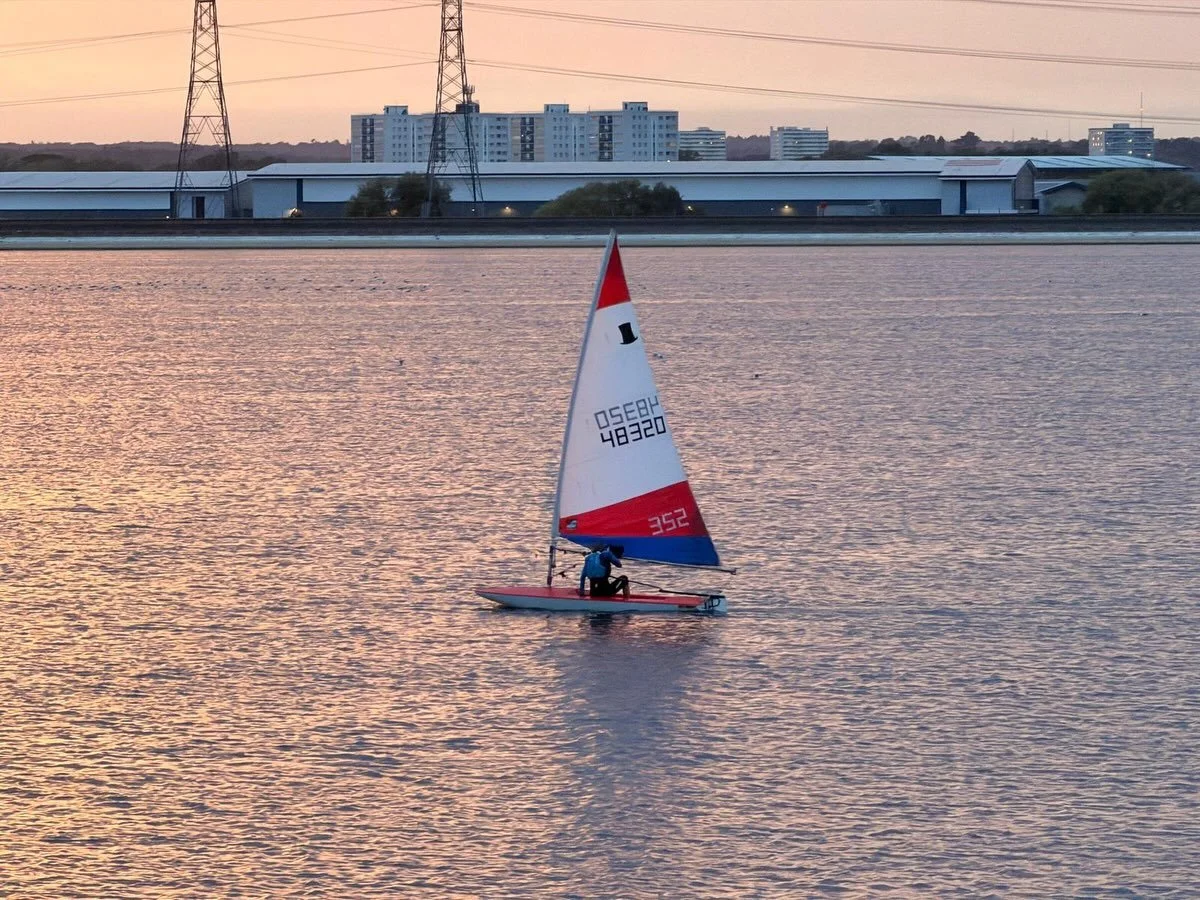
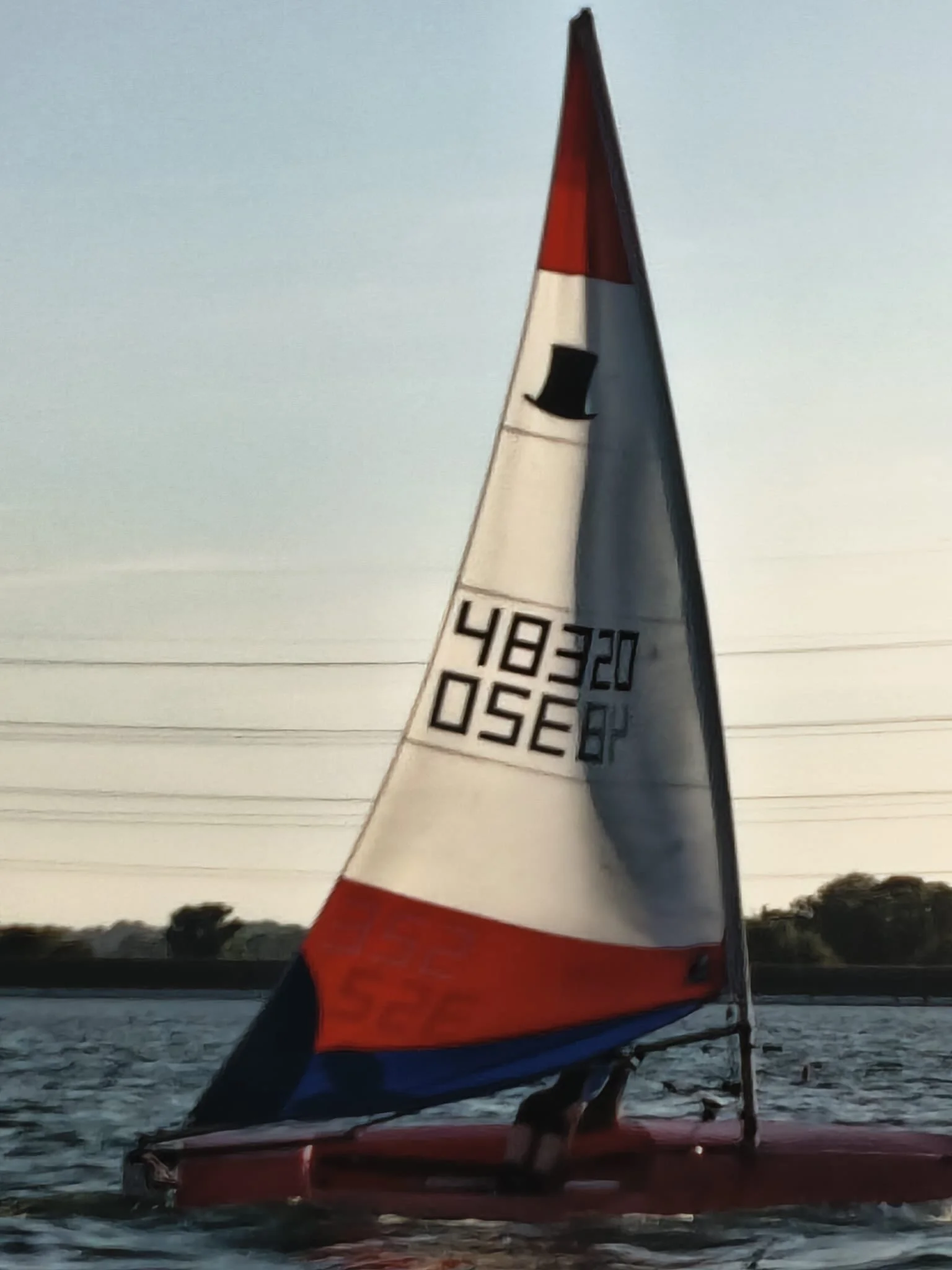
Three King George sailors have been at the Topper Worlds in Quiberon in Brittany.

Quiberon

Leo made it to Gold Fleet after the two qualifying days, which he was very happy with. He then worked through a steep learning curve - figuring out how to cope with a much more competitive start line, a black flag, three protests and finally a stunning second place in the last race of the championship. He chose the pin end and took his bets on the wind and the choice paid off.

His results are consistently about 56th till that final 2nd!

Immy was way more consistent, and worked her way to a fab 7th place in the Silver Fleet, for which she was highly rewarded with impressive Rooster prizes.

A good showing from British sailors

Sarah took place in the Masters event.
Definitely a worthwhile experience for all of us.
The results and more pictures are on the event website.

2026 ILCA Masters Nationals at Parkstone

Five of us from the club went to the 2026 Masters Nationals in Parkstone, Poole Harbour, in July.

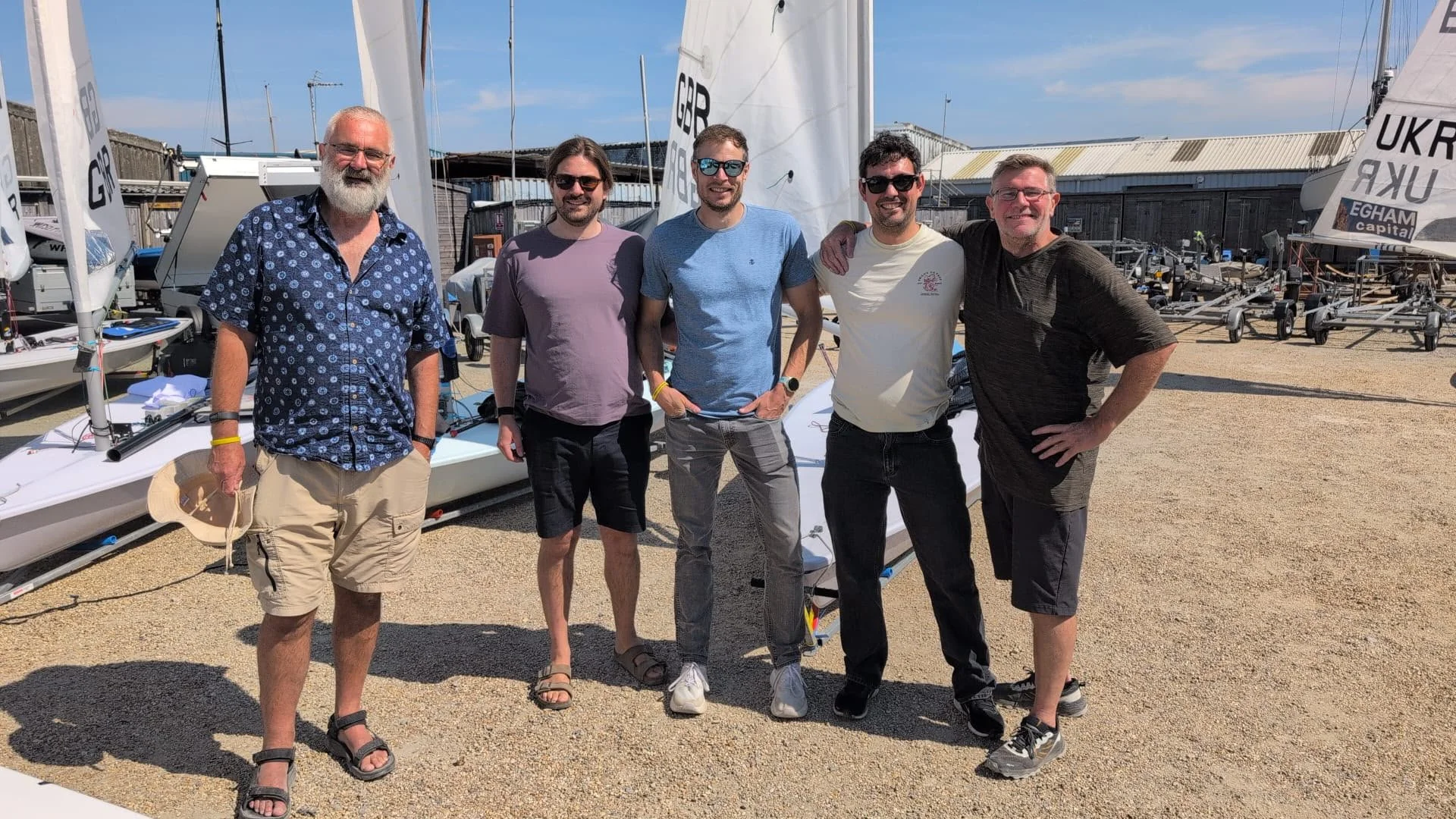
Andy, Ewan, Pete, Austin, and Tony.

We got sent out of the harbour on the Friday and Saturday, battling with the Sandbanks Ferry, to sail in front of Bournemouth beach.

ILCA 7s heading downwind in the bay.

On the Sunday the wind took a little time to fill in and they kept us inside the harbour.

Friday night we ate at the club and attended a gin tasting. They were giving prizes out but we were unlucky.

On Saturday night there was a sit down dinner, again with a sail number raffle, but we won nothing again.

The sailing was pretty good, it was well organised, and we all had a great weekend. So much so that there was talk of attending the Masters Inlands at Draycott Water on the weekend of the 7th/8th November.

The results are here.

Ewan

Andy

Pete

Tony in action

Austin

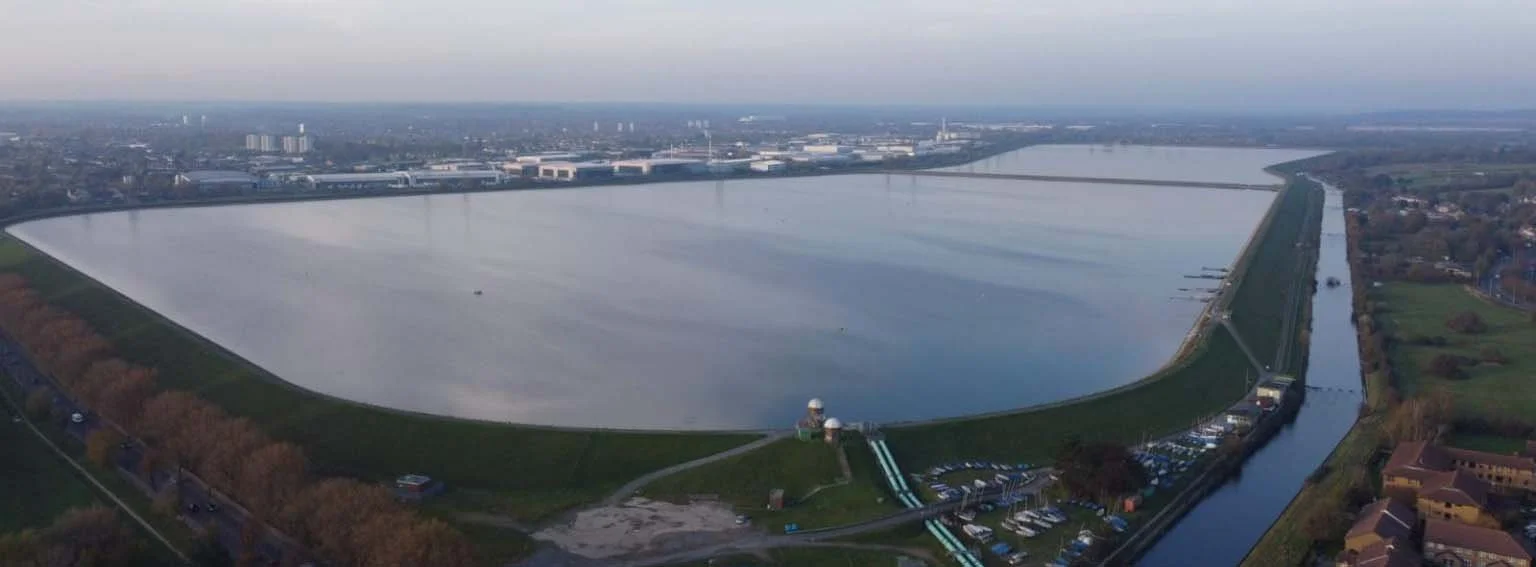
King George Sailing Club shines at ISO Eurocup 2026 on Lake Como

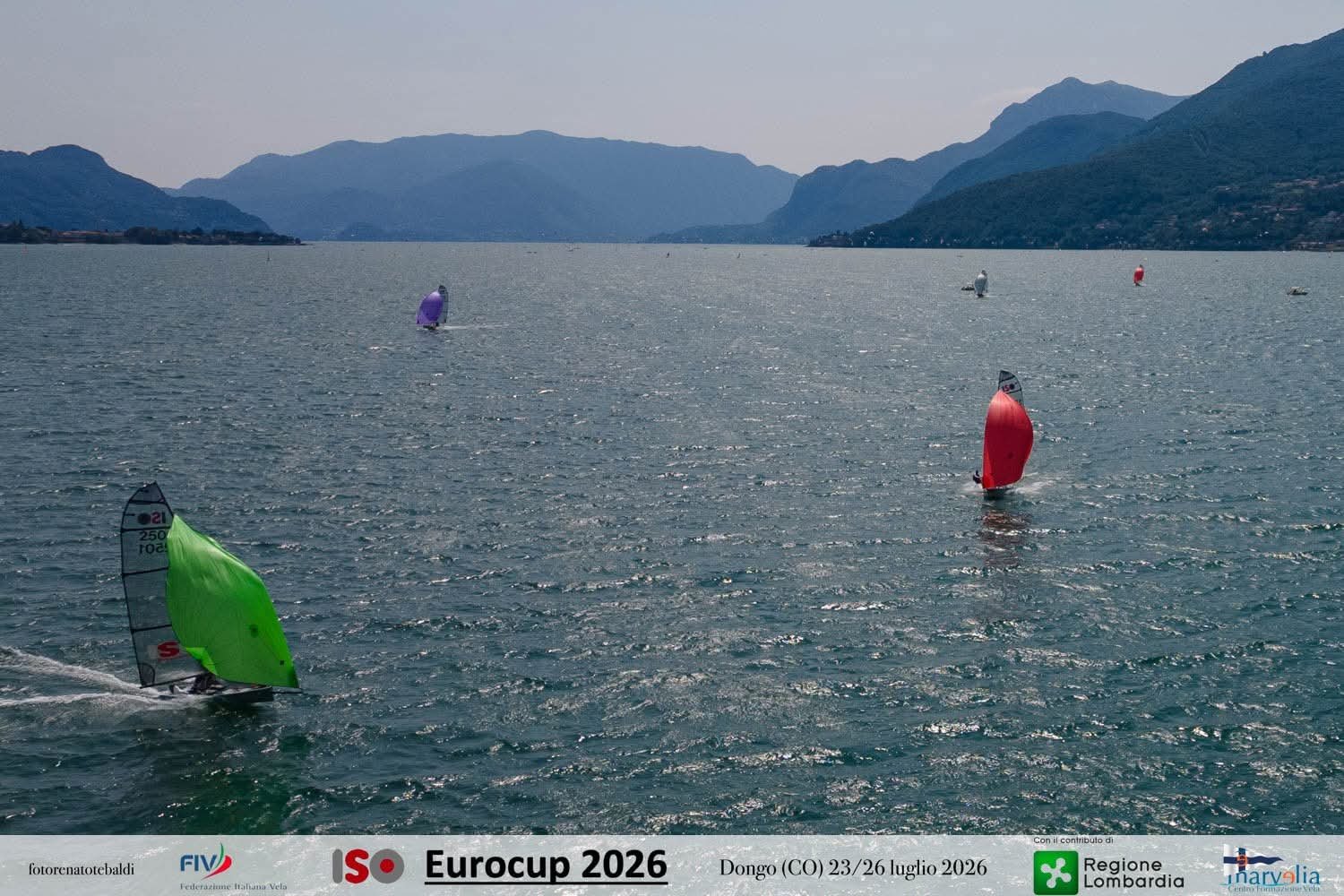
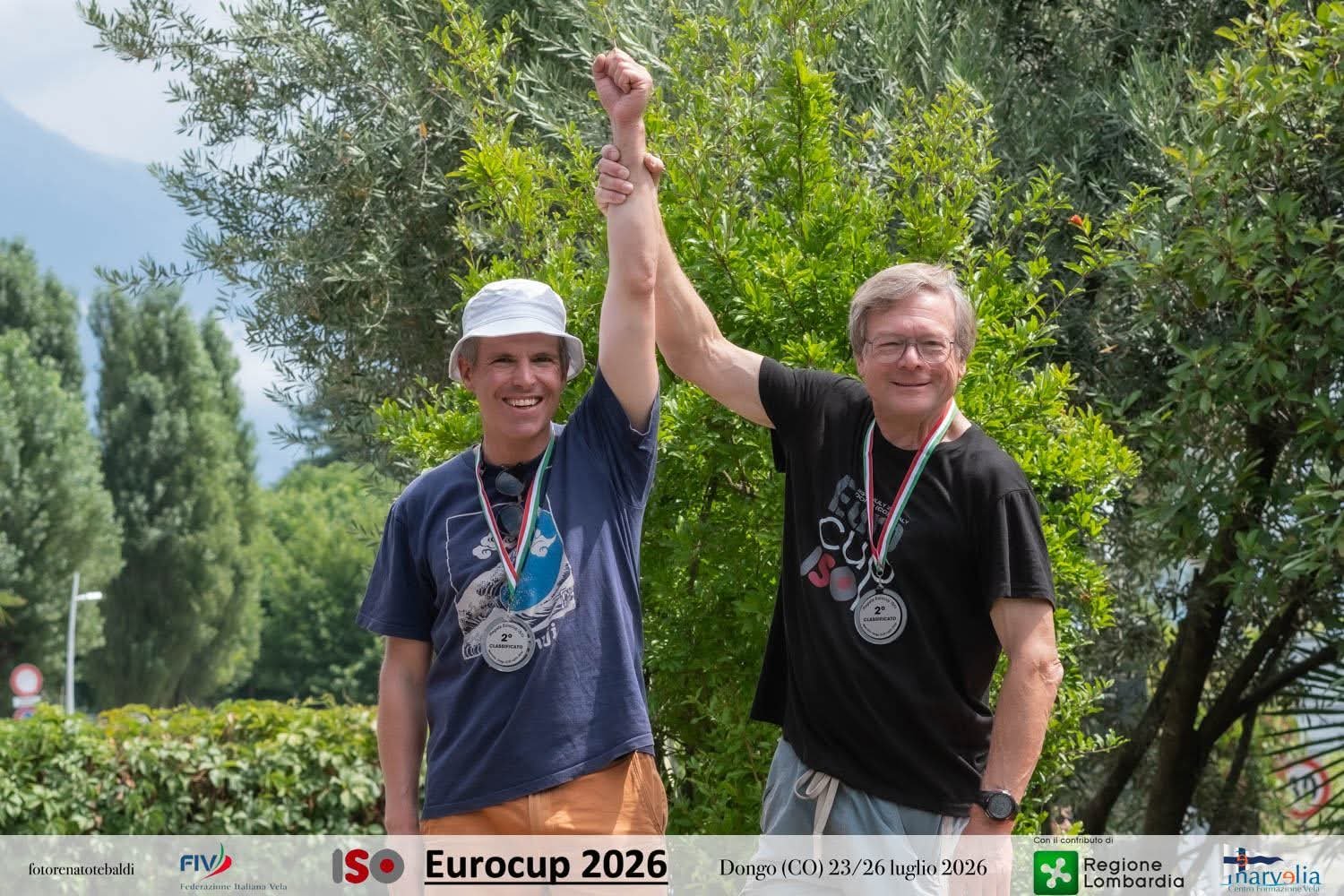
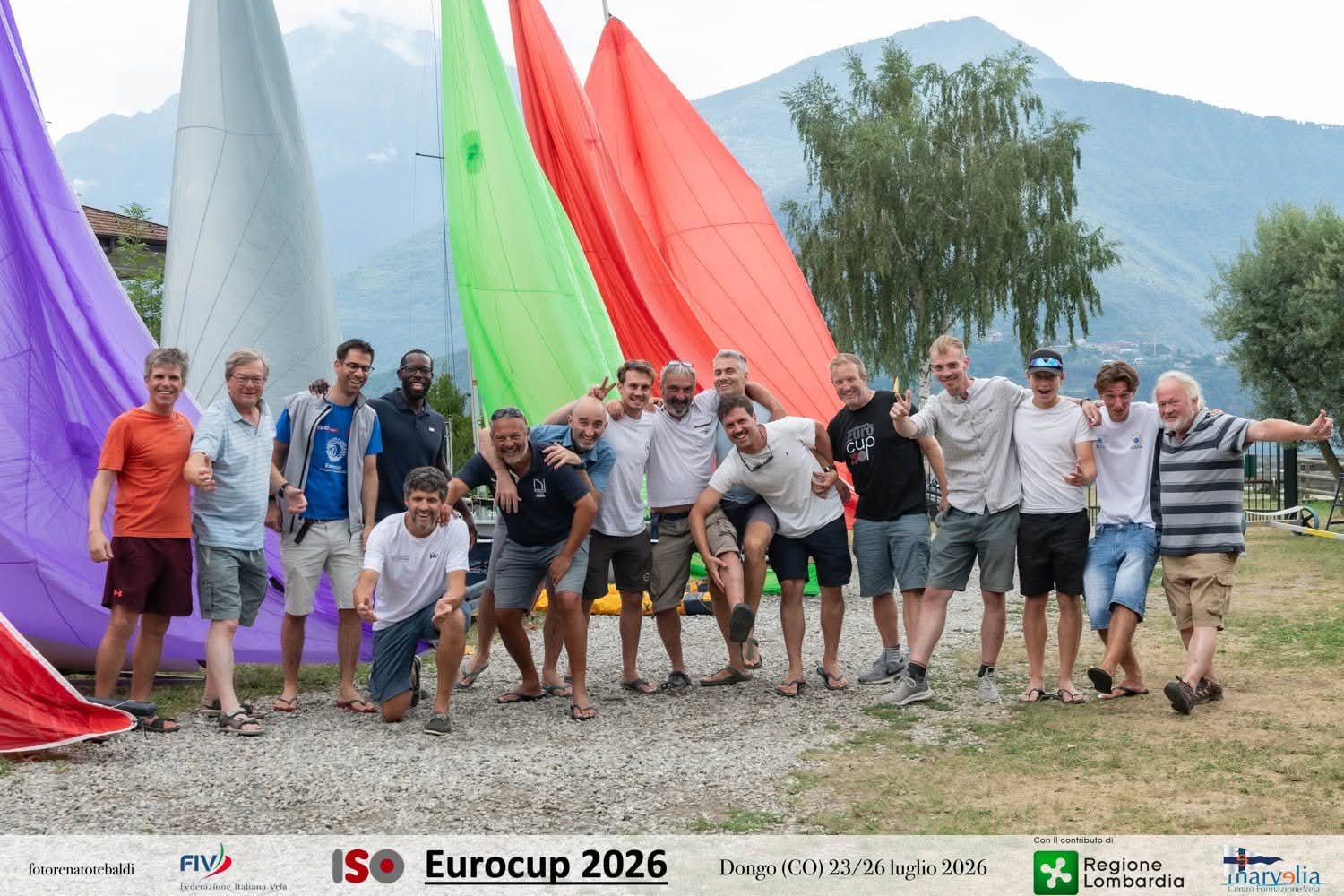
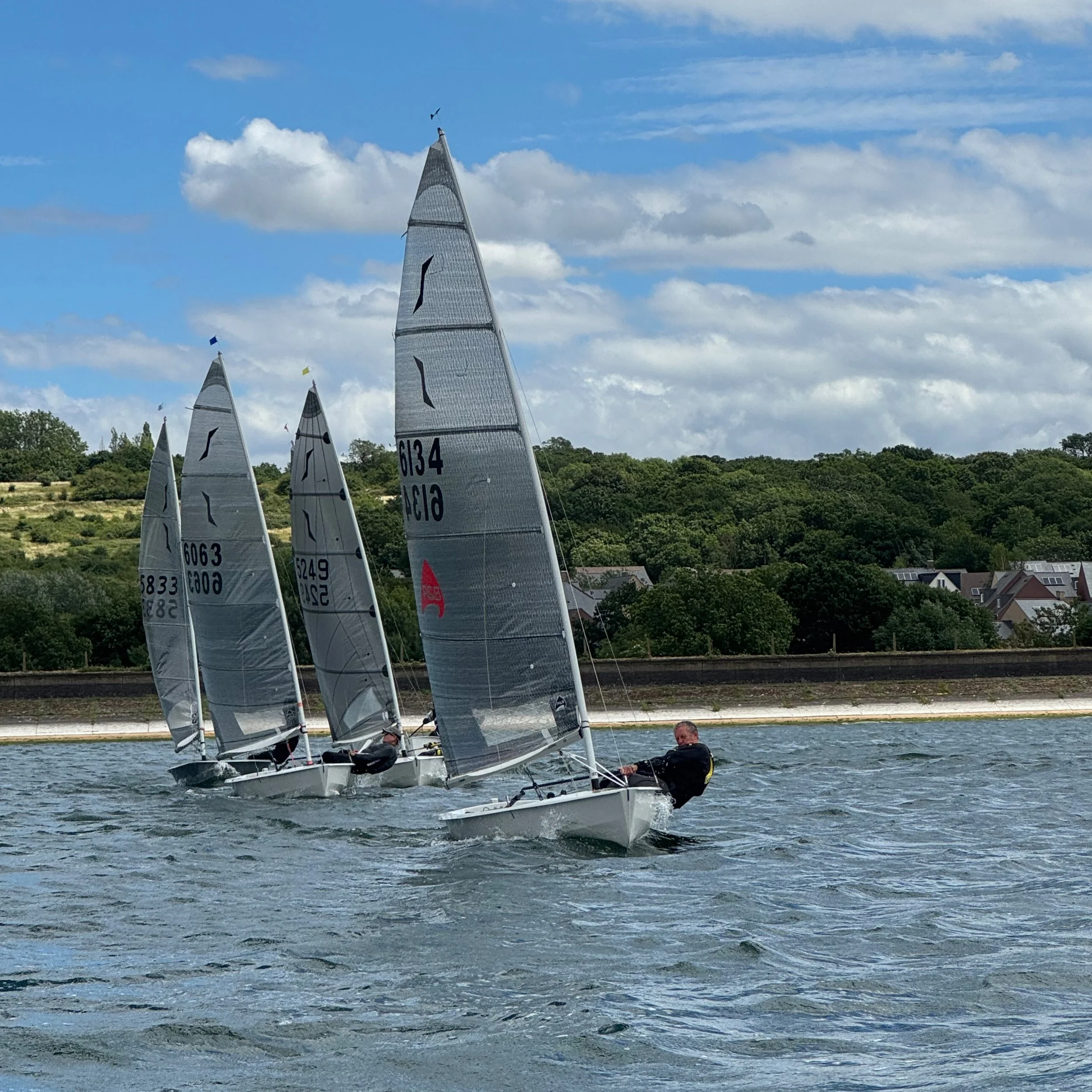
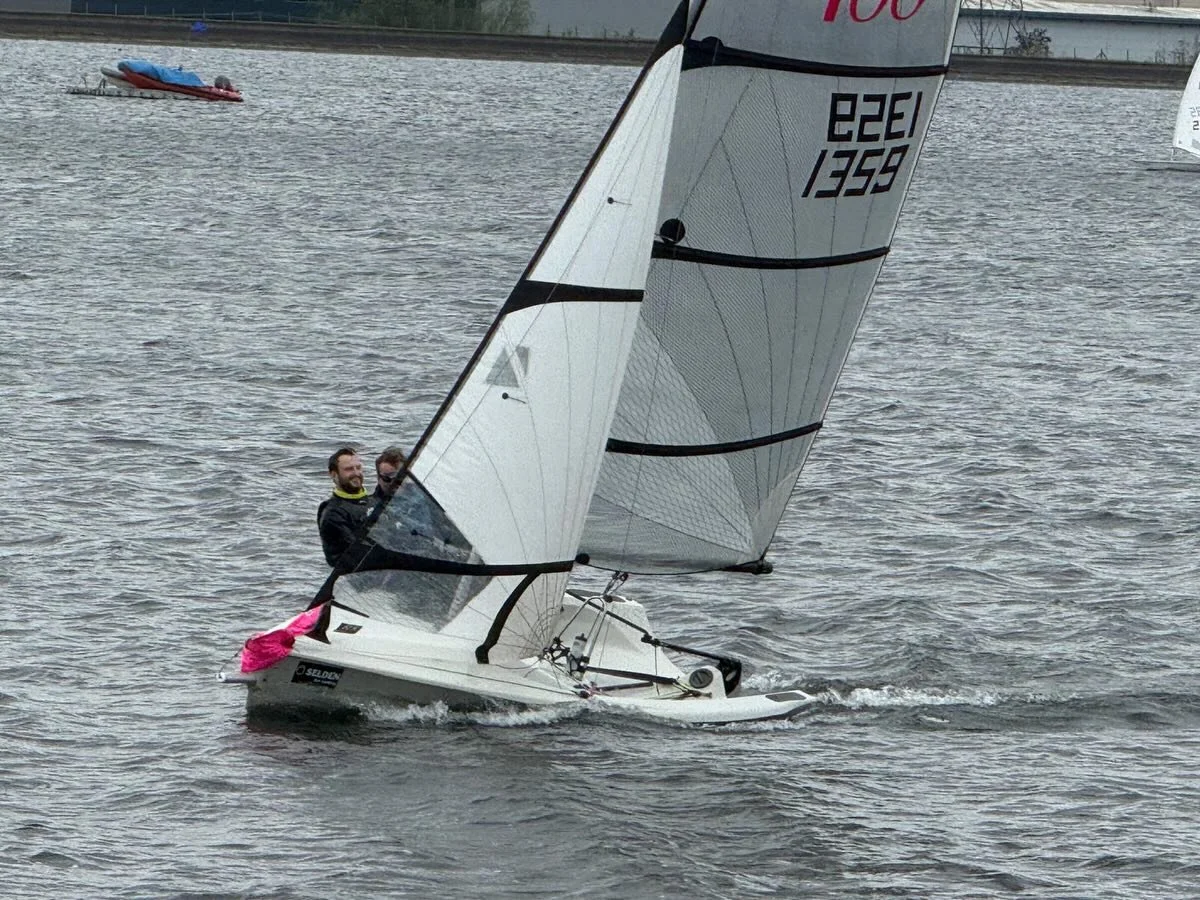
Two King George Sailing Club (KGSC) crews delivered standout results at the ISO Eurocup, held 23–26 July at Marvèlia Centro Formazione Vela in Dongo on Lake Como — one of the class's rare visits to this dramatic Northern Italian venue.

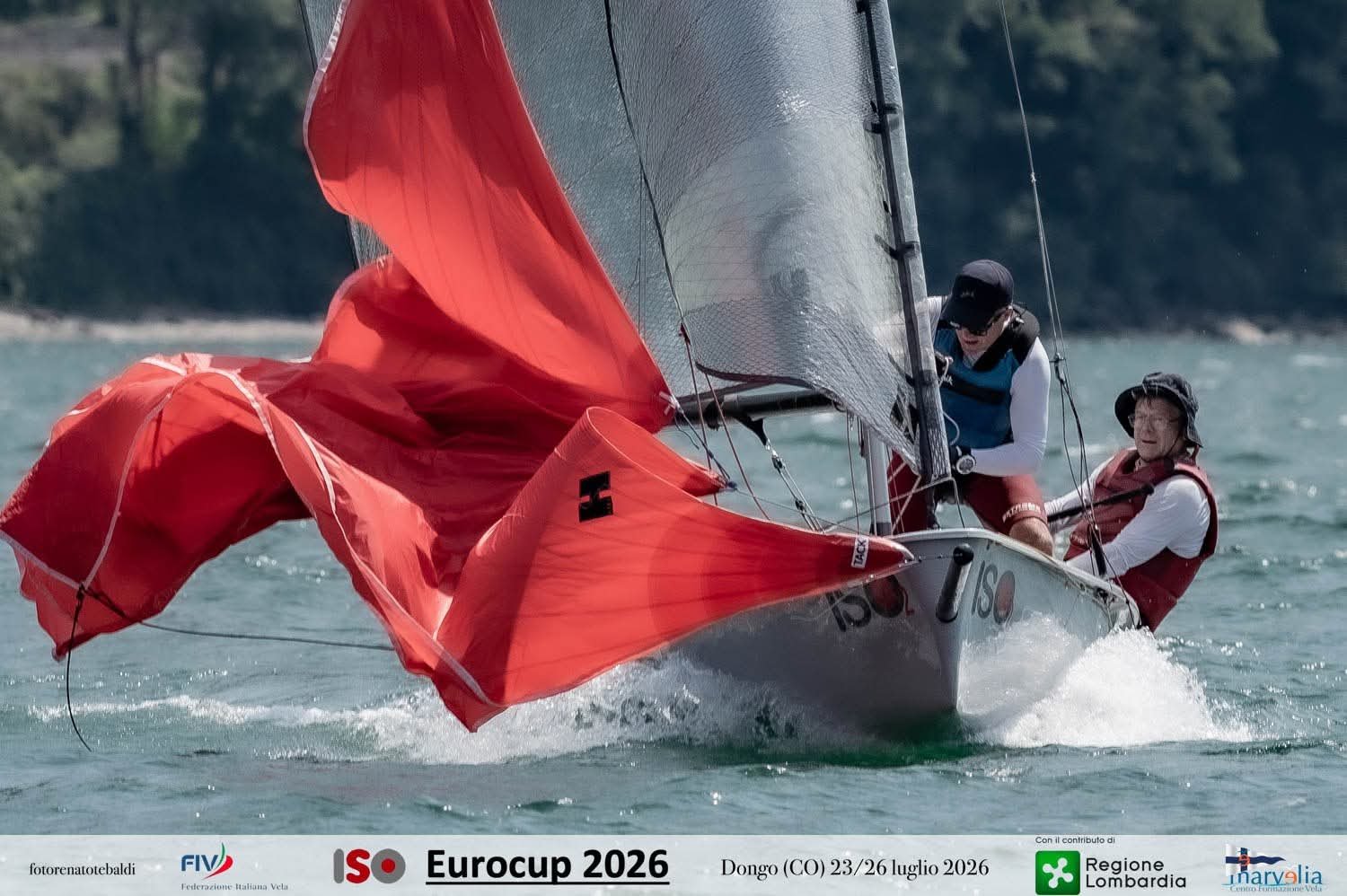
Bob and Michele, red kite, chasing down the champs, green kite at the last mark.

Bob Ladell and Michele Cadei (sail no. 2502) claimed the runner-up spot overall, finishing on 13 points after a consistent run of results including a race win in the final race (R8) and three second-place finishes. Their only blemish was a DNF in race 5.

Michele and Bob

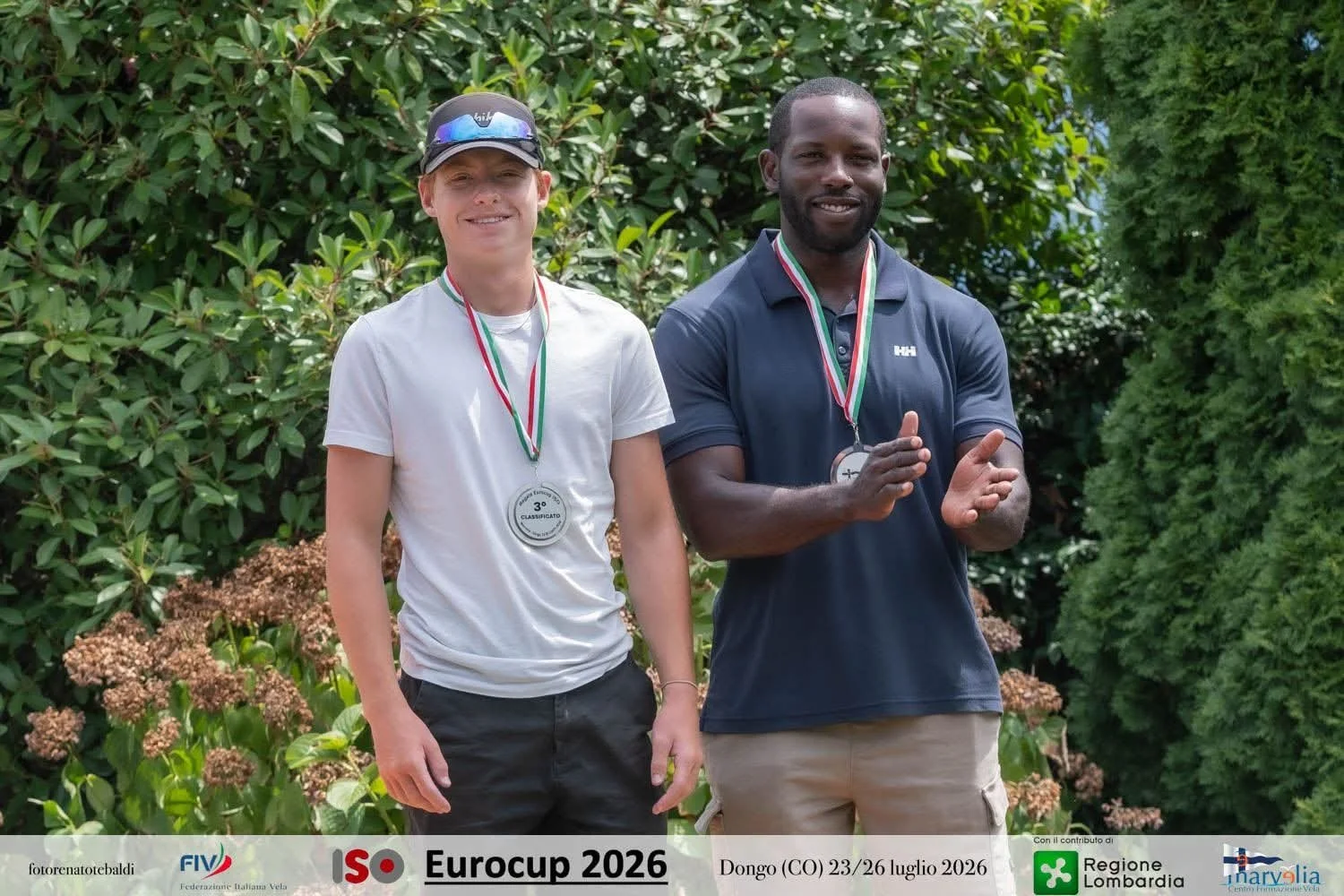
Close behind, KGSC's Asher Robinson and Harry Mitchell (sail no. 1191) took third overall on 16 points, with a strong string of top-five finishes throughout, including two second-place results in races 4 and 7.

Harry and Asher

Between them, the two KGSC boats occupied second and third overall — just off the pace of race winners Rob Howlett and Henry Collings (Poole YC), who took the title on 6 points.

Crew member Harry Mitchell, new to the boat this season, captured the spirit of the event: "It is racing and everyone takes it seriously, but at the same time there is so much fun ashore and everyone is so friendly. The ISO class definitely has a different vibe."

The ISO vibe

Conditions across the four-day regatta ranged from a manageable 14 knots on day one to a boisterous 24 knots on day two, which built notable waves for an inland lake before thunderstorms curtailed racing on the final day. Nine races were completed in total.

KGSC results:

  • 2nd — Bob Ladell / Michele Cadei (2502) — 13 pts

  • 3rd — Asher Robinson / Harry Mitchell (1191) — 16 pts

KGSC Solo Open Meeting - Report, Results and Images from Today's Action

Following on from a very successful training day arranged via the Solo Class Association and run by Vince Horey on Saturday where two club members – James LC and Charlie Shearn – were joined by three visitors. Racing on Sunday saw six visitors join Vince, James and Charlie for a three race open meeting around a trapezoid course.

With a committee boat startline, each race was a three lap (45 minute approximately in length), battle. Pete and Mickey laid a great start line of just the right length meaning each start was clean and fair.

Race 1 started in a decent breeze and was memorable in that Vince forgot the course and, whilst leading, sailed beyond the windward mark heading on towards club mark 3. Fortunately Jamie Clementson, one of the visitors from Chipstead SC was on the ball and led most of the others round the right mark closely followed by James LC. Vince spent the rest of the race working his way back up through a slightly depleted fleet – one visitor was forced to retire with a broken cunningham and another had a very prolonged swim. By the finish it was Jamie C followed by James LC then Vince and Bryan Morum from Hickling Broad was in 4th.

After a commendably prompt turnaround by the race committee, race 2 followed the same course. This time Vince went the right way and led from start to finish leaving Jamie, James LC and Bryan to battle it out for the minor places. This time Bryan led James and then Jamie to the finish. With Vince on 4 points, Jamie and James tied on 5 points and Bryan on 6, no one could take an early shower but nor would they want to with the champagne sailing: decent breeze, great course and very sporting but close racing…

Race 3 saw Vince pull away again. By the end of the second lap James LC had wriggled into 2nd (which might have put him second overall had that been the finish…) with Bryan, Jamie and Nick Pighills from Fishers Green all very close behind him. With more awkward patches in the wind, the final beat didn’t go to plan and by the finish Jamie came 2nd for 2nd overall and Bryan 3rd crucially ahead of James LC meaning that he took third on countback with James 4th.

A great day’s racing supported on the water by Pete and Mickey, with Alistair in the rescue boat. And off the water the spread of cakes and other treats were much appreciated by all for which I think thanks should go to Deborah, Andreas and Marlis (but apologies if I have missed anyone out!)

KGSC Solo Open Meeting 28th June 202

Please find below the link to enter, alongside the NoR and SI’s.

Entry is online only, no entry on the day.

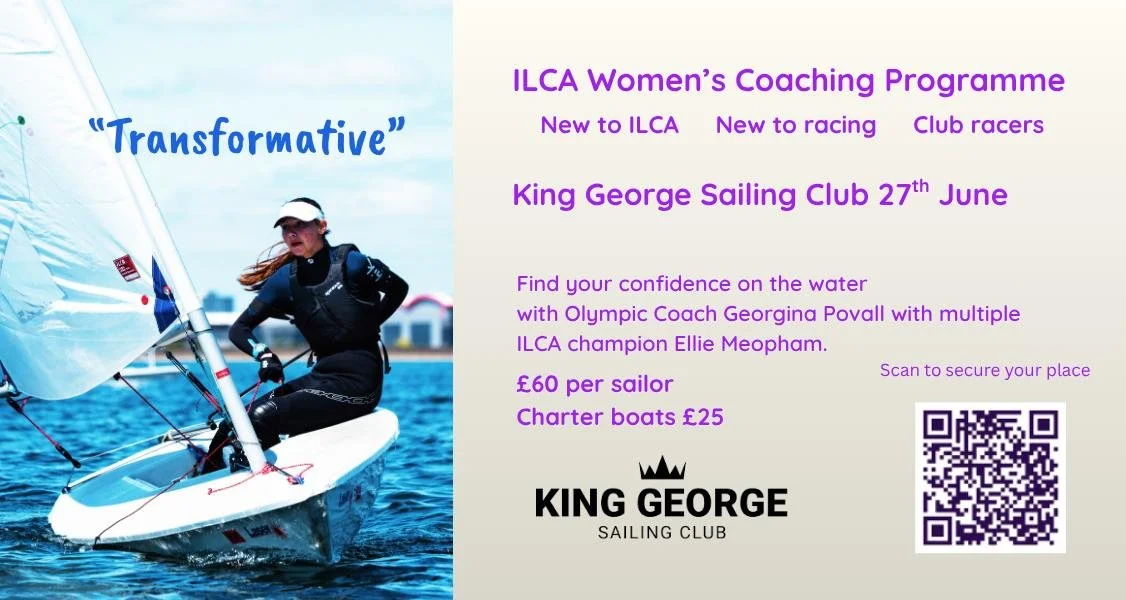
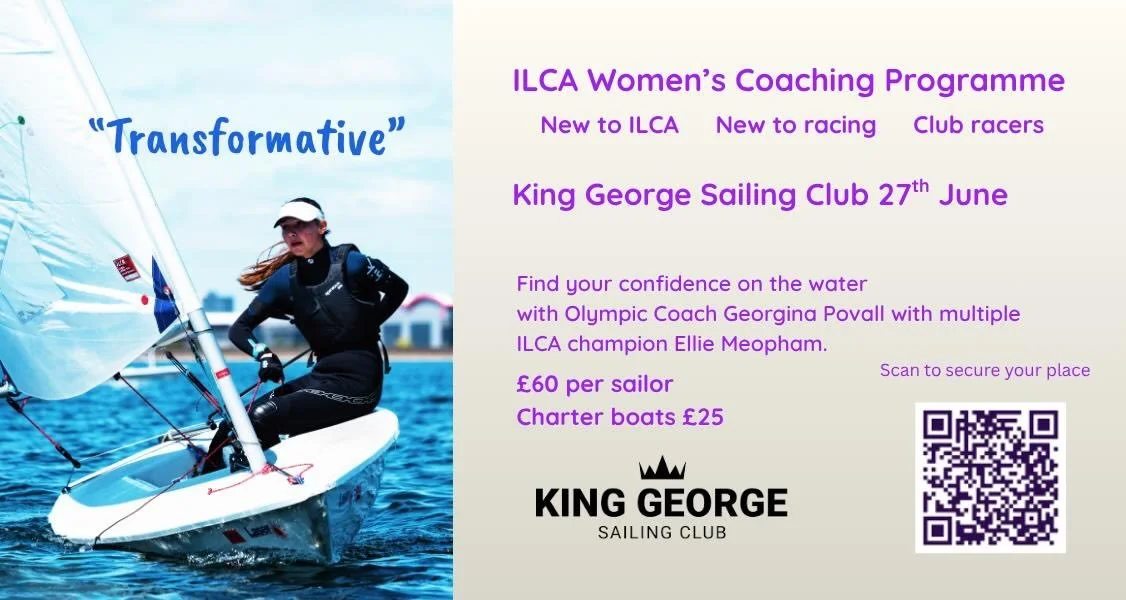
ILCA Women's Coaching Day

Come and join us at KGSC on June 27th for a coaching day with Olympic coach Georgina Povall and ILCA champion Ellie Meopham.

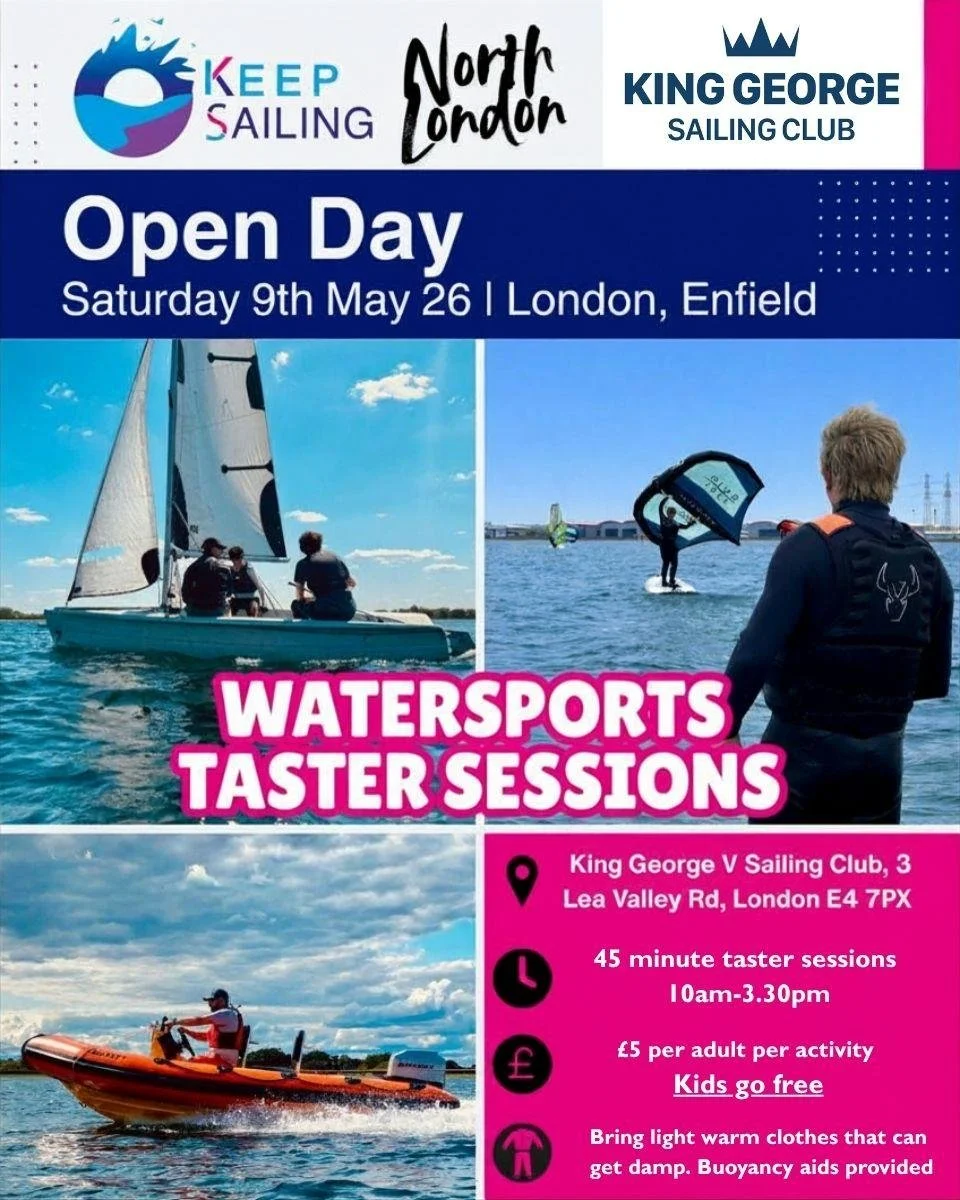
It’s the King George Sailing Club Open Day on Saturday 9 May 2026 and you’re invited!

We’d love to see you at King George Reservoir for this year’s Open Day.

If you’ve always wanted to try sailing and watersports in London, then this is the place to be.

Try sailing, powerboating and wingsurfing with an instructor

Tour our clubhouse, boat park and facilities

Find out about the range of courses and activities at the reservoir

Meet club members and find out how to join

We’re running this year’s Open Day together with our five-star watersports tuition partners Keep Sailing. 

Keep Sailing offer a wide variety of RYA-accredited watersports courses at the reservoir. These include children’s summer holiday camps and a wide range of courses for adults, from complete beginners to old hands.

At the Open Day you can opt for taster sessions across any or all of sailing, powerboating and wingsurfing, all supported by a Keep Sailing instructor. 

Sailing taster sessions will get you out on the water with an experienced crew - ideal for complete beginners.

Powerboat rides give you a feel for life on the water at speed.

Wingsurfing has been one of the fastest-growing watersports around over the last few years, and this is a rare chance to try it out in a safe, structured setting with qualified coaches on hand.  This one is for ages 16+. 

Buoyancy aids, wetsuits and other kit is all provided - you just need to show up wearing clothes you don't mind getting a bit damp and perhaps bring a towel.

Club members will be giving tours, answering questions and serving drinks and cakes in the clubhouse kitchen.  Weekend days at the reservoir are a buzzing hive of activity, so you’ll also see club members out on the water, sailing and windsurfing. 

Kids go free.

Adults pay just £5 per activity, which supports Keep Sailing’s not-for-profit work.

Our Open Day is a great place to start if you've been thinking about joining a Keep Sailing course or joining King George Sailing Club. 

The details

  • Date: Saturday 9th May 2026

  • Time: 10am – 3:30pm. No booking required. 

  • Where: King George Sailing Club, 3 Lea Valley Rd, London E4 7PX

  • Cost: £5 per adult per activity - kids go free

  • What to bring: Light warm clothes that can get damp. Buoyancy aids provided. A picnic blanket or picnic chair if you’d prefer to sit and watch the fun. 

  • Travel and transport: we have plenty of on-site parking. If you’re coming on public transport we have our very own King George Sailing Club bus stop on the 313 route between Enfield to Chingford; or you can get the northbound 215 bus from Walthamstow Central bus station and get off at the Lea Valley Road/Sewardstone Road crossroad‍.

We’re really looking forward to meeting you.

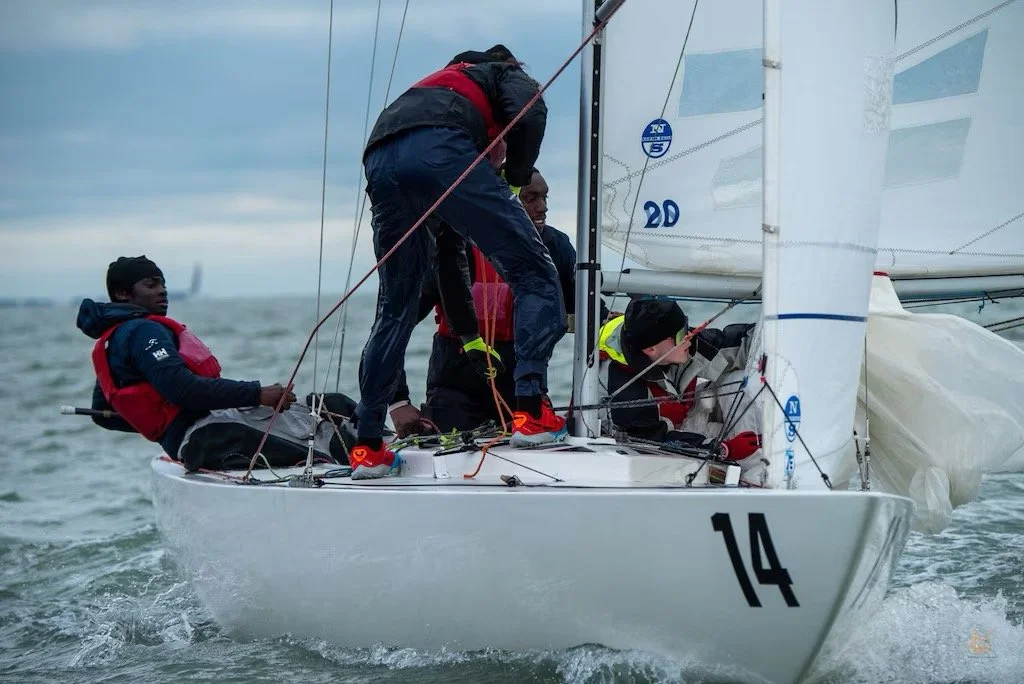
Scaramouche Sailing Trust: Meet the Inner-City Students at Top of Sailing

Sailing Today Magazine selected the Scaramouche Sailing Trust to be their charity of the year for 2025 and it’s been a hugely successful summer for the students involved! They caught up with a few of them on their journeys into sailing, and the support they’ve received, giving a brief mention of their time at KGSC!